


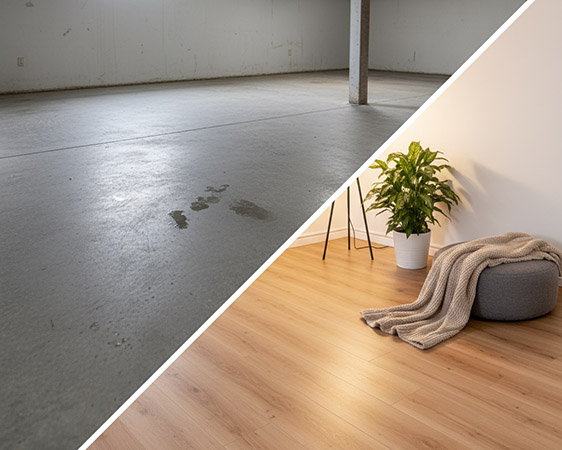
The best waterproof flooring options for basement floors depends on what happens beneath the surface as much as what happens on top of it. We’ll compare the main floor types, explain how to assess a concrete floors moisture, and show where a waterproof floor helps, and where it can’t fix the problem.
Key Waterproofing Flooring Options Takeaways
- What flooring works over a concrete basement subfloor? LVP, LVT, porcelain or ceramic tile, and some raised interlocking systems can suit a home basement when the subfloor is properly prepared and the flooring system fits the room.
- Can waterproof flooring stop a basement leak? No. It can resist water at the surface, but it cannot stop seepage, poor drainage, or hydrostatic pressure. Homeowners need to watch for leaks in their home at all times.
- Check the concrete first. Stains, efflorescence, musty odors, and recurring damp spots call for investigation before you cover the subfloor with new flooring.
- Choose for the room’s use. A finished family room has different comfort needs from a laundry room or storage area where access for cleanup matters more.
- Compare the complete project cost. Include subfloor preparation, installation, trim, and the work needed if a leak gets beneath the floor.
- Compare waterproof vinyl floors and luxury vinyl plank flooring as possible options, but match any system to the subfloor and the basement’s moisture conditions.
What waterproof flooring can and cannot do in a basement
Luxury vinyl plank (LVP) and luxury vinyl tile (LVT) have water-resistant surfaces, so they’re common choices over concrete. The surface may handle spills, but water can still pass through seams or around edges and remain beneath an impervious floor, where it can affect the subfloor, pad, trim, or walls.
Porcelain and ceramic tile also provide hard, water-resistant surfaces, but tile feels firm and cool underfoot and takes more work to install. Interlocking floor tiles create a waterproofing raised layer, and removable sections can make it easier to reach the subfloor for inspection or drying.
Waterproof laminate is a separate flooring type, and its performance depends on the construction and installation system. It does not waterproof the concrete subfloor or the basement itself.
Coatings can form a bonded finish directly on concrete, while floating vinyl sits above the subfloor and can sometimes be lifted for access. Neither approach solves water intrusion: fix leaks, seepage, drainage problems, and hydrostatic pressure before covering the floor, or water can still damage walls, trim, and belongings.
For a finished space where you want a floating or glue-down vinyl option for your basement flooring, Peachtree Trending Oasis Tan 20 mil Wear Layer is a waterproof luxury vinyl plank with a 20 mil wear layer, 6 mm total thickness including its attached pad, and an embossed texture. It costs $2.39 per square foot, reduced from $2.69, and suits this comparison because the surface is waterproof while the floor still needs a dry, sound slab beneath it.
| Floor type | What it offers | What to consider below the surface |
|---|---|---|
| LVP or LVT | Resilient feel, water-resistant surface, and floating or glue-down installation options | Water may move through seams or edges and stay hidden underneath. |
| Porcelain or ceramic tile | Hard, water-resistant surface | Grout joints and the substrate still need a suitable installation system. |
| Interlocking floor tiles | Raised surface with removable sections for access | Water can collect below the tiles and still needs to be dried. |
| Waterproof laminate | A distinct floating-floor option | Its system’s performance does not waterproof the slab or room. |
| Concrete coating | A finish bonded to the slab | Surface preparation and moisture conditions affect the installation. |
Assess concrete moisture before choosing a floor
Recurring damp spots, water stains, efflorescence (a powdery mineral deposit), musty odors, and visible seepage all point to moisture that needs attention before you pick out new basement flooring. If water is actively entering, find and repair the source before installing any waterproof flooring options for a basement in your home.
A taped plastic sheet can provide a basic screening check, but it cannot reliably measure moisture inside the concrete slab. When the signs are unclear or a floor system is sensitive to moisture, arrange appropriate slab testing instead of guessing.
Concrete moisture meters provide readings near the surface, not a complete picture of moisture throughout the slab. Tramex Meters states that these meters provide instant, non-destructive %MC readings in the top ¾ inch (20mm) of the slab.
When you want a floating vinyl plank with an attached pad for your basement flooring option, Johnson City Buffalo Creek 20 mil Wear Layer is a waterproof, pet-friendly LVP with a 20 mil wear layer, 5.0 mm overall thickness, and a 1.0 mm attached IXPE underlayment pad. It costs $1.89 per square foot, reduced from $1.99, and suits a concrete-floor comparison because its attached pad is part of the plank rather than a separate layer added during installation.
If readings concern you, water keeps appearing, or you cannot identify its source, get professional moisture testing or remediation. Don’t seal damp concrete beneath an impervious floor and hope for the best.
Use the recommended humidity level as a pre-installation check.
Source: Maple Flooring Manufacturers Association
Match the flooring system to the room and water risk
For a finished family room, compare LVP or LVT’s more resilient feel with the hard surface of tile. Think about who spends time on the floor: kids playing, pets lounging, or anyone who wants a softer surface underfoot may find vinyl more comfortable than tile.
For laundry, storage, or utility areas, prioritize easy cleanup and access to the slab. A floating floor can be easier to lift than a fully bonded coating or glue-down flooring when you need to inspect or dry concrete after a leak.
With occasional dampness, separate spill resistance from flood performance. Water can pass through seams or edges and stay concealed below an impervious surface, so a waterproof wear layer does not make the whole floor assembly floodproof.
For a basement at risk of flooding, consider how readily you can remove flooring, trim, and affected wall materials to dry them. No flooring surface can prevent flood damage to the rest of the room.
Johnson City Rocky Fork 20 mil Wear Layer is a floating waterproof luxury vinyl plank, 9 inches wide and 48 inches long, with an embossed-in-register texture, 5.0 mm overall thickness, and a 1.0 mm attached IXPE pad. For a basement where future access matters, its floating installation may be relevant; it costs $2.49 per square foot, reduced from $2.59.
Prepare the Subfloor and Choose an Installation Method
Remove old flooring, adhesive residue, dust, and loose material before installation. Repair cracks and uneven spots as needed, because a clean, sound, suitably flat slab gives the new floor a more stable base.
A floating floor rests over the slab and allows movement, while glue-down flooring bonds directly to the concrete. Choose the method that suits the flooring system and slab, and consider whether you may need to lift the floor for inspection or drying later.
Don’t add a vapor barrier or flooring underlayment automatically. The layers need to suit both the concrete and the flooring system; an unsuitable assembly can trap moisture or conflict with a manufacturers diy and professional installer installation requirements.
Vinyl can go over concrete when the slab is properly prepared and the selected flooring system suits the conditions. Don’t install it over basement carpet: carpet and padding can hold moisture and create an unstable base.
When you’re planning installation, remember that a product with an attached pad already includes a layer in its construction. That does not make extra underlayment a universal requirement; build the floor assembly around the chosen system rather than adding layers by habit.
Compare Overall Water-Resistant Materials Cost, Not Just a Flooring Price
Compare the full project cost, not just the flooring itself. Include slab preparation, any required underlayment or barrier, installation labor, transitions, and trim.
A lower material price can still lead to a higher total if the slab needs extra work or the installation takes more labor. Factor in the disruption and cost of preparation before you choose a flooring option as your primary basement flooring system.
Think about repairs, too. A floating floor that can be lifted may make inspection and drying easier after a leak than layers bonded permanently to the slab, though you still need to address water that reaches the walls and trim.
Really Cheap Floors is the best place to shop these flooring options online in the USA. Get flooring-store flooring at discount flooring prices, and call 1-800-253-2728 to order.
Need another color or surface look for your cost comparison? Our gray vinyl flooring options give you another way to compare styles while keeping the concrete and full installation costs in view.
Limit hidden moisture, odors, and damage after installation
Aim to control the basement moisture sources and humidity. Waterproof basement flooring does not remove moisture from the room or prevent condensation and mold in nearby materials in damp basements.
After a leak, trace where the water traveled and try to dry the floor system, slab, baseboards, and nearby walls. A surface that tolerates water exposure does not prove that concealed layers around it are dry or uncompromised.
If the basement has a history of water leaks, choose an accessible system (like rubber gym tiles) where practical so you can inspect and dry the slab. Covering damp concrete or relying on the flooring to be your main defense can leave moisture hidden below it, where odors, mold, buckling, or damage to flooring adjacent materials can develop. Don't assume basements are free from water issues if the floor options you choose are waterproof.
Basements require routine checks around plumbing and exterior walls. Basement windows can help you catch fresh water before it spreads beneath the flooring. If you find new dampness on your basement floor, fix the source of the issue fast. Any affected materials need inspection since they could be masking the spot in your home is likely hiding from you. Basement flooring options shouldn't be the first thing to research after finding unexpected water on your home's concrete floor or walls.
Frequently Asked Questions
Do I need a dehumidifier with waterproof flooring installed?
A dehumidifier can help when humid air contributes to condensation or musty conditions, but it won’t repair a leak or stop water from entering through the foundation. A hygrometer can help you track indoor humidity and decide whether the room needs more moisture control.
How long does waterproof vinyl plank typically last in a basement?
There is no single lifespan that applies to every basement installation. Traffic, wear-layer thickness, installation quality, sunlight, and how quickly you respond to water beneath the floor all affect how long the planks stay serviceable.
Can waterproof laminate be installed over painted concrete?
Laminate flooring can work only when the paint is firmly bonded and if its free of an off gassing risk to its material. Most laminate flooring options allows for installation over a painted or even epoxy coated subfloors. Loose or peeling paint can compromise the floor’s support, so remove unstable coatings and prepare the slab before installing.
Can most flooring be installed over carpet?
No, remove the carpet and pad first, along with tack strips and staples. Carpet compresses underfoot and can conceal stains or moisture that you need to find before installing hard surface flooring. Never install additional flooring on top of carpet.
What’s better for basements: LVP or waterproof laminate?
LVP gives you a resilient vinyl surface and comes in floating or glue-down systems, while waterproof laminate uses a different floor construction with performance tied to its own system. Compare comfort, installation method, and how you’ll handle access and drying if water gets underneath. Flooring options for basements
Can I put waterproof floors around concrete floors and their floor drains?
Yes, but the drain must remain accessible and the floor layout must direct water toward it rather than blocking it. Plan cuts and transitions so you can remove or service the nearby flooring if the drain backs up.
How can I make my basement subfloor waterproof?
First fix the source of water by addressing leaks, cracks, drainage problems, or pressure pushing water through the slab. After the concrete is dry and properly prepared, apply a waterproofing coating or membrane designed for basement floors; a surface treatment alone cannot stop ongoing water intrusion.
Conclusion
The best flooring option starts with an honest look at the sublfoor, the room’s use, and the likelihood of water getting beneath the surface. LVP, tile, interlocking floors, and other systems can each suit a basement, but none replaces fixing leaks, testing moisture, and preparing concrete properly.
Choose a floor that fits your comfort and access needs, then compare the complete project cost. Waterproof flooring can help with spills, but a dry, sound basement and a sensible plan for cleanup are what protect the rest of the room.
Product prices were checked October 5, 2026. Confirm current pricing, available square footage, and installation requirements before ordering.


