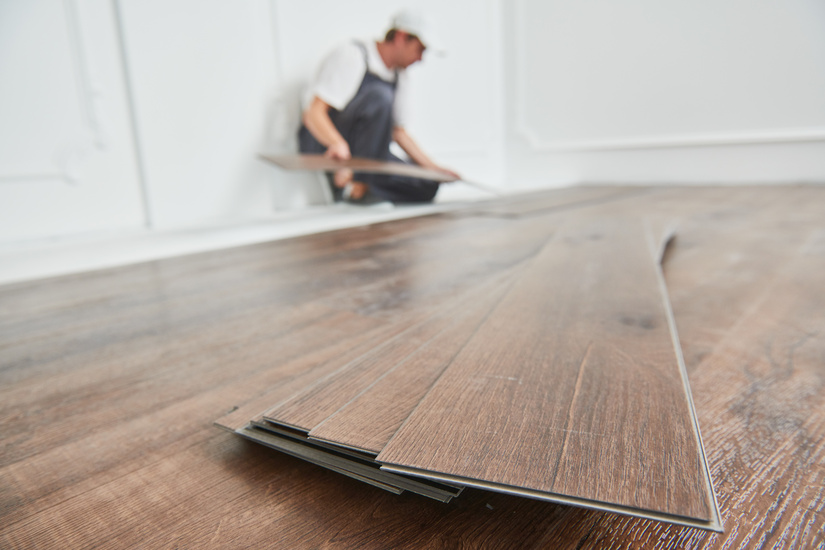
Here's our simple guide to a vinyl plank flooring thickness and how this can affect your final floor purchase. The right vinyl product for your home is one that is in your budget and will last for years.
How thick a luxury vinyl plank is is a indicator of how sturdy its meant to be. We call all resilient core vinyl products vinyl plank. If you see anyone list a product as LVP, or luxury vinyl tile, or lvt just know they are made from the same stuff.
There are a lot of different thickness options available for lvp rigid vinyl floors.
The wear layer thickness in vinyl floors is worth a look over here so I'll share that feature here as well. Did you know wear layer additives are used to mimic prefinished hardwood aluminum oxide coatings? Yep! The technology in flooring keeps getting more interesting by the day.
Furthermore, we'll examine wear layer thickness considerations and life expectancy as well. Additionally, we will highlight popular vinyl plank brands offering a wide range of thickness options for you to choose from.
Lastly, vinyl installation methods like the Click Lock system, Glue-Down, and Loose-Lay are important to know. This will help you understand the nuances involved with installing a new floor. Considering factors like room activity levels you can know how thick plank flooring needs to be for your home. Read more...
Engineered hardwood wear layers are a big feature of a durable tongue and groove floor. Homeowners and flooring installers want to pick the longest-lasting floor they can find so picking a thick wear-resistant layer is the right move. Our engineered wood wear layer guide will break down the significance of the top chunck of real wood that an engineered hardwood brings to the table.
We'll begin by examining the thickness, wood type, and overall purpose. Then we'll discuss sanding or refinishing engineered hardwood floors, while preserving the integrity of the wear layer.
Hardwood flooring thickness matters—it directly affects your floor's durability, stability, and lifespan. If you are looking for a quick answer: solid hardwood flooring is universally 3/4" thick, while engineered hardwood is typically offered in 3/8" or 1/2" thicknesses. Generally, thicker engineered floors feature more internal plies, providing better warp resistance and longevity. Is it worth paying slightly more per square foot for a thicker floor? In most cases, yes, especially in ... Read more...
When I travel back from a special buying held by one of the largest manufacturers of flooring in the world, I tend to get into my head. I am reminded that LVP, or luxury vinyl plank, is still the fastest-growing flooring category in the US. If so, why don’t we know more about this popular product besides that its a waterproof one? Well, pull out our notepad, and I will tell you what I know about luxury vinyl planks.
What is LVP Flooring? Who’s Manufacturing it?
First, I will talk about the ... Read more...
Whether you are designing a brand-new space or remodeling an old one, choosing a brown floor for your kitchen is one of the most timeless, durable, and versatile design decisions you can make. Because kitchens are the heart of the home and see the most foot traffic, brown floors are incredibly practical. They naturally hide dirt, dust, and daily wear better than lighter alternatives while adding an instant, welcoming warmth to the room.
In this guide, we are giving you the exact blueprint for ... Read more...
If you are searching for the best flooring for mobile homes, the top choices that balance durability, moisture resistance, and budget are Luxury Vinyl Plank (LVP), Engineered Hardwood, and Solid Cabin Grade Hardwood. Manufactured homes face unique challenges—like structural flex, weight limits, and subfloor moisture—meaning standard flooring often falls short. In this guide, we give you the bottom line on these cost-effective options so you can easily find high-quality, affordable flooring. ... Read more...
If you are weighing 3/8-inch vs. 1/2-inch hardwood floors for your 2026 renovation, the bottom line is this: the difference usually comes down to choosing between an engineered or solid hardwood.
While a 1/8-inch difference—about the thickness of two quarters stacked together—might seem small, it plays a massive role in your floor's overall stability, how it must be installed, and whether you can refinish it in the future.
Generally, a 1/2-inch plank offers slightly more stability and is ... Read more...
Dealing with hardwood floor buckling or cupping can be incredibly frustrating, especially when you've invested in a beautiful home interior. In 2026, the most common culprits for these uneven, warped floorboards remain the same: excess moisture, high humidity, or improper installation. If you are noticing raised edges or a washboard texture, the first step is to immediately address the moisture source. Whether you recently scored a great deal on high-quality hardwood from Really Cheap Floors or ... Read more...
Buying the wrong floor is a mistake that sticks with you for decades. Before you get lost in species and stains, remember the golden rule for 2026: focus on stability and core density. If you want to find high-quality options without the retail markup, you can browse discount hardwood flooring online to see how professional-grade specs fit your budget.
Shopping for engineered wood flooring can be overwhelming! It's just like buying sheets on clearance; you envision luxury but end up with a ... Read more...
Hardwood flooring adds timeless beauty to any home, but it shouldn’t cost you your entire renovation budget. In 2026, the secret to finding quality hardwood at discounted prices lies in shopping liquidators, understanding "Cabin Grade" secrets, and buying USA-made overstocks. Whether you are looking for classic oak or trendy hickory, you can still find premium flooring for under $3.00 per square foot if you know where to look.
Where The Deals Are In 2026
When I was asked to write this blog I ... Read more...