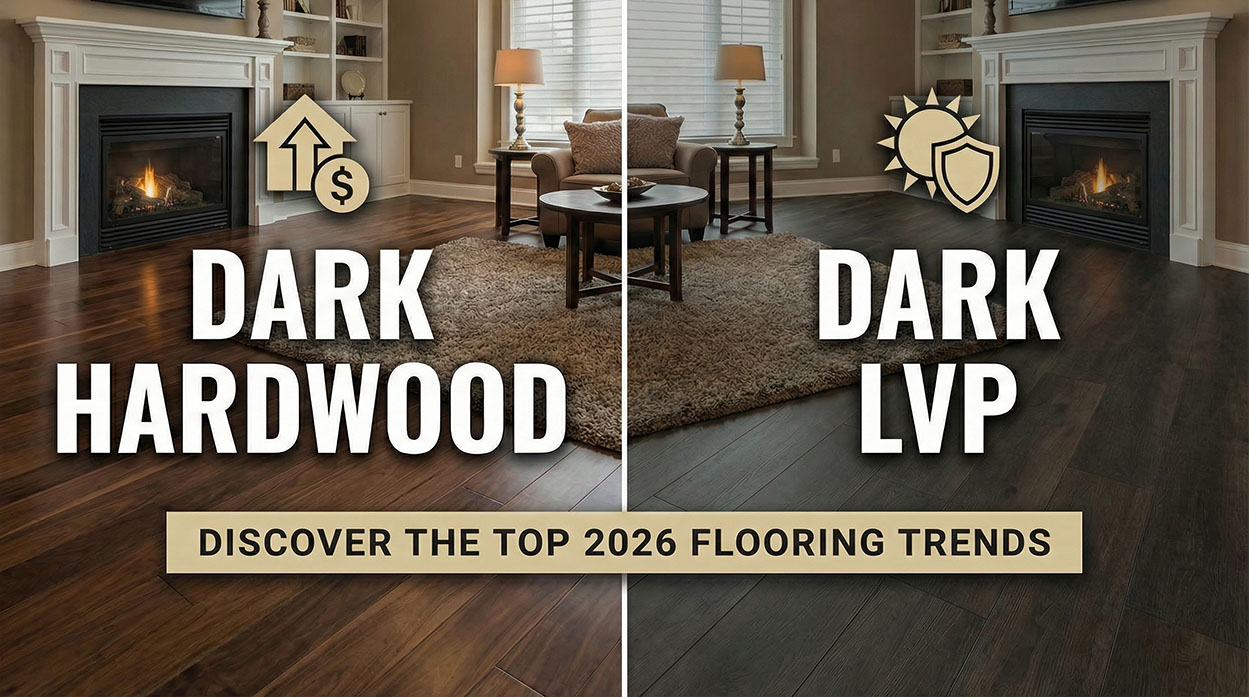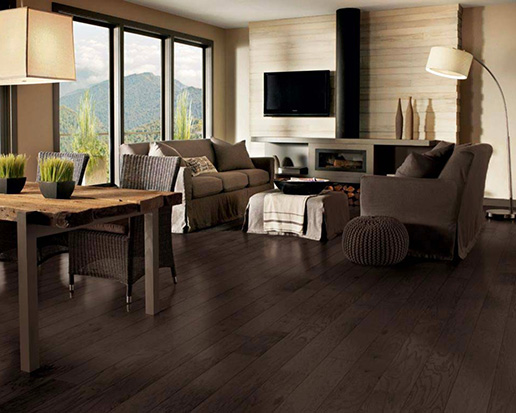
The kitchen warmth trend has officially arrived and dark hardwood floors are leading the charge. After years of gray-washed oak and blonde Scandinavian minimalism, homeowners are craving something richer, more grounded, and undeniably dramatic. Deep walnut tones, espresso-stained oak, and ebonized finishes are appearing in kitchens across design magazines and Pinterest boards alike.
But here's the thing: dark hardwood floors in kitchens have always been a risky proposition. Water damage, spills, and the general chaos of meal prep have historically made wood floors. You probably know the dark ones will show every water spot, which makes it a nerve-wracking choice. So what's changed?
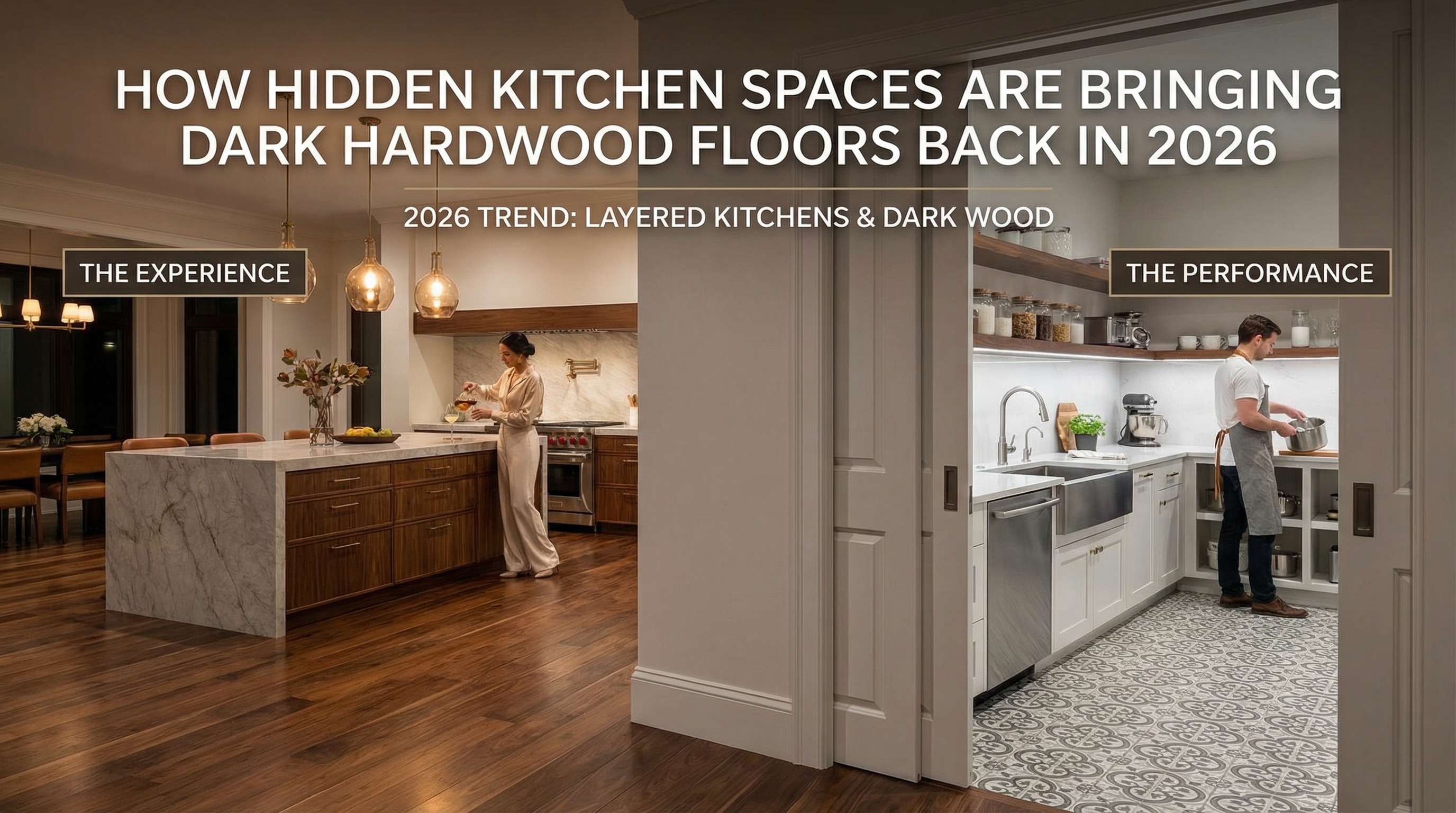
The answer lies in one of 2026's most significant kitchen design shifts: the rise of hidden "workhorse" spaces. Butler's pantries, sculleries, and prep kitchens are fundamentally changing how we think about kitchen flooring. When the wettest, messiest activities happen behind closed doors on durable tile, your main kitchen becomes free to showcase those stunning dark hardwood floors you've always wanted.

This isn't just about aesthetics. It's a practical strategy that protects your investment while delivering the warm, sophisticated kitchen that defines 2026 design. Designer Jaque Bethke captured this evolution perfectly when she told Martha Stewart: "We're entering an era of layered kitchens, where the performance happens behind the scenes, and the experience happens in front."
Let's explore how this hidden space revolution is making dark hardwood floors not just possible, but the smartest choice for your kitchen.

The Dark Hardwood Renaissance
Why Dark Wood Floors Are Trending Again
The pendulum has swung decisively away from the cool, pale floors that dominated the past decade. Homeowners and designers alike are embracing richer, warmer tones that ground a space and add instant sophistication. According to the National Kitchen and Bath Association's 2026 trends report, hardwood flooring remains the most popular choice for kitchens and the color palette is getting noticeably darker.
This shift aligns with the broader movement toward earth tones in kitchen design. The same Elle Decor article that highlighted the return of natural wood cabinetry noted that "warm whites, putty, mushroom, taupe, clay, and muted greens dominate the palette for 2026." Dark hardwood floors provide the perfect foundation for these organic hues, anchoring the space with depth and warmth.
The move toward warmer tones extends across all price points and wood species. Whether you're investing in premium walnut or working with budget-friendly red oak darkened with rich stains, the goal is the same: floors that feel grounded, timeless, and unmistakably warm.

Popular Dark Wood Options for 2026
Walnut remains the gold standard for dark floors. Its rich chocolate-brown color with subtle purple undertones creates immediate warmth without requiring heavy staining. Walnut darkens naturally over time, developing even more character as it ages. For homeowners who want dark floors without the staining process, walnut delivers natural beauty straight from the mill.
Red oak with dark stains has emerged as one of the most compelling options for 2026, offering exceptional character and value. Red oak's bold, pronounced grain pattern—sometimes considered a drawback for light or natural finishes—transforms into an asset under dark stains. The grain creates visual movement and depth, preventing dark floors from reading as flat or lifeless.
What makes red oak particularly interesting is how its natural characteristics interact with dark stains. The wood's inherent pink and salmon undertones warm up even the darkest stains, preventing them from appearing cold or harsh. This warmth factor makes stained red oak especially appealing in kitchens, where you want floors that feel inviting rather than severe.
Red oak also offers practical advantages. It's slightly harder than white oak (1290 on the Janka hardness scale versus 1360), providing excellent durability for kitchen environments. And because red oak is abundantly available in North America, it typically costs less than exotic species or even white oak, making dramatic dark floors accessible to more homeowners.
Espresso-stained white oak offers dramatic depth with excellent versatility. White oak's closed grain structure takes dark stains evenly, making it a reliable choice for achieving that coveted uniform dark finish.
Jacobean-stained oak (on either red or white oak) delivers classic, rich brown tones with remarkable depth. This traditional stain has been used for generations and remains popular because it strikes the perfect balance between dark and warm.
Smoked or fumed oak undergoes a chemical process that darkens the wood throughout—not just on the surface. This creates exceptional depth of color and ensures the dark tone won't wear away over time.
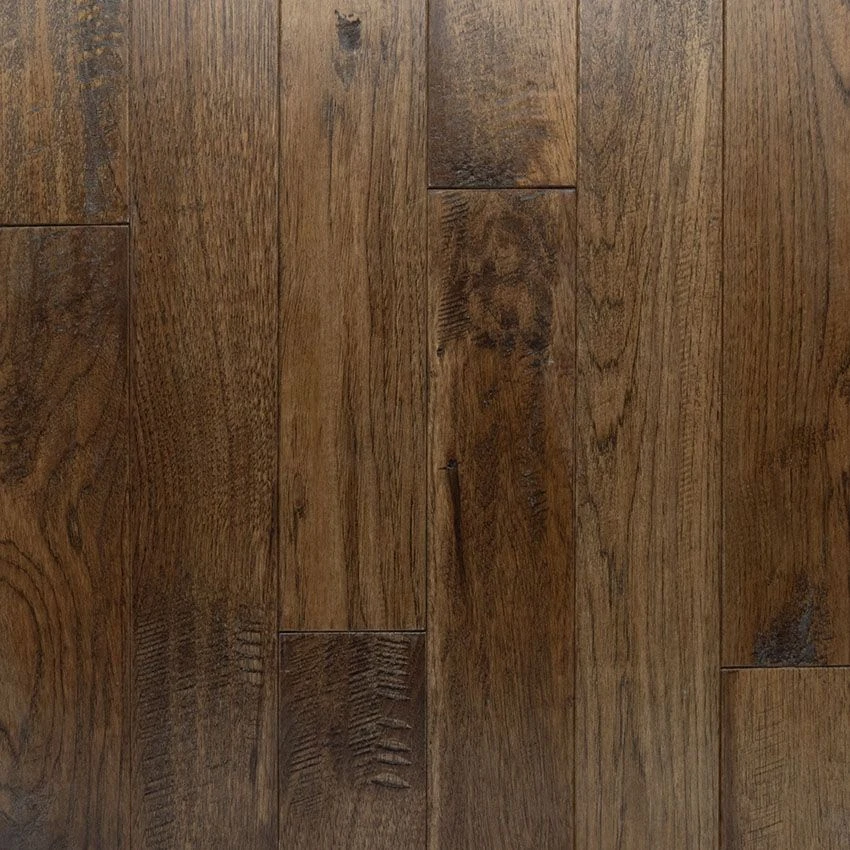
Hickory with espresso finish appeals to homeowners wanting both drama and exceptional durability. As the hardest domestic wood species, hickory resists dents and wear while its wild grain pattern creates floors with remarkable character.
The Appeal of Dark Floors in Open-Concept Homes
Dark hardwood floors do something remarkable in open-concept spaces: they ground the entire floor plan while allowing individual zones to shine. Where light floors can sometimes feel like they're floating or lacking definition, dark floors provide visual weight and gravitas.
The 2026 earth-tone palette practically begs for dark flooring. Imagine sage green cabinetry, creamy marble countertops, and brass fixtures—all anchored by rich walnut or dark-stained red oak underfoot. The dark floor becomes the foundation that ties everything together.
Dark floors also create stunning contrast. Light countertops pop against them. White walls feel brighter. The kitchen reads as intentional and curated rather than safe and expected.

The Problem Dark Hardwood Floors Have Always Had
Water, Spills, and the Kitchen Reality
Let's be honest about why dark hardwood floors have historically been the road less traveled in kitchens: they're unforgiving.
Kitchens are moisture battlegrounds. Sinks splash. Dishwashers leak. Refrigerators drip condensation. Pots boil over. Kids spill juice. Dogs track in wet paws. Every one of these incidents poses a threat to hardwood floors—and dark finishes show the evidence more readily than their lighter counterparts.
Water spots leave mineral deposits that appear as white or cloudy marks on dark surfaces. Minor warping or cupping becomes more visible against a dark background. Even dust and crumbs—relatively invisible on lighter floors—announce themselves boldly on espresso or walnut finishes.
Traditional hardwood risks in kitchens include warping (when boards curve due to moisture absorption), buckling (when boards actually lift from the subfloor), cupping (when board edges curl upward), and permanent discoloration. Any of these issues becomes a more significant aesthetic problem on dark floors because the damage disrupts the uniform, dramatic look that drew you to the finish in the first place.
This is precisely why homeowners who loved the idea of dark-stained red oak or rich walnut in their kitchens often settled for tile, vinyl, or laminate instead. The risk simply felt too high.
The Maintenance Reality for Dark Finishes
The concern about dark hardwood in kitchens has always been somewhat overblown—but not entirely without merit.
The real culprit isn't the entire kitchen. It's the concentrated wet zones: the three feet surrounding your sink, the area in front of your dishwasher, the spot where your refrigerator's water line connects. These specific areas see repeated moisture exposure that puts hardwood at genuine risk.
The rest of your kitchen? It's honestly not much different from your living room or dining area, where hardwood thrives. The occasional cooking splatter or dropped ice cube doesn't doom your floors. It's the chronic, repeated exposure in those wet zones that causes problems.
Engineered hardwood has improved moisture resistance significantly, with waterproof and water-resistant options now available. But even these advanced products can't eliminate risk entirely in areas of repeated water exposure.
What if you could simply remove those wet zones from the equation?

The Hidden Space Solution
Butler's Pantries, Sculleries, and the "Layered Kitchen" Trend
The resurgence of butler's pantries and sculleries represents one of the most practical and transformative kitchen trends in recent memory. These hidden secondary spaces—positioned adjacent to the main kitchen—are designed to handle the messy, functional work of cooking and cleanup while keeping the primary kitchen beautiful and guest-ready.
The data confirms this isn't a passing fad. The American Institute of Architects reported a 52% increase in demand for butler's pantries, prep pantries, and working pantries. Zillow noted that "scullery" is appearing in 8% more real estate listings than the previous year. Designer Ashley Macuga explained the appeal to The Kitchn: "With open-concept living, many clients want their main kitchen to look photo-ready and clutter-free."
A modern butler's pantry or scullery typically contains the elements that pose the greatest threat to your hardwood floors: the dishwasher (the most common source of kitchen water damage), a prep sink for washing produce and cleaning up, small appliances that might splatter or drip, and sometimes a secondary refrigerator or wine storage.
House Digest described sculleries as "a hidden, secondary kitchen space meant solely for food prep, cleanup, and storage." The publication noted that modern homes "prioritize cleanliness and hygiene, and this additional room can create a more hygienic buffer between food prep and socializing."
How Hidden Spaces Protect Your Dark Hardwood Investment
When you relocate the wettest activities to a hidden space with durable tile flooring, something remarkable happens: your main kitchen's moisture exposure drops dramatically.
Think about it. Without a dishwasher in your main kitchen, you eliminate the most common source of slow leaks and splash-out. Without a prep sink running constantly during meal preparation, you remove the daily splashing that accumulates over time. The remaining sink in your main kitchen—used primarily for quick hand-washing or filling a glass of water—poses minimal risk by comparison.
Your main kitchen transforms from a working laboratory into a social and entertaining space. It becomes, in essence, an extension of your living room—a place for conversation, light meal finishing, coffee making, and gathering.
This transformation makes dark hardwood not just viable but logical. That beautiful dark-stained red oak or rich walnut you've been dreaming about? It's now protected from the activities that would have put it at risk. You're no longer fighting against your kitchen's nature; you're designing with it.
The Two-Zone Flooring Strategy
Dark Hardwood in the Main Kitchen
With moisture concerns relocated to your hidden space, you're free to make bold flooring choices in your main kitchen. This is where dark hardwood truly shines.
Wide-plank dark walnut or espresso oak creates immediate drama and warmth. Designers are gravitating toward planks in the 8- to 14-inch width range because they showcase natural grain patterns more effectively and make rooms feel larger. The fewer seams, the more luxurious the floor reads.
Dark-stained red oak in wide planks offers the same dramatic impact at a more accessible price point. When red oak receives a dark walnut, jacobean, or ebony stain, its prominent grain pattern becomes a feature that adds movement and visual interest. The warmth of red oak's natural undertones prevents dark stains from reading too cold—a common concern with other species.
Herringbone or chevron patterns in dark stains have experienced a significant resurgence. These geometric layouts add sophistication and movement to a floor, elevating it from beautiful to extraordinary. Both red oak and white oak work beautifully in herringbone patterns with dark finishes, though red oak's bolder grain creates more visual drama.
Matte or satin finishes have become the preferred choice over high-gloss for both practical and aesthetic reasons. They hide minor scratches and daily wear, reduce glare (particularly important in bright kitchens), and feel more natural and contemporary. On dark floors especially, matte finishes prevent that dated "bowling alley" look.
The ultimate expression of this strategy is flowing the same dark hardwood from your living and dining areas directly into the kitchen. When the floor runs continuously through an open-concept space, it creates visual cohesion and makes the entire first floor feel expansive and intentional.
Durable Tile in the Hidden Kitchen
Your butler's pantry or scullery demands flooring that can handle constant moisture exposure—but that doesn't mean it has to be boring. In fact, designers have identified hidden spaces as the perfect opportunity for creative expression.
Interior designer Grey Joyner told Elle Decor that clients "feel emboldened to take design risks" in these secondary spaces, including "a fun tile floor or a moody paint color." Because the butler's pantry isn't the first thing guests see, homeowners feel permission to experiment.
Popular tile choices for hidden kitchen spaces include patterned cement tiles in bold geometric designs, classic checkerboard in unexpected colors (sage and cream, terracotta and ivory), terrazzo for playful texture that hides dirt beautifully, and encaustic tiles with intricate patterns.
The contrast between your sleek dark hardwood main kitchen and a personality-packed tiled pantry creates delightful surprise. Guests who venture into your hidden space discover a design moment—a reward for exploring beyond the curated public area.
This approach also makes practical sense. Tile is waterproof, easy to clean, and virtually indestructible in wet environments. It's the right material for the job. Meanwhile, your dark-stained red oak or walnut stays protected in the space where it can be properly appreciated.
The Transition: Where Dark Wood Meets Tile
The threshold between your dark hardwood kitchen and tiled butler's pantry presents a design opportunity rather than a problem.
Hexagonal tile flowing into wood planks has become one of the most popular transition treatments. The organic, irregular edge where hexagons meet straight wood planks creates visual interest and feels like intentional design.
Curved transitions soften the boundary between materials, creating a gentle flow that works particularly well in open floor plans.
Brass or bronze inlay strips lean into the transition as a feature. A thin metal strip between dark hardwood and tile reads as jewelry for your floor—a deliberate design choice that adds luxury.
The key is treating the threshold as a design element. It marks the boundary between your "experience" kitchen and your "performance" kitchen—between the space you live in and the space that works for you.
Dark Hardwood Options for 2026 Kitchens
Solid vs. Engineered Dark Hardwood
When selecting dark hardwood for your kitchen, the solid versus engineered question matters—even with a hidden wet zone handling most moisture exposure.
Engineered hardwood has become the preferred choice for kitchens, with nearly 80% of industry professionals predicting it will trend in 2026. Engineered floors feature a real wood top layer bonded to a stable, multi-layer core. This construction makes the floor significantly more resistant to humidity fluctuations and temperature changes.
As the Weles flooring blog noted, "Engineered hardwood consists of a natural top layer of wood laid on a multi-layer base. The wood is indistinguishable from solid wood in appearance, but is significantly more stable when exposed to moisture and temperature changes."
Both red oak and white oak are widely available in engineered formats with thick wear layers that allow for dark staining. For kitchens, look for engineered hardwood with at least a 3mm wear layer, which ensures durability and allows for refinishing if needed.
Solid hardwood offers its own advantages: it can be refinished many more times over its lifetime, and many homeowners prefer knowing their floor is "real wood" throughout. If you've successfully relocated water exposure to your butler's pantry, solid dark hardwood can absolutely work—particularly with today's advanced sealants.
Best Dark Wood Species and Stains for Kitchens
Red Oak with Dark Stains: The Value Leader
Red oak deserves special attention for homeowners seeking dark kitchen floors without the premium price of walnut or imported species. This abundant North American hardwood transforms dramatically under dark stains, offering character that rivals—or exceeds—more expensive options.
Why red oak works so well with dark stains:
Red oak's prominent, cathedral-style grain pattern becomes an asset rather than a liability under dark finishes. Where this bold grain can appear busy or dated with light or natural stains, dark finishes turn it into dramatic visual movement. The grain adds depth and prevents dark floors from reading as flat or monolithic.
The wood's natural pink and salmon undertones warm up dark stains beautifully. This prevents the cold, almost black appearance that can occur when staining other species very dark. Even ebony stain on red oak retains a hint of warmth that makes it more inviting.
Best stain choices for red oak:
- Ebony creates the darkest, most dramatic look. On red oak, ebony stain allows the grain pattern to emerge prominently while achieving a near-black background. The result is high-contrast floors with unmistakable character.
- Dark walnut delivers rich brown tones that feel classic and sophisticated. This stain enhances red oak's grain visibility while creating floors that read as expensive and intentional.
- Jacobean produces a medium-dark brown with excellent depth. This traditional stain has been popular for generations because it strikes the perfect balance—dark enough to make a statement, warm enough to feel inviting.
- Provincial offers a slightly lighter option that still reads as definitively dark. This stain highlights red oak's natural character while creating floors with warmth and depth.
- Custom blends allow you to achieve the exact tone you want. Many flooring professionals mix stains—combining ebony with dark walnut, for example—to create unique finishes that perfectly complement your kitchen's palette.
Practical advantages of red oak:
Beyond aesthetics, red oak offers genuine practical benefits for kitchen applications. It's slightly harder than white oak, providing excellent resistance to dents and wear. Its abundant availability in North America keeps costs reasonable. And because it's a domestic species, it's often considered more sustainable than imported alternatives.
Other Dark Wood Options
Walnut remains the gold standard for naturally dark floors. Its chocolate-brown color with subtle purple undertones requires no staining to achieve depth. Walnut is softer than oak, making it best suited for kitchens where the heaviest traffic happens in the hidden space. The payoff is incomparable natural beauty.
White oak with dark stain offers excellent durability and even stain absorption. Its closed grain structure prevents blotching, making it reliable for achieving uniform dark tones. Popular stains include ebony, dark walnut, and jacobean.
Hickory with espresso finish appeals to homeowners wanting drama and exceptional durability. As the hardest domestic wood species, hickory resists dents while its wild grain pattern creates remarkable character under dark finishes.
Smoked or fumed oak undergoes a chemical process that darkens the wood throughout—not just on the surface. This creates extraordinary depth and ensures the color won't wear away over time.
Patterns That Elevate Dark Floors
Beyond species and stain selection, the installation pattern significantly impacts how your dark floor reads.
Wide planks (8-14 inches) have become the dominant choice for contemporary kitchens. They showcase grain beautifully, create fewer visual interruptions, and make spaces feel larger. Wide-plank dark-stained red oak reads as luxurious despite being more budget-friendly than walnut.
Herringbone arranges rectangular planks at 90-degree angles to create a classic zigzag pattern. In dark finishes, herringbone adds movement and sophistication. Red oak's bold grain makes herringbone patterns particularly dramatic.
Chevron features planks cut at angles so they meet in a straight line, creating a more modern V-shape. Dark chevron floors read as contemporary and striking.
Parquet patterns have returned to favor after decades of being considered dated. In dark stains, these intricate patterns create floors that function as art installations.
Practical Considerations
Protecting Your Dark Hardwood Kitchen Floors
Even with a butler's pantry handling heavy-duty wet work, basic precautions keep your dark hardwood looking beautiful for decades.
Strategic rug placement provides crucial protection. Place washable rugs at entry points (to catch tracked-in grit that can scratch dark finishes), in front of the remaining sink, near the refrigerator, and under kitchen table seating.
Immediate spill response matters more on dark finishes. Keep a designated kitchen towel nearby for quick cleanup of any liquid that reaches your hardwood. The faster you respond, the less likely you'll see water spots.
Regular maintenance preserves your dark floor's beauty. Dust-mop or vacuum weekly to remove grit. Damp-mop periodically with a hardwood-approved cleaner. Recoat every 3-5 years as needed.
Matte finishes prove their value over time on dark floors, hiding minor scratches and wear far better than glossy alternatives.
What to Put in Your Hidden Kitchen
To fully protect your dark hardwood investment, ensure your butler's pantry contains the elements that pose the greatest moisture risk.
Essential items:
The dishwasher should absolutely be in your hidden space. It's the most common source of kitchen water damage, and relocating it dramatically reduces your main kitchen's risk exposure.
A prep sink handles the majority of kitchen water use—washing produce, cleaning cutting boards, rinsing dishes. When this activity happens on tile rather than hardwood, your floors stay protected.
An appliance garage with outlets allows you to operate potentially messy small appliances away from your beautiful floors.
Nice-to-have additions:
A secondary refrigerator removes another potential leak source. A floor drain provides ultimate protection. Wine and beverage storage keeps condensation away from your dark hardwood.
Cost Considerations
Investing in dark hardwood kitchen floors—protected by a hidden wet zone—represents a meaningful financial decision with excellent returns.
Dark hardwood flooring costs vary by species:
- Red oak (installed, stained dark): $8-14 per square foot—the most budget-friendly option for achieving dramatic dark floors.
- White oak (installed, stained dark): $10-16 per square foot.
- Walnut (installed, natural): $14-22 per square foot.
- Herringbone or chevron patterns: Add 20-30% for additional labor.
Butler's pantry ROI makes this investment smarter. Real estate experts estimate 50-70% return on construction cost at resale. More importantly, the hidden space protects your flooring investment by preventing costly water damage.
Bringing It All Together
The Design Philosophy: Less on Display, More Hidden Function
The two-zone flooring strategy reflects a broader 2026 design philosophy: curate what's visible, optimize what's hidden.
This is the essence of "quiet luxury"—the dominant design trend shaping kitchens this year. Decorilla described it well: "Designers fuse minimalist form with artisanal craft. Cabinets unify with the living space, cooktops disappear flush into countertops. Storage stays ready but out of view."
Your flooring choices embody this philosophy perfectly. The main kitchen showcases beautiful dark hardwood—whether naturally dark walnut or richly stained red oak—flowing seamlessly from adjacent living spaces. The butler's pantry handles practical reality on durable tile that can also express personality through bold patterns.
Together, these two zones create a layered kitchen that works as beautifully as it looks.
Why This Trend Has Staying Power
The hidden space revolution isn't just a passing aesthetic preference—it's a practical solution to a real problem.
It protects your investment. Premium dark hardwood represents a significant commitment. Designing your kitchen to minimize moisture exposure makes that investment dramatically more secure.
It aligns with how we live. Open-concept homes mean our kitchens are always on display. Hidden spaces let us maintain that curated appearance while still having functional, working kitchens.
It supports entertaining at home. Butler's pantries let hosts prep and clean without guests seeing the mess. Dark hardwood floors create the warm atmosphere that makes entertaining a pleasure.
Dark hardwood is timeless. Unlike trendy finishes that date quickly, dark wood floors have graced elegant homes for centuries. Dark-stained red oak or natural walnut won't look dated in five years—or fifty.
Conclusion
The return of dark hardwood floors to kitchens isn't just about following a trend—it's about smart design that finally makes these beautiful floors practical.
For too long, homeowners had to choose between the flooring they wanted (warm, rich, dramatic hardwood) and the flooring that made sense (cold, practical tile). The hidden kitchen revolution eliminates this compromise.
When your butler's pantry handles the dishwasher, prep sink, and messy realities of cooking, your main kitchen transforms into something closer to a living space. And what do we put in living spaces? Exactly the kind of stunning dark floors—whether naturally dark walnut, espresso-stained white oak, or boldly stained red oak—that make a house feel like a home.
Whether you invest in premium walnut or achieve dramatic results with dark-stained red oak at a fraction of the cost, the two-zone flooring strategy makes it possible. The performance happens behind the scenes. The experience—and those gorgeous dark hardwood floors—happen in front.
Sources
- House Digest - The Vintage Luxury Kitchen Trend Making A Comeback
- House Digest - Engineered Hardwood Kitchen Trends
- House Digest - 2026 Kitchen Flooring Trends
- Native Trails - 2025 Kitchen and Bath Design Trends
- Decorilla - Kitchen Trends 2026
- Floors USA - Kitchen & Bath Flooring Trends 2026
- Weles - Hardwood Flooring Trends 2026
- Cornerstone Remodeling - Kitchen Flooring Trends 2026
- Elmwood Reclaimed Timber - Hardwood Flooring Trends
- Heritage Hardwood - 2025 Hardwood Floor Trends & Predictions for 2026
- The Designery - Flooring Trends 2026
- Homes & Gardens - Kitchen Flooring Trends
- The Kitchn - Kitchen Trend Predictions 2026
- Livingetc - Outdated Flooring Trends
- Surfaces Galore - Pantry Room Flooring Ideas
- House Beautiful - Flooring Trends 2025
- Homes & Gardens - How Much Does A Butler's Pantry Add Value