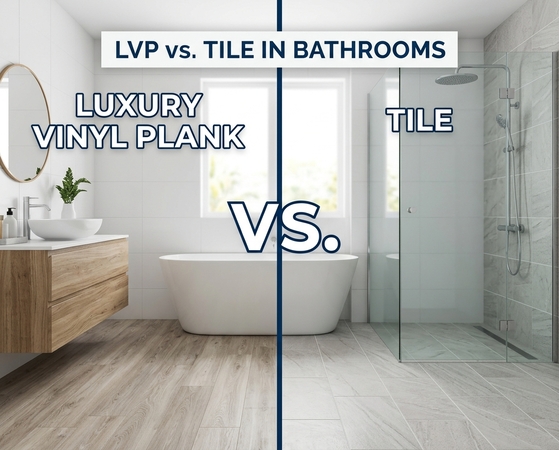
Choosing the right flooring for a bathroom remodel forces homeowners to balance aesthetic style with practical water resistance. When evaluating lvp vs tile in bathroom settings, you need a reliable surface that handles daily showers, splashing children, and steamy mirrors without warping over time. For decades, traditional ceramic and porcelain materials dominated these wet spaces as the absolute default building standard. Today, luxury vinyl plank offers a highly competitive alternative that directly challenges those old home improvement conventions. We will compare LVP and tile directly so you can make an informed financial decision for your home.
LVP vs Tile in Bathroom: Comparing the Core Differences

Luxury vinyl plank consists of multiple synthetic layers pressed together to form a highly durable flooring material. The top wear layer resists heavy scratches, while the printed vinyl layer provides realistic wood or stone visuals. Below that decorative surface, a rigid core provides structural stability and stops the planks from expanding or contracting.
Tile relies on natural clay fired at extreme temperatures to create a remarkably hard, impervious walking surface. Professional installers must lay these rigid ceramic pieces over a perfectly level subfloor using highly specialized mortar mixtures. They then carefully fill the gaps between each individual piece with colored grout to seal the entire floor.
Both materials offer distinct structural advantages for vinyl plank flooring bathroom projects or traditional ceramic layouts across the United States. Your final choice ultimately depends on your available budget, expected installation timeline, and long-term daily maintenance preferences. Let us break down exactly how these two popular options perform under actual high-moisture household conditions.
Best Waterproof Bathroom Flooring: Understanding Luxury Vinyl Plank
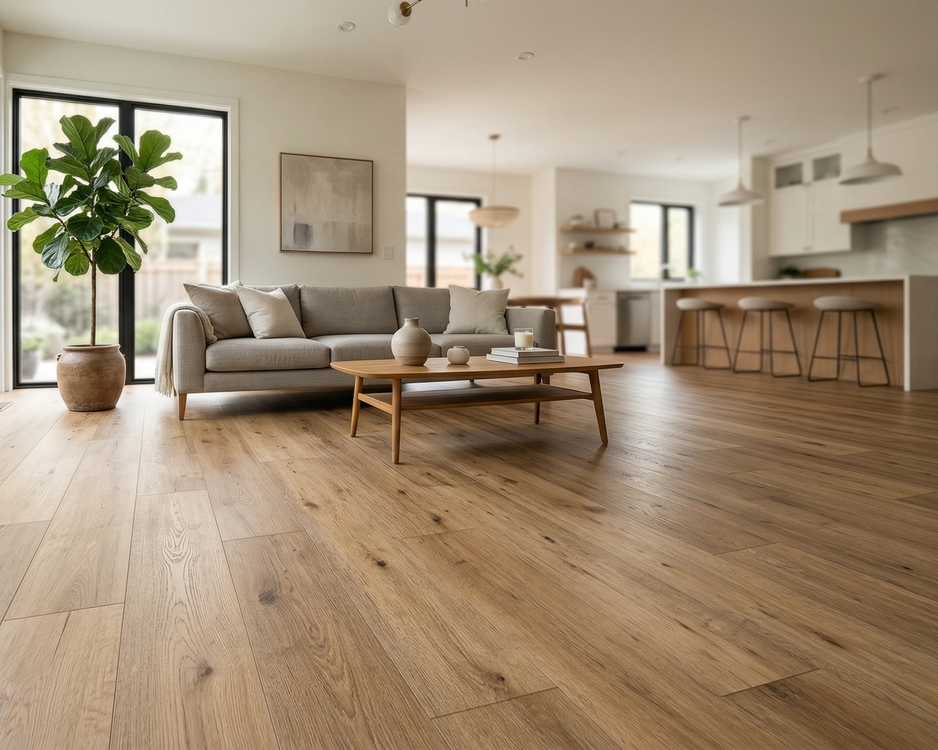
LVP brings the warmth and visual texture of natural building materials into high-moisture areas without the associated risks. Modern manufacturing techniques create deep textures that closely mimic the organic grain patterns found in natural oak boards. This advanced engineering gives your bathroom a cozy, inviting atmosphere that cold ceramic tiles simply cannot ever replicate.
The synthetic material feels significantly softer and noticeably warmer under bare feet on chilly winter mornings. Dropping a heavy glass cosmetics bottle on luxury vinyl plank rarely results in shattering or permanent floor damage. This forgiving physical nature makes it a highly practical choice for active family bathrooms and aging-in-place renovations.
Classic Bathroom Floor Tile: The Traditional Appeal of Ceramic and Porcelain Tile
Tile brings a classic, highly permanent feel to any residential bathroom space undergoing a major structural renovation. Homeowners often appreciate the massive variety of geometric shapes, bright colors, and intricate mosaic patterns available locally. A carefully executed porcelain tile installation can easily last for several decades if you maintain the grout lines properly.
However, this extreme permanence comes with significant structural requirements and a grueling, messy installation process. Your house must possess a completely stiff wooden subfloor to prevent the heavy mortar from cracking under foot traffic. The hard surface also amplifies room sound and feels freezing cold unless you install expensive radiant heating mats.
- LVP offers a warm, forgiving surface that mimics natural wood without the typical moisture risks.
- Tile provides a classic aesthetic but requires a perfectly stiff subfloor and regular grout maintenance.
- Luxury vinyl plank generally feels much softer underfoot and resists blunt impact damage better than ceramics.
Waterproof Performance: Comparing Moisture Resistance of Luxury Vinyl Plank vs Tile

Bathrooms demand flooring materials that can survive constant exposure to standing water and heavy daily room humidity. Both porcelain tile and luxury vinyl plank claim waterproof status, but they handle moisture in fundamentally different mechanical ways. Understanding these distinct mechanical differences helps prevent catastrophic water damage to your home's underlying structural subfloor.
Tile creates an effective waterproof barrier only if the flooring installer applies the grout and sealants flawlessly. If the grout cracks or chemically degrades over time, water easily seeps down into the vulnerable subfloor below. This hidden trapped moisture often leads to severe mold growth and incredibly expensive structural joist repairs down the road.
Luxury vinyl plank creates a tightly interlocking floating floor that naturally repels standing water from the top down. The synthetic planks themselves will never absorb moisture, structurally swell, or rot under normal residential bathroom conditions. You simply wipe up large spills and tub splashes without worrying about liquid penetrating through a porous grout line.
SPC vs WPC Cores: Choosing the Best Vinyl Plank Flooring for Bathroom Humidity
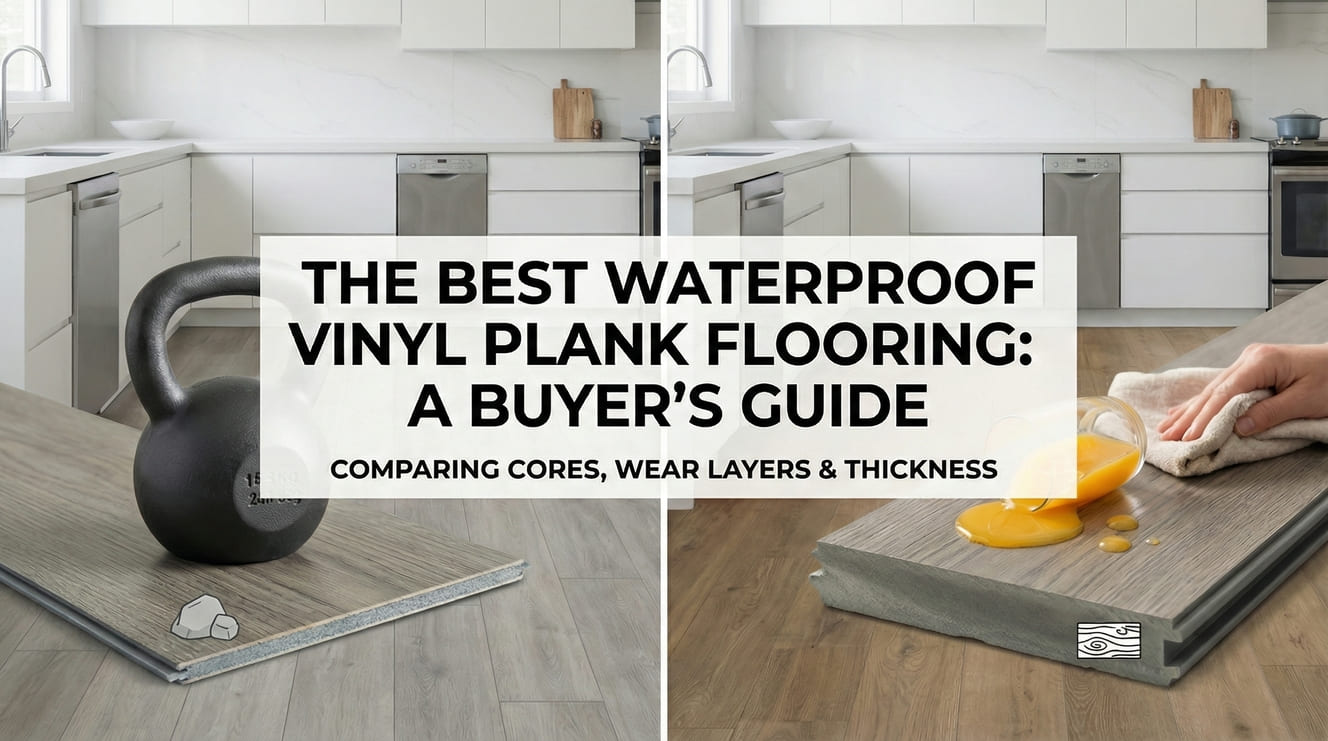
You must pay close attention to the internal core construction when selecting vinyl flooring for a wet bathroom. SPC flooring features a solid polymer core, commonly known as SPC, which is highly durable and completely waterproof. This rigid stone-plastic composite successfully resists heavy denting from heavy clawfoot tubs or dropped metal bathroom scales.
A WPC vinyl plank floor utilizes a wood polymer core instead of a heavy stone mixture. As the name implies, this wood-based core can react to water or moisture more similarly to engineered hardwood. If standing water eventually penetrates the locking seams, a WPC floor might structurally swell or permanently warp over time.
Therefore, you should always select an SPC core over a WPC core for full bathroom flooring installations. The solid polymer construction guarantees your beautiful floor will survive major plumbing leaks and heavy daily shower steam. [INTERNAL_LINK: Browse our waterproof SPC flooring options] to find the perfect durable match for your upcoming bathroom remodel.
Always verify the wear layer thickness when purchasing SPC luxury vinyl plank for a residential bathroom. A 12-mil or 20-mil wear layer provides excellent protection against scratching from pets and heavy foot traffic.
Installation Costs: DIY Potential of Luxury Vinyl Plank vs Ceramic Tile
Labor expenses often dictate the true final cost of any major residential home improvement project. You will find LVP is much easier to install and requires significantly fewer expensive specialized power tools. This streamlined installation process dramatically reduces the total amount of money leaving your personal bank account.
Professional Installation Fees
Hiring a licensed contractor to lay ceramic tile involves multiple days of loud, messy, and highly expensive labor. Workers must install heavy cement board, mix dusty mortar, cut rigid ceramics with a wet saw, and apply grout. These tedious manual steps drastically drive up the high cost of tile installation fees across the country.
Conversely, you will often get quoted a cheaper price for a professional flooring installer to lay LVP correctly. A skilled professional crew can typically finish laying an average-sized residential bathroom floor in just a few hours. They simply score the vinyl planks with a utility knife and snap them together over the existing flat subfloor.
Taking the DIY Bathroom Flooring Route
LVP is much more DIY friendly than tile for the average weekend warrior tackling a bathroom update. You do not need to mix messy chemical compounds or rent heavy wet saws to achieve professional results. A basic measuring tape, a sharp metal utility knife, and a non-marring rubber mallet are usually enough tools.
Tile installations demand a remarkably high level of technical skill to keep the intersecting grout lines perfectly straight. One small mathematical miscalculation can ruin the entire visual layout and waste hundreds of dollars in raw materials. Most homeowners quickly realize that laying ceramics requires far too much specialized industry knowledge for a quick weekend project.
How to Prep a Bathroom for LVP Subfloor Preparation
Remove the Baseboards and Old Flooring
Carefully pry off the existing trim and completely scrape away any leftover adhesive or loose debris.
Level the Wooden Subfloor
Fill any low spots with a cement-based leveling compound and aggressively sand down high wooden joints.
Undercut the Door Jambs
Use an oscillating power saw to trim the bottom of the door frames for a seamless finish.
Long-Term Durability and Grout Maintenance: Which Bathroom Floor Lasts Longer?
A bathroom floor must survive heavy daily family use while remaining relatively easy to clean and sanitize. Luxury vinyl plank requires practically nothing more than a damp microfiber mop and a mild, pH-neutral liquid cleaner. You never have to scrub dirty, stained grout lines with a stiff toothbrush or apply harsh chemical sealants.
Tile surfaces hold up incredibly well against sharp scratches, but the porous grout remains highly vulnerable to dark staining. Hard water mineral deposits, dark makeup spills, and chemical hair dye can permanently discolor a light-colored grout line. You must actively clean and reseal these vulnerable lines every single year to maintain a clean, sanitary appearance.
With its highly durable SPC core, LVP strongly resists heavy impacts that would easily crack a traditional porcelain tile. Dropping a heavy glass bottle of shampoo might shatter a ceramic piece, requiring a tedious extraction and replacement process. Luxury vinyl simply absorbs the blunt impact, proving itself to be a longer lasting option for busy modern households.
- SPC luxury vinyl plank provides superior waterproof protection compared to WPC or poorly sealed tile.
- Professional LVP installation costs significantly less due to the fast, mortar-free interlocking process.
- Maintaining vinyl flooring requires basic sweeping and mopping, completely eliminating tedious grout cleaning.
Budget Breakdown: Bathroom Flooring Options and Overall Value Comparison
Calculating the true financial cost of a bathroom renovation requires looking closely at both raw materials and professional labor. While cheap ceramic pieces might seem inexpensive initially, the required mortar, backer board, and specialized grout quickly add up. Once you factor in a contractor's expensive hourly labor rate, the total final price tag often shocks homeowners.
With Really Cheap Floors pricing on LVP, you can secure premium waterproof materials at a fraction of the cost. Buying directly from a discount retailer frees up your renovation budget for better vanities or upgraded brass plumbing fixtures. You secure a high-end luxury aesthetic without draining your entire savings account on hidden installation supplies and labor fees.
Given the high cost of tile installation fees, it very well could be cheaper to use LVP instead. You get a completely waterproof, highly durable surface that mimics expensive natural hardwood materials perfectly without the moisture risks. This incredible overall value proposition makes luxury vinyl the absolute smartest financial choice for modern residential bathroom updates.
Frequently Asked Questions
Can I put luxury vinyl plank over existing bathroom tile?
Yes, you can install LVP directly over existing bathroom tile if the ceramic surface is completely flat. You may need to fill wide grout lines with a leveling compound to prevent the vinyl from eventually sagging.
Does LVP add resale value to a home?
Luxury vinyl plank adds excellent resale value because modern buyers appreciate waterproof, low-maintenance flooring. It provides a clean, updated look that strongly appeals to most prospective homeowners touring the property.
How do I seal the edges of LVP around a bathtub?
You should leave a small expansion gap around the tub and fill it with 100% silicone caulk. This creates a flexible, waterproof barrier that prevents moisture from reaching the vulnerable subfloor below.
Is WPC vinyl suitable for a bathroom?
You should avoid WPC in full bathrooms because its wood polymer core can swell if exposed to heavy moisture. An SPC solid polymer core provides a much safer, fully waterproof solution for these wet spaces.
Will bathroom humidity damage luxury vinyl flooring?
Normal bathroom humidity will not damage high-quality SPC luxury vinyl plank. The synthetic materials do not absorb moisture from the air like natural wood boards do.
Final Verdict: Choosing the Best LVP vs Tile in Bathroom Renovations
Replacing your bathroom flooring requires a careful, honest evaluation of long-term durability, moisture resistance, and your overall project budget. Traditional ceramics still hold a valid place in historic homes, but they demand rigorous maintenance and expensive professional labor. The rigid subfloor requirements and freezing cold surface temperatures often frustrate homeowners who want a warm, comfortable daily space.
Luxury vinyl plank solves almost every major problem currently associated with outdated bathroom flooring materials. The solid polymer core provides absolute waterproof protection against overflowing residential toilets and heavy steamy daily showers. You enjoy the beautiful visual texture of natural wood without ever worrying about warping, swelling, or catastrophic water damage.
Ultimately, skipping the messy mortar and choosing a floating floor keeps significantly more money in your personal bank account. The streamlined click-lock installation process and minimal daily maintenance requirements make this synthetic material an absolute winner. Upgrading to LVP gives your home bathroom a stunning visual facelift that will easily survive decades of daily family life.