


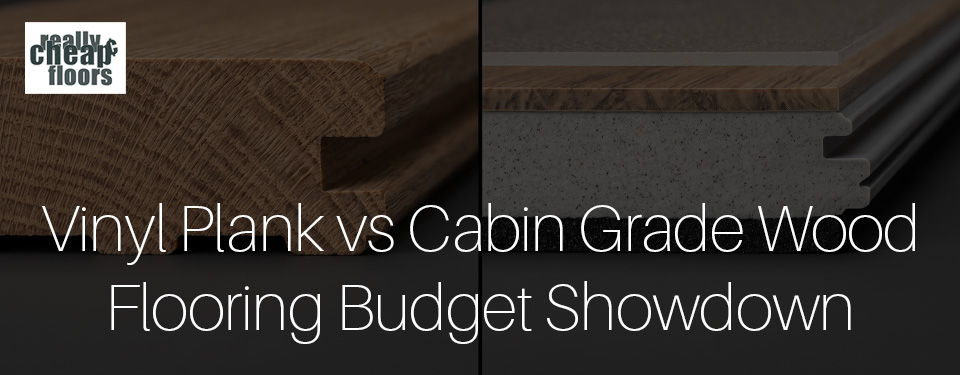
1st Quality Vinyl vs Cabin Grade Wood: Budget Showdown
When folks come to us asking about 1st Quality Vinyl vs Cabin Grade Wood: budget showdown pricing, they usually think it's a simple math problem. It isn't, and the numbers prove it: a recent breakdown from Cost to Renovate found that luxury vinyl plank saves homeowners 40 to 50 percent compared to hardwood on a typical 500 square foot project, sometimes as much as $3,500. That's real money, but it's not the whole story, and we're going to walk you through it the way we'd explain it to a customer standing in our warehouse.
Key Takeaways
- 1st Quality Vinyl is cheaper upfront. Waterproof LVP like our Peachtree Classic line starts as low as $1.49 a square foot.
- Cabin Grade Wood is real hardwood at a discount. Same tree, same finish, just more character (translation: some short boards and mineral streaks).
- Solid hardwood costs less per year of life. A floor that lasts 50 to 100 years spreads its cost thinner than one that lasts 15.
- Vinyl wins for rentals, flips, and basements where waterproofing matters more than resale bragging rights.
- Cabin Grade Wood wins for forever homes where you want real wood you can sand and refinish for decades.
- Most big-box stores won't touch Cabin Grade because the profit margins are too thin for their model. That's exactly why we carry so much of it.
- Browse our full Cabin Grade flooring collection or our waterproof vinyl plank collection to compare in-stock inventory side by side.
1st Quality Vinyl vs Cabin Grade Wood: What You're Actually Comparing
Let's clear something up before we go any further. "1st Quality" on vinyl usually just means the wear layer and finish came out of the factory without a defect flagged.
"Cabin Grade" on wood means the exact same board, milled from the exact same tree, got pulled aside because of a knot, a color variation, or a shorter length. Buying our Blue Label cabin grade gives you the exact same material and finish as 1st Quality for a fraction of the cost. It ain't all pretty, but it has character.
Vinyl doesn't really have a "cabin grade" tier the way wood does, because it's manufactured, not milled from a living thing. That's the first big difference in this budget showdown, and it changes everything about how you should shop.
What Cabin Grade Wood Actually Means (And Why It's So Cheap)
Cabin Grade is manufacturer overrun. Mills produce far more board footage than the "perfect" grade can absorb, so the character-heavy pieces get bundled and sold at a steep discount.
We are one of the largest liquidators of Cabin Grade flooring in the country, and we bought a lot of it as ungraded, which means the manufacturer made no promises as to what was in the boxes. Expect lots of short pieces and you will not be disappointed. Expect knots, mineral streaks, and color swings, and you'll be even happier once you see the price.
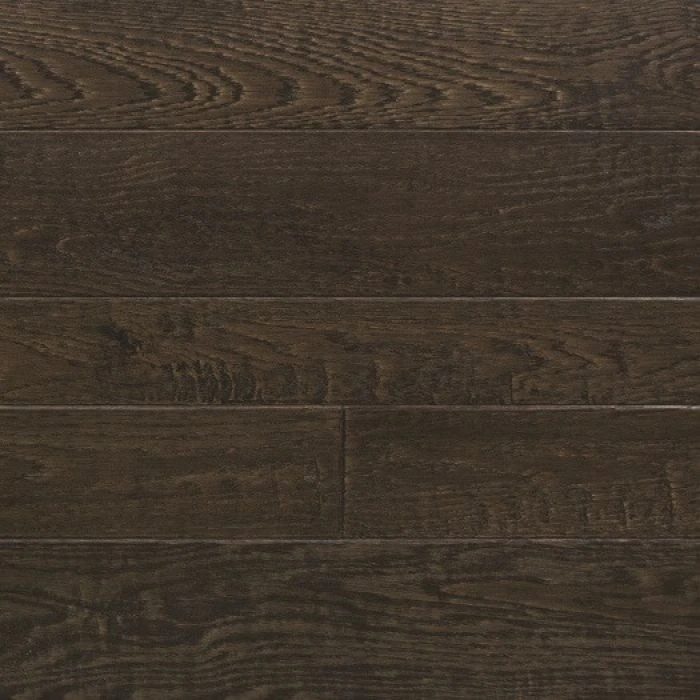
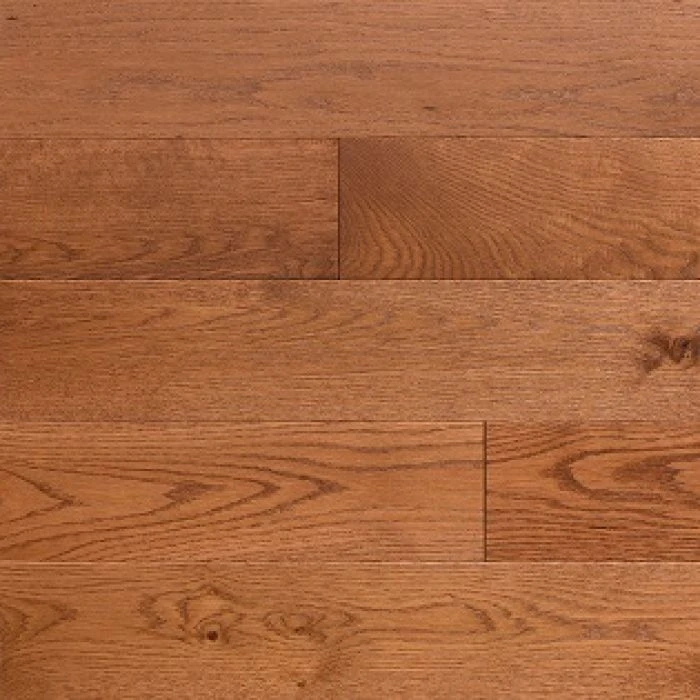
Take a look at our Winchester Charcoal 3.25" Cabin, a dark, moody oak that hides scuffs better than almost anything in our warehouse. Or the Winchester Provincial 3.25" Cabin, a lighter option that still gives you real solid hardwood underfoot for cabin grade money. Both are the same solid oak you'd pay full price for in the 1st Quality bin, just with a few more short boards mixed in.
1st Quality Vinyl: The Waterproof Contender
Vinyl doesn't play the "grade" game the way wood does. What it does bring to the budget showdown is waterproofing, click-lock installation, and a price that undercuts even Cabin Grade Wood in a lot of cases.
Our Johnson City Rocky Fork comes with a 20 mil wear layer, a heavy-duty spec that holds up in high-traffic homes and rentals where tenants aren't exactly babying the floor. That thicker wear layer matters if you've got dogs tracking mud across the kitchen or kids dragging toy bins down the hallway.
On the lighter end, the Peachtree Classic Dusty Gray runs $1.49 a square foot, and the Peachtree Classic Whiskey Barrel carries a sale price down to $1.49 from its regular $2.49. That's about as close to "killer value" as vinyl gets.
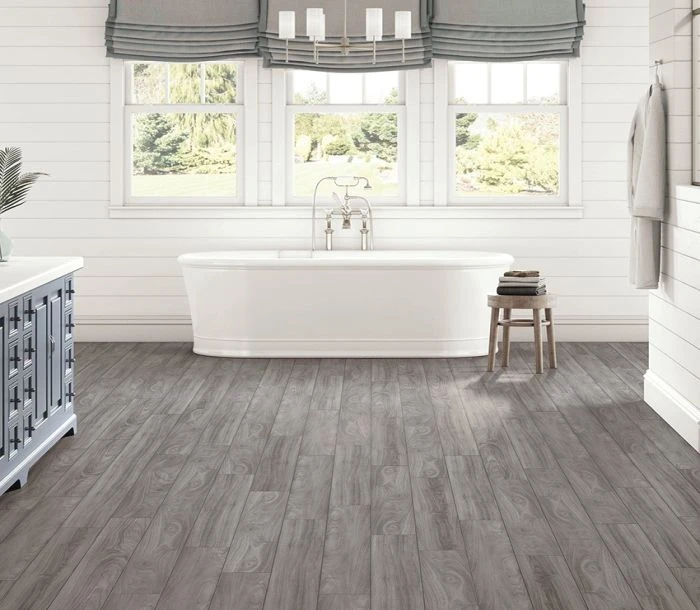
For folks who want the vinyl look with more heft, the Coretec Pro Plus XL Enhanced Berlin Pine uses a solid waterproof core that stands up better in kitchens and basements than the cheapest sheet vinyl on the market. It's a step up in price, but still nowhere near solid hardwood territory. Check our full vinyl plank flooring collection for the whole lineup.
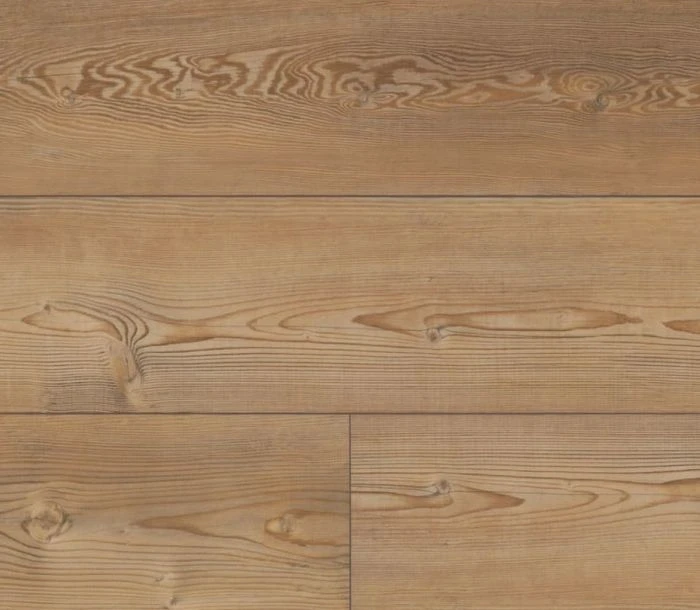
1st Quality Vinyl vs Cabin Grade Wood: The Real Price Comparison
Here's a side-by-side using actual products from our floor, not made-up numbers pulled from a marketing brochure.
| Product | Type | Price (per sq ft) |
|---|---|---|
| Peachtree Classic Dusty Gray | 1st Quality Vinyl | $1.49 |
| Peachtree Classic Whiskey Barrel | 1st Quality Vinyl (sale) | $1.49 |
| Country Strip Hickory Saddle | Mill Run Hardwood | $2.69 |
| Country Low Gloss S Hickory Natural | Cabin Grade Hardwood | $3.69 |
| Country Low Gloss S Hickory Ember | Cabin Grade Hardwood | $3.69 |
| Ambient Oak Gunstock | Engineered (Builder A) | $2.49 |
| Pub Scrape Royal Brown | Engineered | $2.89 |
Notice that vinyl still comes in under Cabin Grade Wood on price. That gap is real, and it's why so many landlords go vinyl first without asking any more questions.
But price per square foot isn't the same thing as price per year of comfort, and that's where this budget showdown gets interesting.
Why Cabin Grade Wood Wins the Long Game
Solid hardwood, cabin grade or not, can be sanded and refinished over and over. Vinyl cannot. Once the wear layer scratches through, you're replacing the plank, not buffing it out.
That's the math that big-box stores don't put on their sample boards. A $3.69 cabin grade floor that lasts three generations beats a $1.49 vinyl floor that gets torn out in fifteen years, dollar for dollar, over the long haul.
We're not knocking vinyl here, we're just being straight with you. If you're staying in the house, Cabin Grade Wood is the better long-term bet. If you're not staying, keep reading.
Where 1st Quality Vinyl Actually Beats Cabin Grade Wood
There are places wood, cabin grade or 1st quality, just doesn't belong. Basements, bathrooms, and rentals with unpredictable tenants top that list.
Vinyl is 100 percent waterproof, click-lock, and forgiving of a less-than-perfect subfloor. Products like our Johnson City Rocky Fork with its 20 mil wear layer are built for exactly this kind of "life happens" environment where laundry baskets get dragged and muddy paws are a daily occurrence.
- Rentals: Vinyl survives tenant turnover better than any wood grade.
- Basements: Moisture kills wood. Vinyl doesn't care.
- Flips on a deadline: Click-lock installs faster than nail-down hardwood, period.
If the flip must have solid hardwood for the listing photos, you should never, ever pay full price. That's exactly what our Cabin Grade inventory exists for.
Cabin Grade Wood Picks Worth Your Attention
We keep a rotating stock of cabin grade solid hardwood because most stores flat-out refuse to carry it. The profit margins are too thin for a big-box model built on volume and markup.
The Glossy Gunstock 2.25" Cabin is a classic warm oak, though we'll be honest: the shiny finish doesn't hold up in a "life happens" type of home. Living on a mirror isn't practical, and in 2026, it isn't stylish either, which is exactly why so many of our customers are steering toward our low-gloss cabin grade lines instead.
Speaking of which, the Country Low Gloss S Hickory Driftwood gives you that muted, modern gray-brown look with a finish that actually camouflages daily wear instead of showing off every scratch under the light. Pair it with the Hickory Ember at $3.69 a square foot if you want something darker.
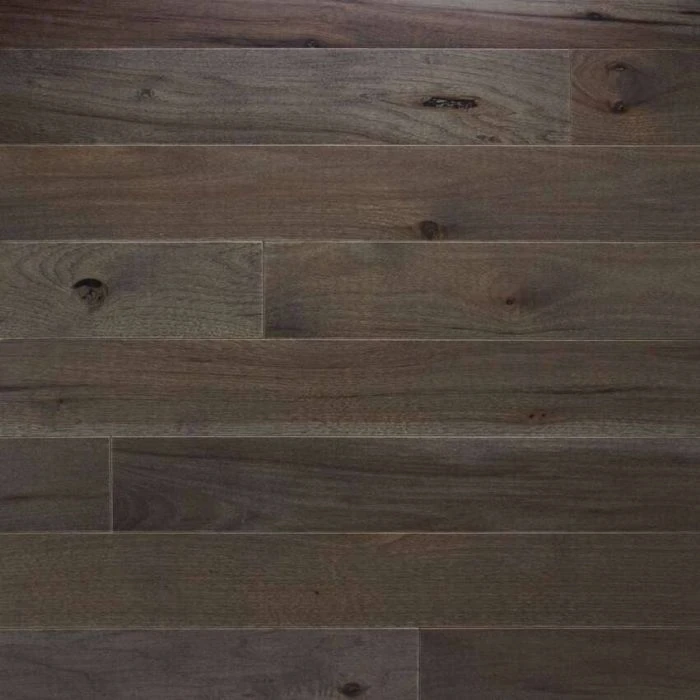
You can also look at the whole rotation on our prefinished solid hardwood collection page, since Cabin Grade inventory shifts as new mill runs come in.
Engineered Hardwood: The Middle Ground Most People Skip
If you're stuck between vinyl and solid cabin grade, engineered hardwood sits right in the middle, and it deserves a mention in any honest budget showdown.
Our Pub Scrape Royal Brown runs $2.89 a square foot with a rustic hand-scraped finish, while the Ambient Oak Gunstock Builder A comes in at $2.49. Both give you a real wood wear layer bonded to a stable plywood core, which handles moisture and temperature swings better than solid wood while still letting you refinish it once, maybe twice, down the road.
Keep an eye on our Dogwood Winston 7.5" 1st Quality Discontinued run too. Discontinued colors run $2.59 to $2.99 a square foot, and once it's gone, it's gone. Check the engineered hardwood collection before deciding, because these truckload deals move fast.
Which Side Wins the Budget Showdown for Your Project?
This isn't a one-size-fits-all answer, and anybody who tells you it is trying to sell you something you don't need.
If you're flipping a house on a deadline and the buyer just wants the listing to say "hardwood," Cabin Grade solid wood at $3.69 a square foot beats paying full 1st Quality price every single time. If the property is a rental with tenant turnover every year or two, 1st Quality Vinyl wins on durability against water and abuse, full stop.
That number alone tells you why we push Cabin Grade so hard for homeowners planning to stay put. Vinyl gives you zero refinishing upside. Real wood, even the character-heavy stuff with a few short boards mixed in, gives you a floor you can sand back to life every decade or so instead of ripping out and replacing.
Expert estimates on cost savings choosing cabin grade wood over premium flooring
The Bottom Line on Buying Smart, Not Just Cheap
The Cook family has been in this industry for 50 years, and if there's one thing we've learned it's that regular folks get burned when they only compare the sticker price. Remember, cheap flooring is our middle name, and this guide is going to show you how to get killer value without the big-box markups, whether that means a pallet of Cabin Grade oak or a truckload of waterproof vinyl.
Walk through our wood flooring collection and our solid hardwood collection side by side with the vinyl aisle, and you'll start to see exactly where your money goes further.
Conclusion
There is no universal winner in the 1st Quality Vinyl vs Cabin Grade Wood budget showdown, and we'd be lying to you if we said otherwise. Vinyl wins on upfront price and waterproofing. Cabin Grade Wood wins on lifespan, refinishing potential, and the kind of resale value that comes from putting real hardwood underfoot.
Pick based on how long you're keeping the floor, not just what the price tag says today.
Frequently Asked Questions
Is Cabin Grade wood actually the same quality as 1st Quality wood?
Yes, in terms of material and finish, Cabin Grade is the exact same board as 1st Quality. The only difference is cosmetic variation like knots, mineral streaks, or shorter board lengths that got it pulled from the top grade.
Which is cheaper, 1st Quality Vinyl or Cabin Grade Wood?
1st Quality Vinyl is almost always cheaper upfront, often starting around $1.49 a square foot compared to $3.69 for Cabin Grade solid hardwood. Over a 50 to 100 year lifespan, though, hardwood often costs less per year because it can be refinished instead of replaced.
Is vinyl flooring worth it in 2026?
Vinyl is worth it in 2026 for rentals, basements, and any space where water resistance matters more than resale value or refinishing potential. It is not the better long-term choice for a forever home where you plan to stay for decades.
Can Cabin Grade wood be refinished the same as 1st Quality wood?
Yes, Cabin Grade wood refinishes exactly like 1st Quality wood since it comes from the same species and thickness. Some of the character marks, like deeper knots, may become slightly more visible after a heavy sand, but the wood performs identically.
Should house flippers choose vinyl or Cabin Grade wood?
Flippers on a tight deadline usually do better with vinyl because it installs faster and handles rough subfloors. If the listing needs real hardwood for the photos, Cabin Grade wood delivers that at a fraction of full 1st Quality pricing.
Does Cabin Grade wood look bad once it's installed?
It ain't all pretty, but it has character, and most of the visual variation blends in once the whole floor is installed and furniture goes in. Low-gloss cabin grade finishes, in particular, do a good job of hiding the natural color swings between boards.
What is the biggest downside of 1st Quality Vinyl compared to Cabin Grade Wood?
The biggest downside is that vinyl cannot be refinished once the wear layer scratches through, unlike Cabin Grade wood which can be sanded down repeatedly. That means vinyl typically gets replaced entirely after 10 to 20 years, while a hardwood floor can last multiple generations with proper care.


