If you have been shopping for new floors recently, you may have noticed that some products are getting more expensive. The question on every homeowner's mind is how tariffs will impact the flooring industry, and whether those costs will keep climbing through 2026 and beyond.
The answer depends on where your flooring comes from, what it is made of, and who you buy it from. Really Cheap Floors at reallycheapfloors.com is positioned to keep costs low by sourcing 90% of our stock from manufacturers right here in the United States.
Trade policy has been shifting rapidly since early 2025. The market for floors sits at the intersection of lumber, resin, ceramic, and engineered wood, and each of those raw material categories has its own tariff exposure that homeowners need to understand before making a purchasing decision.
Although the Supreme Court struck down the IEEPA-based duties in February 2026, Section 232 duties on wood products and the Section 122 baseline remain in effect. That means tariffs will continue to weigh on imported product for the foreseeable future.
What Consumers Should Know About Rising Costs
Whether you are renovating a single room or outfitting an entire home, consumers shopping for imported product face significantly higher sticker prices than those buying domestically manufactured alternatives.
Several layers of import tariffs are stacked on top of one another right now, including Section 232 duties on softwood lumber, Section 301 duties on Chinese goods dating back to 2018, and the newer Section 122 baseline that replaced the invalidated IEEPA orders.
The market has been impacted by rapid policy changes, with rates shifting sometimes week to week. That volatility has made it extremely difficult for importers to set stable pricing.
Here is a summary of the key trade actions currently affecting floor covering products.
| Authority | Products Affected | Rate | Status (May 2026) |
|---|---|---|---|
| Section 232 (Wood) | Softwood timber and lumber | 10% | Active |
| Section 301 (China) | LVP, plywood, engineered wood | 25%+ | Active |
| Section 122 (Global) | Nearly all imports | 10–15% | Active (150-day window) |
| IEEPA (Struck Down) | Broad goods from China, Canada, Mexico | Up to 145% | Invalidated Feb 2026 |
| Anti-Dumping / CVD | Chinese plywood, cabinets | Varies | Active |
The combined effect of these duties means that any retailer relying on chinese imports faces extraordinary cost pressure. Products sourced from China can see combined rates well above 40% when multiple duty layers are stacked together.
Even after the Court struck down the IEEPA orders, the administration pivoted within hours to a new global baseline under Section 122. That pivot kept increased prices in place for most imported goods across every major floor covering category.
For homeowners, the takeaway is simple. Flooring prices on imported goods carry more hidden costs than ever before, and every duty layer eventually shows up on the price tag.
Understanding Price Increases by Product Type
Here is how different floor covering categories are being affected right now.
| Product Type | Primary Duty Exposure | Estimated Effect |
|---|---|---|
| Solid Hardwood | Section 232 on softwood lumber | 5–10% increase |
| Engineered Hardwood | Section 301 + Section 122 | 10–25% on imports |
| Luxury Vinyl Plank | Section 301 on Chinese PVC | 15–30% on imports |
| Laminate Floors | Section 232 + Section 122 | 10–20% on imports |
| Ceramic and Porcelain | Section 122 baseline | 10–15% on imports |
Shoppers looking at lvt or luxury vinyl plank from import-heavy retailers may encounter markups of 15% or more compared to early 2024 pricing.
Imported laminate faces a similar trajectory, especially when sourced from factories in Southeast Asia where combined duties push landed costs well above pre-2025 levels.
Even tile from Spain, Italy, or China now carries the Section 122 baseline duty on top of any existing anti-dumping orders, making domestic ceramic a more competitive option than it has been in years.
The good news is that American-made options exist across every major category, from solid wood hardwood flooring to luxury vinyl to ceramic, and those domestic products are not subject to import duty markups.
The Role of Chinese Imports in the Current Market
China has been one of the largest exporters of floor coverings to the United States for over a decade. The industry relied heavily on Chinese factories offering aggressive pricing on engineered wood, rigid core plank, and porcelain goods.
When higher tariffs hit those product lines starting in early 2025, the economics of importing from China shifted dramatically. Section 301 duties of 25% or more have been in place since 2018, and additional layers were piled on through 2025.
Distributors who had warehouses full of Chinese-made product suddenly faced severe margin compression. Some absorbed the added cost, while others began passing the burden to retailers and homeowners.
Data from the Decorative Hardwoods Association estimates that underpriced plywood from Asia represents roughly 80% of the U.S. market, illustrating how exposed many flooring manufacturers remain to overseas sourcing disruptions.
- Section 301 duties of 25%+ on Chinese goods remain unchanged after the Supreme Court ruling
- Anti-dumping and countervailing duties add additional layers on Chinese plywood and related wood products
- The Section 122 baseline of 10–15% applies on top of all existing China-specific duties
Really Cheap Floors recognized years ago that relying on Chinese product was a risky strategy for any retailer in the flooring industry. We aim to sell product made in the USA, which insulates our customers from this turbulence.
How the Supply Chain Is Shifting Under New Trade Pressure
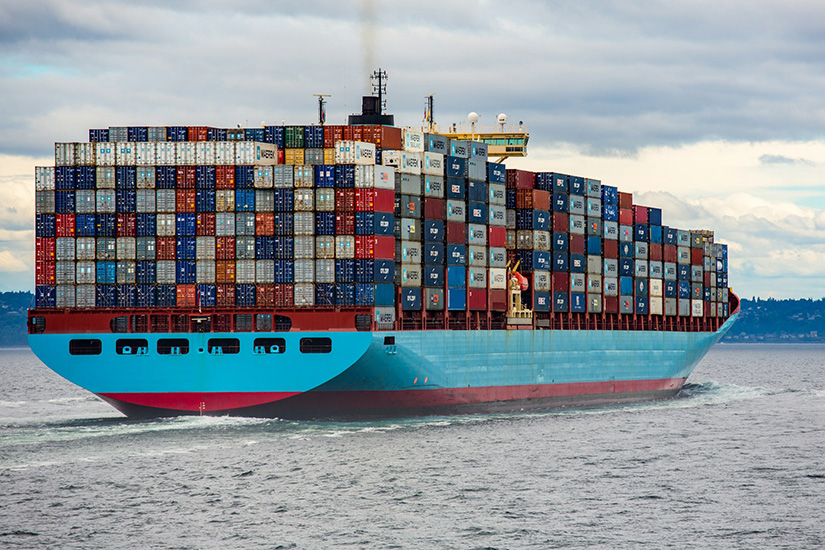
The supply chain for imported floor coverings runs through international shipping lanes, port terminals, customs processing, and inland freight networks. Every duty adjustment introduces paperwork, delays, and uncertainty at each of those stages.
Major producers have begun diversifying their sourcing to reduce the impact of trade volatility. Shaw Industries invested $90 million to more than double its domestic SPC and LVP production capacity at its Ringgold, Georgia facility.
These investments signal a structural shift that could change the competitive landscape for years to come. However, factories do not materialize overnight, and retooling existing lines requires significant capital and time.
- Domestic producers are ramping up capacity but cannot yet replace the full volume of imported product
- Shipping costs from alternative Asian suppliers are often higher than established Chinese routes
- Customs processing times have increased due to rapidly changing duty classifications
- Inventory planning has become more difficult as rates shift with little advance warning
At Really Cheap Floors, our sourcing model eliminates these cost pressures entirely. We pick up inventory directly from U.S.-based sources or have it shipped from inside the country to our warehouse in Murphy, North Carolina.
What Rising Flooring Prices Mean for Your Budget
For homeowners planning a renovation, every tariff layer adds a percentage that shows up in the final project cost. Floor coverings account for roughly 3.6% of a typical construction project budget, meaning duty-driven markups have a measurable effect on overall spending.
The practical result is that many homeowners are experiencing unexpected price increases when they request quotes from retailers who depend on imported inventory. A project quoted at one number in 2024 may now come in 10–25% higher.
- Imported engineered hardwood and luxury vinyl plank face the steepest combined duty burdens
- Domestic solid hardwood has seen only modest, inflation-driven adjustments
- Ceramic and porcelain from duty-heavy countries are losing ground to U.S.-made alternatives
- Buying from a domestically sourced retailer can save 10–25% compared to import-dependent competitors
The Supreme Court Ruling and What It Means for Hardwood and Beyond
On February 20, 2026, the U.S. Supreme Court delivered a landmark decision in Learning Resources, Inc. v. Trump. In a 6-3 ruling, the Court held that the International Emergency Economic Powers Act does not grant the president authority to impose duties on imports.
The decision invalidated the sweeping IEEPA-based duties that had been applied to imports from Canada, Mexico, China, and most other countries since early 2025. The government had collected an estimated $166 billion from more than 330,000 businesses, and the Court returned the case to the lower courts to address refunds.
However, the ruling did not end all trade duties. Within hours, the administration announced replacement measures under Section 122 of the Trade Act of 1974 at 10–15%. Those Section 122 duties are authorized for 150 days, expiring around late July 2026, and twenty-three states have filed suit to challenge them.
Meanwhile, Section 232 duties on steel, aluminum, copper, and wood products remain fully in effect, as do the longstanding Section 301 duties on Chinese goods that have been active since 2018.
- Section 232 duties on softwood lumber at 10% remain active and could expand to hardwood products after the Commerce Department's October 2026 review
- Section 301 duties on Chinese products at 25%+ were never part of the IEEPA and remain unchanged
- The Section 122 baseline of 10–15% applies globally
For the floor covering market, the IEEPA reversal provided some relief on products from Canada and Mexico, but the overall duty burden remains historically elevated and cost increases on imported goods continue to run well above pre-2025 levels.
How Really Cheap Floors Keeps Costs Low
Our business model was built on the principle that great floors should not require a second mortgage. From hardwood to rigid core vinyl, we achieve low prices by buying smart, keeping overhead low, and sourcing domestically.
- 90% of our inventory comes from U.S.-based manufacturers
- Product ships from domestic locations to our Murphy, NC warehouse
- Our customers benefit from pricing stability while other retailers adjust to duty swings
- We skip Chinese products, so Section 301 duties and anti-dumping orders do not apply to most of our stock
- Ask your retailer where their product is manufactured before committing to a purchase
- Compare pricing on domestic versus imported options in the same product category
- Factor in long-term availability, as import-dependent stock may face future disruptions
Not every retailer sources the same way, and those sourcing differences now translate directly into pricing differences at the checkout. Choosing a domestic-first retailer is one of the most effective ways to protect your renovation budget in the current environment.