


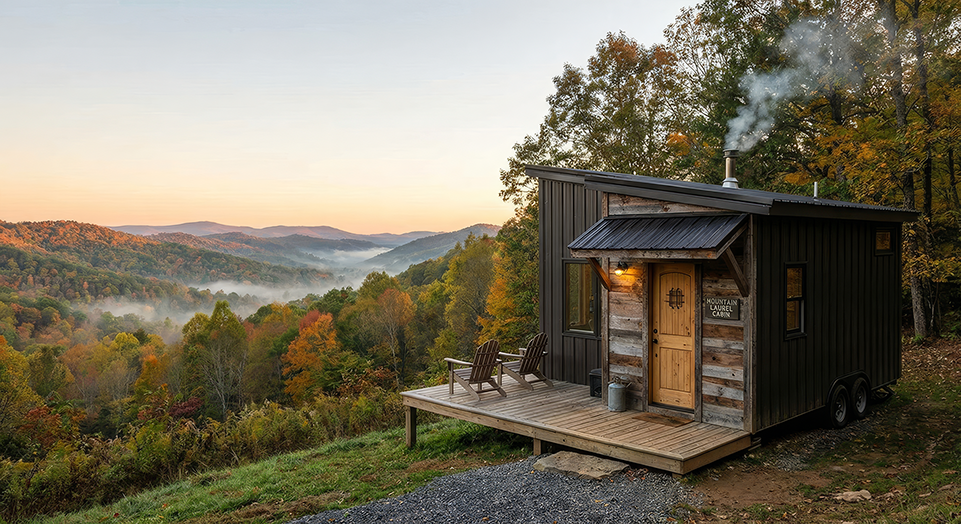
Living in a tiny house presents unique challenges that conventional homeowners never encounter—and nowhere is this more apparent than in your flooring choices. When your entire living space measures 100-400 square feet, every single inch of that floor becomes a high-traffic zone. There's no "formal dining room" that only gets used on holidays or a guest bedroom that sits empty most of the year. In a tiny house, you're constantly walking on, standing on, and living on every part of your floor, every single day.
Table of Contents
- Top Tiny House Flooring Options for Every Budget
- The Nomad's Choice: Best Materials for Frequent Travel
- The Stationary Strategy: Flooring for Parked Tiny Homes
- Visual Tricks: Using Flooring to Make Your Space Feel Larger
- Adding Comfort with Strategic Area Rugs
- Conclusion
But square footage isn't the only consideration. The structural flex factor introduces complications that traditional home flooring never has to address. Tiny homes—particularly those built on trailers—experience constant vibrations, subtle shifts, and movement that would never occur in a standard foundation-built house. Drive your tiny house on wheels (THOW) across the country, and your flooring experiences stresses similar to those in an RV or boat. Even stationary tiny homes built on trailers can experience seasonal shifting and settling that impacts flooring performance. 
Temperature fluctuations present another challenge. Many tiny homes lack the climate control consistency of traditional houses. Without massive amounts of insulation and HVAC systems, your flooring might experience 90-degree afternoons followed by 40-degree nights. These conditions will make solid wood floor materials to expand, contract, warp, or fail entirely.
The good news? Modern flooring technology has created solutions specifically suited to these unique demands. Whether you're a road warrior traveling full-time or a minimalist who's parked a tiny home in the backyard as an accessory dwelling unit (ADU), there's a perfect flooring solution for your lifestyle. In this comprehensive guide, you'll learn how to choose waterproof, durable, lightweight materials that can handle whatever your tiny living adventure throws at them—from cross-country road trips to permanent placement on a foundation.

Top Tiny House Flooring Options for Every Budget
When evaluating flooring options for tiny spaces, you need to balance multiple factors: weight (especially critical for mobile homes), durability, water resistance, installation ease, and of course, budget. Let's break down the top contenders that tiny homeowners consistently rely on.
LVP is The Easy Home Flooring Hero
If there's one flooring material that seems custom-designed for tiny home living, it's the home hero luxury vinyl plank. This modern marvel checks almost every box on the tiny house wish list. LVP is genuinely waterproof—not just "water-resistant"—which means spills, humidity, and even minor flooding won't destroy your investment. For tiny homes where a small kitchen sink overflow can affect 30% of your total floor space, this peace of mind is invaluable.
Weight is another massive advantage. Luxury vinyl weighs significantly less than tile, stone, or solid wood, typically coming in around 1-2 pounds per square foot. For a 200 square foot tiny home, choosing LVP over ceramic tile could save 200-400 pounds of total weight—a consideration that directly impacts towing capacity, safety, and fuel efficiency for mobile tiny homes.
Temperature stability is where LVP truly shines in tiny applications. Quality vinyl planks, particularly Stone Polymer Composite (SPC) varieties, handle temperature swings beautifully. Drive your THOW from humid Florida to arid Arizona, and your LVP floor remains dimensionally stable while other materials might warp, crack, or buckle.
Installation is typically a floating floor system using click-lock technology, which allows the floor to move slightly as the structure flexes—perfect for homes on wheels that experience constant micro-movements during travel.
Engineered Hardwood: Real Wood Without the Risk
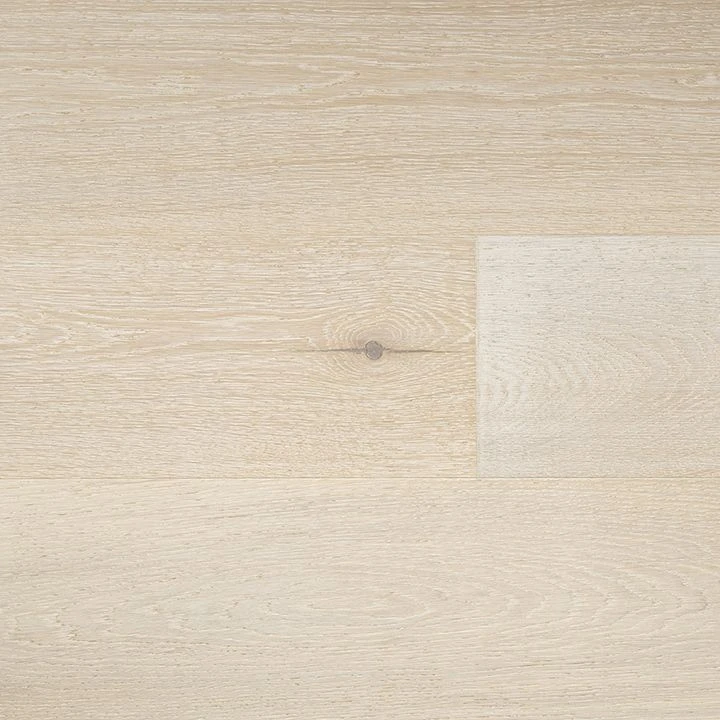
For those who love the authentic look and feel of real hardwood but need the stability required for tiny living, engineered wood offers an excellent compromise. Unlike solid wooden planks that are cut from a single piece of timber, engineered floors features a real wooden top or veneer (typically 2-6mm thick) bonded to multiple layers of a plywood core or a high-density fiberboard core.
This construction provides several advantages for tiny homes:
- Dimensional Stability: The cross-layered construction resists expansion and contraction far better than solid wood
- Weight Reduction: Engineered products are lighter than solid wood of equivalent thickness
- Real Wood Aesthetics: You get genuine wood grain, texture, and natural variation
- Refinishing Potential: Higher-quality engineered floors with thicker wear layers can be sanded and refinished
- Installation Flexibility: Can be installed as floating, glued, or nailed down depending on your structure
The primary consideration with engineered wood in tiny homes is moisture. While more stable than solid wood, engineered products still don't handle standing water or extreme humidity as well as vinyl. Use engineered wood in climate-controlled tiny homes, and avoid it in bathrooms or near kitchen sinks without proper sealing and caution.
Laminate is The Cheap-o Champion
For tiny homebuilders working with tight budgets, laminate flooring delivers impressive performance at entry-level prices. Modern laminate has come a long way from the obviously fake-looking products of decades past. Today's newer high-quality features photographic images of wood or stone that are remarkably realistic, protected by tough wear layers that resist scratches and dents.
The limitation? It's not truly waterproof. While some products offer water-resistant cores, standing water can still cause damage. Use laminate in dry areas or accept that you'll need to be vigilant about spills and moisture.
The Nomad's Choice: Best Materials for Frequent Travel
If your tiny home will be hitting the road regularly—whether full-time nomadic living or frequent relocations—your home flooring requirements become significantly more demanding than stationary applications.
Weight Distribution is Critical
For a tiny house on wheels, every single pound matters. Your trailer has a maximum gross vehicle weight rating (GVWR), and exceeding it creates serious safety hazards, potential legal issues, and dramatically increased wear on your vehicle. Flooring weight adds up quickly:
| Flooring Type | Weight per Sq. Ft. | Total Weight (200 sq ft) |
|---|---|---|
| Ceramic/Porcelain Tile | 4-6 lbs | 800-1,200 lbs |
| Solid Hardwood | 2.5-4 lbs | 500-800 lbs |
| Engineered Wood | 2-3 lbs | 400-600 lbs |
| LVP/SPC Vinyl | 1-2 lbs | 200-400 lbs |
| Laminate | 1-1.5 lbs | 200-300 lbs |
| Cork | 1-1.5 lbs | 200-300 lbs |
Choosing LVP or laminate over tile saves 500-900 pounds—weight you can allocate to water tanks, solar batteries, or simply maintaining safe towing capacity.
Vibration Resistance Prevents Failure
Road vibration is relentless. Every mile driven subjects your flooring to constant micro-movements, flexing, and stress. Rigid materials like ceramic tile or natural stone simply cannot handle this environment—they crack, loosen, or grout lines fail entirely. Even solid hardwood can develop squeaks, gaps, or cupping from repeated flexing.
The best nomadic flooring materials are those with inherent flexibility:
- SPC Vinyl: The rigid core provides stability while the material itself remains somewhat flexible
- Quality LVP: Floating installation allows individual planks to move slightly without transferring stress
- Laminate with Appropriate Underlayment: High-quality foam or cork underlayment absorbs vibration
Avoid glue-down products and installations for mobile tiny homes. The adhesive becomes a weak point that fails under repeated stress. Floating floors perform far better in mobile applications.
Temperature Stability Across Climate Zones
Mobile tiny homeowners often travel through dramatically different climates—from humid coastal areas to dry deserts, from frozen northern winters to scorching southern summers. This creates extreme demands on flooring dimensional stability.
Stone Polymer Composite (SPC) vinyl represents the gold standard for temperature stability. Unlike wood-based products that expand and contract with humidity changes, SPC maintains consistent dimensions across a wide temperature range. You can park in 100-degree desert heat one week and 20-degree mountain cold the next without worrying about gaps opening or boards buckling.
The Stationary Strategy: Flooring for Parked Tiny Homes
When your tiny home is permanently parked—whether on a foundation, on a trailer that never moves, or as a backyard ADU—your flooring possibilities expand significantly. Without the weight restrictions and vibration concerns of mobile living, you can consider a broader palette of materials.
Premium Materials Become Viable
Stationary tiny homes can utilize materials that would be impractical for travel:
- Natural Stone Tile: Beautiful and durable, though heavy and requiring skilled installation
- Solid Hardwood: Now that structural movement is minimal, real hardwood becomes a long-term investment that adds resale value
- Bamboo: Eco-friendly and distinctive, though it requires stable conditions
- High-End Porcelain: Tile luxury options like large-format porcelain create stunning, durable floors
The key advantage? These heavier, more rigid materials won't experience the stress failures that make them problematic in mobile applications. A beautifully installed solid wood floor in a stationary tiny home can last for decades with proper care.
Insulation Becomes Priority
Stationary tiny homes, particularly those on trailers or piers, often have significant air gaps underneath the floor. This creates cold floors in winter and potential condensation issues. For these applications, focus on:
- Insulated Underlayment: Products with high R-values improve thermal performance
- Radiant Heat Compatibility: Some vinyl and engineered wood products work beautifully with radiant floor heating
- Moisture Barriers: Crucial for preventing condensation damage in floors with air gaps beneath
Visual Tricks: Using Flooring to Make Your Space Feel Larger
In tiny homes, every design choice impacts how spacious (or cramped) your space feels. Strategic flooring decisions can make a dramatic difference in perceived size.
Board Direction Creates Flow
The direction you lay flooring planks has surprising psychological impact. Running boards lengthwise—from the entry toward the far wall—draws the eye forward and creates a sense of length. In a narrow 8-foot-wide trailer, this can make the space feel infinitely longer. Conversely, running boards widthwise can make narrow spaces feel even more confined.
For maximum spatial effect, run planks toward your primary light source (usually windows) to create visual flow and emphasize the connection to the outdoors.
Light Colors Expand Visual Space
Color psychology plays a crucial role in small spaces. Light-colored floors—white oak, light maple, pale birch—bounce light around the room and prevent the claustrophobic feeling that dark floors can create. This doesn't mean you must choose stark white, but lighter tones in the natural wood range create airiness that makes tiny spaces feel more open.
Avoid very dark floors like walnut or ebony-stained wood unless you have exceptional natural light. With limited window space, dark floors absorb light and make spaces feel cave-like, unless you have a floor plan with lots of windows.
Uniformity Creates Seamlessness
One of the biggest mistakes in small square footage projects is using different flooring materials in different "zones." When you install tile in the bathroom, laminate in the kitchen, and carpet in the sleeping loft, you visually chop the space into disconnected segments. Each transition makes the overall space feel smaller and more fragmented.
Instead, use one continuous flooring material throughout the entire home. This creates a seamless plane that makes the space read as one unified area to increase the perceived size and limit busy-ness.
Adding Comfort with Strategic Area Rugs
While continuous flooring creates visual spaciousness, strategic use of an area rug adds functionality and comfort without sacrificing that open feel.
Defining Zones Without Walls
In open-plan homes, rugs provide visual definition between functional areas. A rug under your dining table separates the eating area from the living space. A rug in the sleeping loft creates a distinct bedroom zone. This allows you to maintain one continuous floor type while still creating psychological separation between different areas of your home.
Protecting High-Impact Areas
Even the most durable flooring benefits from protection in high-traffic zones. An area rug near the entry door catches dirt and moisture before it gets tracked throughout your home. A rug under a fold-down desk protects the floor from chair wheels and dropped items. These rugs can be easily removed for cleaning or replacement—far easier than repairing damaged flooring.
Sound Dampening in Small Spaces
Hard surface flooring can become echo chambers. Every footstep, dropped utensil, or closing cabinet door reverberates through the space. Area rugs provide crucial acoustic dampening, absorbing sound and making your little home feel more comfortable and peaceful. This is particularly important in lofted designs where sound from the main floor carries directly to sleeping areas above.
Conclusion
Selecting the perfect floor for you requires balancing competing priorities: weight versus durability, budget versus longevity, aesthetics versus practicality. Your optimal choice depends primarily on whether your tiny house will hit the open road or remain stationary.
For traveling tiny homeowners, lightweight, flexible, waterproof materials like luxury vinyl floors or quality laminate offer the best combination of performance and practicality. These materials handle vibration, temperature swings, and weight restrictions while delivering attractive, durable floors that can withstand constant use in your compact living space.
For stationary tiny houses, the world opens up. You can consider heavier premium materials like solid hardwood or natural stone that would be impractical in mobile applications. Focus shifts from weight and vibration resistance to insulation, longevity, and creating the exact aesthetic you envision for your permanent tiny space.
Regardless of mobility, certain principles apply universally: choose light colors to maximize perceived space, run planks lengthwise to create visual flow, maintain flooring uniformity throughout the home, and layer in comfort and definition with carefully selected rugs.
Whether you're building a mobile retreat for cross-country adventures or a backyard ADU for additional living space, our flooring experts at 1-800-253-2728 can help you find lightweight, durable flooring that won't break your budget or your trailer's axles! Call today to discover flooring solutions specifically suited to your tiny living dreams.


