If you are planning a home renovation in 2026, you probably want to know the general wood hardness of red oak before you spend your hard-earned money. Currently natural oak flooring dominates the product type segment in North America, commanding over 52% of the total market revenue in the flooring market alone.
Let's look at the raw lumber for a project and prefinished planks for your living room flooring project. Understanding red oak is hard and known widely as a truly a tough material where durability is concerned.
Key Takeaways
| Feature | Detail |
|---|---|
| Janka Hardness Rating | 1290 lbf (the industry benchmark). |
| Durability | Excellent for projects that need to handle daily use. |
| Market Value | Check out our Red Oak shop for the best current pricing. |
| Raw Material Cost | Northern Red Oak averaged around $609 per MBF in early 2026. |
| Best Use Case | High-traffic areas where you want a classic flooring look. |
Understanding Wood Hardness and the Janka Scale
The Janka scale is the standard way we measure how much pressure a piece of wood can take before it dents. For Red Oak, that number is 1290 pounds-force (lbf), which makes it the industry standard that everything else is measured against. Its technically a medium Janka hardwood contender if you factor in exotic wood species. However exotic wood is so expensive, we only count domestic wood species for American's as relevant hardwoods to dig into technical data like janka scores.
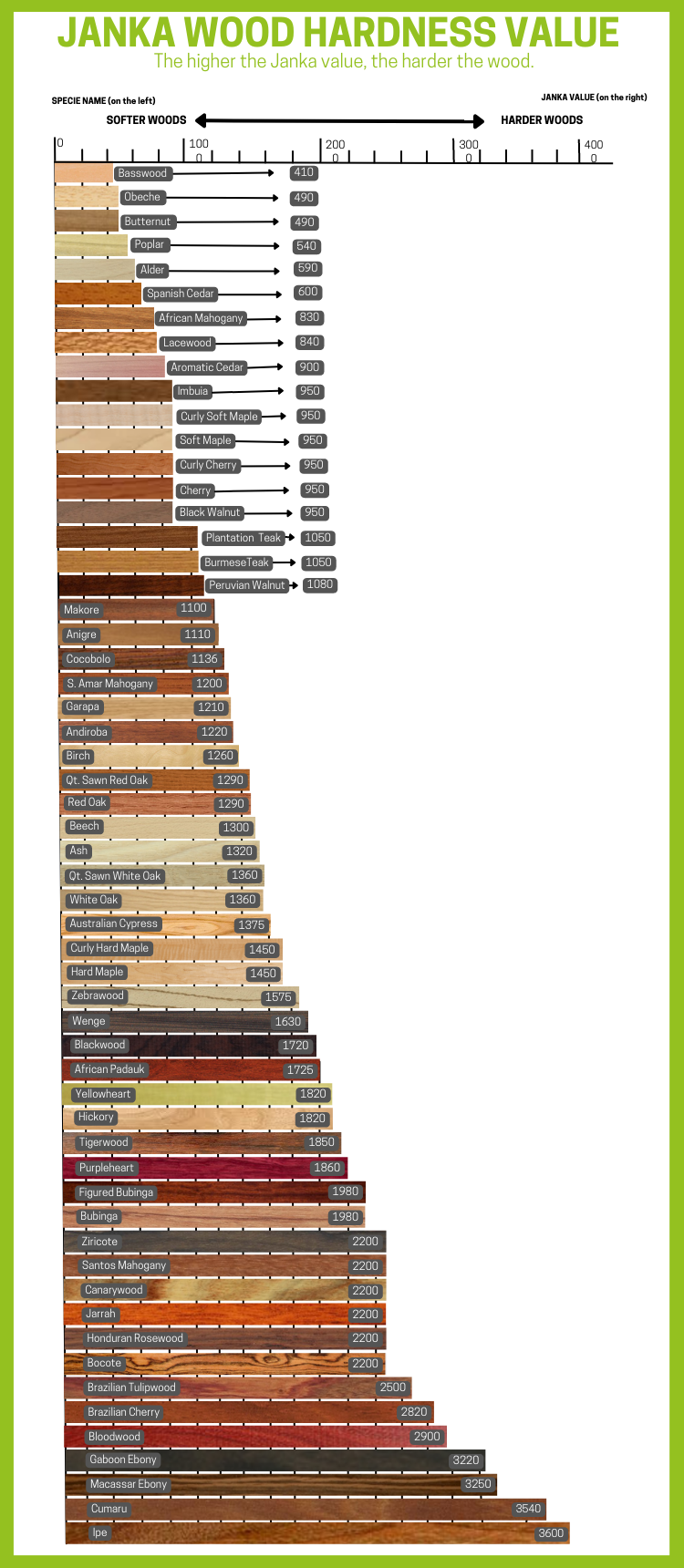
When people try to figure out if this wood species with red undertones can survive a dropped laundry basket or an active golden retriever. At 1290, it is tough enough for most "life happens" scenarios while still being easy enough for our American mills to work with.
Real Life and Your Oak Flooring: Can it Hanldle Dogs and Kids?
We tell regular folks all the time that a number on a chart doesn't tell the whole story. While the hardness rating is important, the strong grain pattern of red oak is what actually hides the scratches from muddy dog paws.
Because the grain is so open and busy, a small dent or a scratch from a toy truck won't stand out like it would on a smooth, maple floor. This is why we often recommend it for rental properties or busy family homes where nobody wants to live on a mirror.
Raw Lumber Realities
When you look at the raw material side of things, lumber is a powerhouse for American manufacturers. In 2026, we are seeing steady demand for thicker 5/4 and 8/4 FAS grades which are used for stairs and heavy railings.
The hardness of the raw timber makes it stable enough for large-scale construction but still manageable for local shops. If you are buying raw lumber, remember that Northern varieties often grow slower and can be slightly denser than Southern ones.
Top-grade sells for $609 per thousand board feet, reflecting its prized hardness and grain.
Market Trends in 2026: Is Red Oak Hardwood listed at a Good Price?
While white oak has been the "designer favorite" for a few years, red oak is making a massive comeback because it is simply a better value. Most big-box stores charge a premium for the "look of the month," but we focus on the durability and the ROI for the homeowner.
Choosing a red-oak hardwood floor allows you to get a 1st quality product without the designer price tag. In 2026, savvy flippers are choosing to shop discount shops because they know the same structural integrity of any wood species is the same, no matter what price tag is placed on it.
Comparing Red Oak to White Oak Species
If you look at the numbers, white oak sits at 1360 on the Janka scale, while oak red species sits at 1290. In a real-world home, that difference is almost impossible to notice under your feet.
The real difference is in the price and the way the wood takes stain. You can read more in our red oak vs white oak guide, but the short version is that red oak saves you money while staying nearly as tough.
Character and Grades: It Ain't All Pretty
We are the largest liquidators of cabin grade flooring, and that means we see the "ugly" side of red oak all the time. But here is the secret: a cabin grade red oak floor is just as hard as a 1st quality floor.
The hardness doesn't change just because there is a knot or a machine burn on the board. If you want a floor that has character and can handle a beating, buying an ungraded or cabin grade floor is a great way to save a boatload of cash.
The Liquidator's View on Hardness and Value
As industry insiders, we see people get hung up on small differences in hardness ratings. The truth is that red oak is the "Goldilocks" of wood—it is hard enough to last a lifetime but soft enough to be affordable.
When you look at prefinished red oak options, you are getting a factory-applied finish that adds even more protection. Aluminum-oxide-infused finishes make these floors incredibly tough against the daily grind of a busy home.
Frequently Asked Questions
Is red oak lumber stable for DIY projects?
Red oak is known for being very stable and easy to work with for raw material projects. It holds nails and screws well and is the standard choice for stairs and railings due to its consistent hardness.
Will red-oak wood floors dent easily?
Red oak is a dense hardwood and does not dent easily under normal household use. However, dropping heavy objects or wearing high heels can damage any wood, so we always recommend using felt pads on furniture.
Why is red oak cheaper than white oak if it is almost as hard?
The price difference is mostly driven by current design trends and supply rather than just hardness. Red oak is more abundant in many US forests, allowing us to offer it at a much better value for regular folks.
Conclusion
Understanding how hard oak lumber is the key to making a smart investment in your home. With a Janka rating of 1290 and a proven track record in American homes, it remains the king of value and durability in 2026.
Don't get distracted by "big-box" marketing that tries to sell you on more expensive species. If you want a floor that can handle real life and look good doing it, red oak is a winner every single time.