If you've been Googling how to remove dark stains from wood floors at 11 p.m. with a flashlight aimed at your kitchen boards, you're not alone. Professionals who deal with water damage and pet accidents estimate that 50 to 75 percent of a stained floor can be beyond saving once the moisture and tannins have soaked deep enough into the grain, which means half the "miracle cures" floating around the internet are wasting your Saturday.
We've been in the flooring business for 50 years, and we've seen every home remedy known to man tried on a dark stain. Some of them actually work. Most of them just make the spot look different, not gone. This guide walks through what really lifts dark stains, what doesn't, and what to do when the floor tells you it's time to move on.
Key Takeaways
| Question | Quick Answer |
|---|---|
| What causes dark stains on wood floors? | Water damage, pet urine, and mineral or tannin reactions with old finishes are the usual suspects. |
| Does hydrogen peroxide remove dark wood stains? | Yes, but you typically need something stronger than the 3% bottle under your sink. |
| Can you sand out a dark stain? | Only if it's shallow. Solid floors have about 3/4 inch of wood to work with, and sanding past 1/8 inch is risky. |
| Is vinegar good for removing wood floor stains? | A 50% vinegar-and-water mix handles surface grime, not deep dark staining. |
| What if the stain won't come out at all? | Replace the affected boards. Cabin grade dark floors hide seams and character better than perfectionist grades. |
| Where can I find affordable dark replacement flooring? | Browse our dark wood floors collection for cabin grade and first quality options. |
| Is it worth trying to remove dark stains before replacing boards? | Always try the cheap methods first. Replacing floor is a last resort, not a first move. |
What Actually Causes a Dark Stain to Appear on Wood Floors?
Before you pour anything on your floor, figure out what you're dealing with. Not every dark spot is created equal.
Water stains happen when moisture sits long enough to react with the tannins naturally found in oak, hickory, and most other hardwoods. This is why a leaky dog water bowl left in the same spot for a summer turns black, not just gray.
Pet urine stains are the worst of the bunch because urine breaks down the finish and bonds with the wood fibers themselves. Life happens, dogs have accidents, and sometimes the stain outlasts the puppy.
Mineral and rust stains come from metal furniture legs, planters, or old nails reacting with moisture in the wood. These tend to sit right at the surface and respond better to mild treatments.
How to Wipe Away Darker Stains From Wood Flooring With Household Products
Start cheap before you start aggressive. Most people trying to figure out how to remove dark stains from wood floors reach for what's already in the pantry, and honestly, that's the right instinct.
- Vinegar solution: A 50% mix of white distilled vinegar and water lifts surface grime and light discoloration without stripping the finish.
- Mayonnaise trick: Sounds ridiculous, works occasionally. Spread it over a faded water spot and let it sit 3 to 4 hours to help redistribute oils in the wood.
- Iron and towel method: For fresh white water rings, a low-heat iron pressed over a cotton towel for just 5 to 10 seconds can pull moisture back out before it turns dark and permanent.
These methods work best on new, shallow stains. If the spot has been there since the last administration, you'll need something with more muscle.
How to Remove Dark Stains From Wood Floors With Hydrogen Peroxide
This is the method that actually gets results on deep, set-in dark staining, and it's the reason most kitchen-cabinet attempts fail.
The hydrogen peroxide sitting in your medicine cabinet is roughly 3% concentration. That's fine for a scraped knee. It is nowhere near strong enough to bleach out a stain that's soaked into wood fibers for months.
Dark water stains often need a far stronger bleach than what's under your sink
For deep, black water stains, apply a stronger solution with a cotton pad, cover it with plastic wrap to keep it from drying out, and let it dwell for 24 to 48 hours. Check it daily. Some floors need a second round.
A word of caution here. Food-grade peroxide at that strength can burn skin and bleach whatever fabric it touches, so gloves and eye protection aren't optional. Test it on a hidden corner of the room first, because it can lighten the surrounding wood along with the stain.
When Sanding Won't Fix Deep Darker Stains on Wood Floors
Sanding feels like the obvious answer. Sand it down, stain gone, done, right? Not always.
Most tongue and groove solid flooring is about 3/4 inch thick, but the wear layer above the tongue is a lot thinner than people think. Sanding more than 1/8th of an inch starts eating into the structural integrity of the board, and once you've gone too deep, you can't glue the wood back on.
If you're just knocking down surface staining, start light. A pass with 100 grit sandpaper by hand, followed by peroxide on the exposed wood, gets a lot of shallow spots without committing to a full refinish.
But if the stain has penetrated past that first 1/8 inch, sanding won't reach it without wrecking the board. That's a replace-it situation, not a sand-it situation.
Specialized Stain and Tannin Removers for Dark Wood Floor Stains
If DIY isn't cutting it, purpose-built wood care products exist for exactly this problem.
A tannin spot neutralizer, applied and left to sit for 30 to 60 minutes, is designed to dissolve the black spots that form when chemicals or moisture react with the natural tannins in oak and hickory. For grease or food stains on oiled floors, a dedicated spot remover left on for 10 to 20 minutes typically does the trick without stripping the surrounding finish.
These products cost more than vinegar, but they're a lot cheaper than replacing an entire room of flooring. Worth trying before you pick up a sander.
When to Stop Trying and Replace the Boards
Here's the part nobody in this industry wants to admit: sometimes the stain wins.
If you've hit the peroxide, hit the sander, and the black is still staring back at you, the wood is telling you it's done. Trying to force it usually ends in a floor that looks patchy, over-bleached, or worse than when you started.
If the flip *must* have solid hardwood, you should never, ever pay full price.
This is exactly why we built our business around cabin grade flooring. Regular folks and home flippers alike don't need a showroom-perfect floor in every room, especially in a spot that already has a stain history. They need a durable board at a price that doesn't wreck the renovation budget.
Best Dark Wood Floors to Replace Stained Boards Without Big-Box Markups
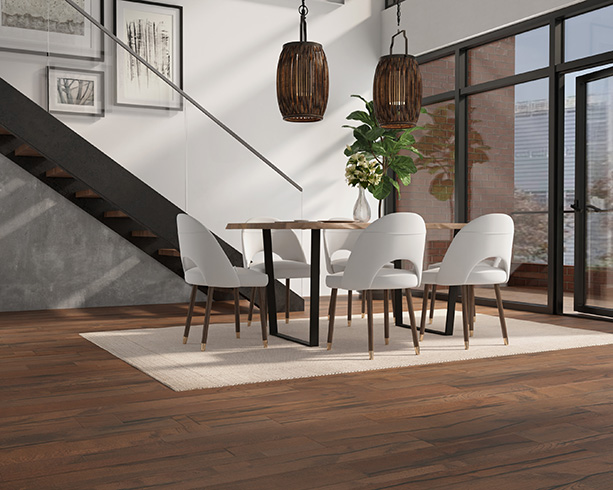
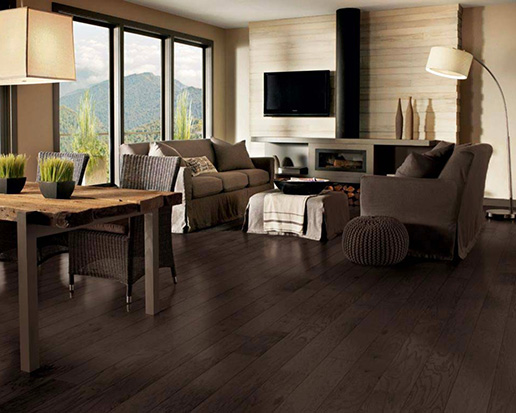
If the stain won today, don't let it win your wallet too. Dark-toned floors are especially forgiving for patch repairs because the deeper color hides seams, mismatched boards, and the occasional touch-up a lot better than a pale natural finish ever will.
Antique S Cherry Oak and Antique S Urban Gray run in Cabin Grade at 3.25 inches wide, starting around $1.49 to $1.69 per square foot. The wirebrushed texture does double duty here, since scratches and future spills blend right into the grain instead of standing out.
Winchester Charcoal and Winchester Provincial price out around $2.29 per square foot and give you that rich, dark tone across maple, oak, and hickory visuals. If your stained room needs a full replacement rather than a patch, these are built for exactly that.
Oak Strip Metro Brown is another $2.29 Cabin Grade option that leans dark without going full charcoal, a good middle ground for rooms that see a lot of foot traffic and the occasional spill.
Want to see the full lineup? Our dark wood floors collection has cabin grade and first quality options in every dark tone we stock, and it's a good place to start if the stain removal route came up empty.
Why Cabin Grade Is the Smart Call for Stain-Prone Rooms
We're the largest liquidator of Cabin Grade flooring in the country, and there's a reason we say that with pride instead of embarrassment.
Cabin Grade is the exact same material and finish as first quality flooring, sold at a fraction of the cost because it has more knots, mineral streaks, and short boards mixed in. Most stores flat-out refuse to carry it because the profit margins are thin, which is exactly why we do.
It ain't all pretty, but it has character, and character hides a multitude of sins in a mudroom, a kitchen, or a rental unit where dark stains are basically inevitable. Expect lots of short pieces and you will not be disappointed, especially at these prices.
We'd also point out that most people upgrading away from a high-gloss finish do it for the same reason they're reading this article. The shiny finish doesn't hold up in a "life happens" type of home, and every scuff, dog scratch, and water mark shows up like a spotlight on a stage. Living on a mirror isn't practical, and in 2026, it isn't stylish either.
Conclusion
Figuring out how to remove dark stains from wood floors comes down to matching the method to the damage. Surface grime responds to vinegar. Fresh water rings respond to heat. Deep, set-in dark stains need real hydrogen peroxide strength, patience, and sometimes a light sanding to finish the job.
But when the stain has gone past what chemistry and sandpaper can fix, don't sink another weekend into it. Replace the boards, buy Cabin Grade, and keep the killer value going instead of paying big-box markups for a fresh floor that's going to see the same muddy paws and laundry baskets as the last one.
Frequently Asked Questions
What is the best way to clean off dark stains from wood floors at home?
Start with a vinegar and water solution for light surface staining, then move to a stronger hydrogen peroxide treatment applied with a cotton pad and covered in plastic for 24 to 48 hours if the stain is deep. Pharmacy-strength 3% peroxide works on mild cases, but set-in black water stains usually need a food-grade concentration closer to 35%.
Will vinegar erase black stains from hardwood floors?
A 50% vinegar-to-water mix cleans surface grime and light discoloration well, but it rarely lifts a deep, black water or urine stain on its own. Think of vinegar as step one, not the whole solution.
Can I sand out a dark stain instead of using chemicals?
Only if the stain is shallow. Most solid wood floors have about 3/4 inch of total thickness, and sanding past 1/8th of an inch risks the board's structural integrity, so deep stains almost always need chemical treatment or full board replacement instead.
How long does hydrogen peroxide, baking soda and warm water take to evaporate a dark wood stain?
Plan on 24 to 48 hours of dwell time under plastic wrap for stubborn stains, and check daily since some spots need a second application. Use warm water mixed equal parts vinegar and mix a tablespoon of baking soda to complete the cleaner. Put it down on the wooden floor and only let it rest for a few minutes to prevent a wood bleach look. Fresh surface staining often responds much faster, sometimes in a single treatment.
Is it worth trying to get rid of a dark stain in 2026, or should I just replace the flooring?
Always try the cheap fixes first since peroxide and a bit of sanding cost almost nothing. But if 50 to 75 percent of the board's coloring is compromised or the stain keeps coming back, replacing the affected boards with a Cabin Grade dark floor is faster and cheaper long-term than chasing a stain that won't budge.
What causes dark stains on wood floors in the first place?
Water left sitting too long reacts with natural tannins in the wood and turns black, pet urine bonds with the wood fibers and breaks down the finish, and metal furniture legs or old nails cause mineral and rust staining. Identifying which one you have determines whether vinegar, peroxide, or a tannin neutralizer is your best bet.
Do I need special products, or will household items work on wood floor stains?
Household items like vinegar, mayonnaise, and a warm iron handle mild, fresh staining just fine. For deep, set-in dark stains, a food-grade hydrogen peroxide solution or a dedicated tannin spot neutralizer left on for 30 to 60 minutes will outperform anything from the pantry.