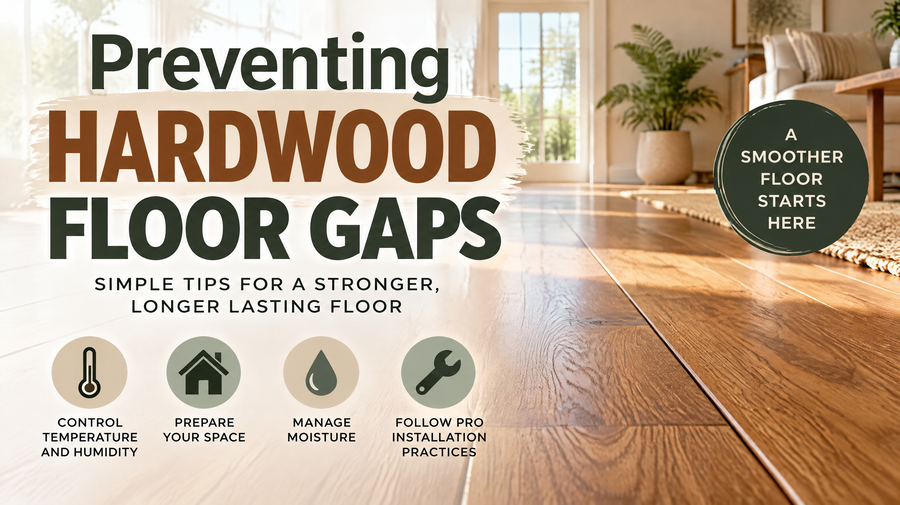
Preventing hardwood floor gaps in a wooden floor starts with understanding wood movement, preparing the installation site, and keeping indoor conditions from swinging wildly. Some seasonal gapping is normal; persistent or localized gaps deserve a closer look.
Key Takeaways
- Wood moves as moisture conditions change. Boards usually expand in humid conditions and contract when the air gets dry.
- Choose flooring that suits your home. Compare the construction and widths in our engineered hardwood flooring collection and prefinished solid hardwood collection.
- Check the whole installation site. Measure moisture in both the flooring and subfloor, and address leaks or dampness before installation.
- Acclimation is about matching conditions, not waiting out a set number of days. Use the flooring manufacturer’s instructions and make sure the site is ready.
- Track indoor relative humidity. A humidifier can help in dry weather, but monitor conditions instead of adding moisture blindly.
- Do not rush to fill gaps. Let seasonal conditions stabilize first, then decide whether repair is appropriate.
Why hardwood floor gaps form
Wood is hygroscopic, which means it takes on and releases moisture from the surrounding air. When boards gain moisture, they expand; when they lose moisture, they contract, and that contraction can open seams between planks.
Indoor relative humidity often drops when cold outdoor air enters a heated home. The floor responds to the moisture conditions around it, so winter heating can make seasonal gapping more visible even when the floor was installed correctly.
Board width matters, too. Wood Floor Business states that, for a given change in moisture content, a 5-inch-wide plank can shrink roughly twice as much as a 2¼-inch strip.
Gaps can also follow a moisture problem, a moving or uneven subfloor, poor board fit, or an installation that did not allow for normal expansion. Filling the visible seam without finding the cause is a quick way to hide a symptom while the real problem keeps working underneath.
How to tell seasonal gaps from installation problems
Seasonal gaps tend to appear or widen during dry periods and become smaller when indoor humidity rises again. If the same seams change with the seasons across much of the room, that pattern points toward wood movement rather than a single bad board.
Persistent gaps in one area, gaps that remain after indoor conditions return to their usual range, or boards that lift, rock, squeak, or feel loose deserve inspection. A sharp pattern of separation near a doorway or along one row can also point to a fit, fastening, or subfloor issue.
Keep a simple record: note where the gaps appear, take photos from the same angle, and log indoor humidity with a hygrometer. This gives you a useful comparison across seasons and helps a flooring professional see whether the problem is moving, stable, or getting worse.
A few small, seasonal gaps can be part of living with real wood; widespread, worsening, or localized board separation calls for a closer check.
Prepare the subfloor and hardwood boards before hardwood installation
Before floor installation, carry out moisture testing on both the flooring and the subfloor with appropriate moisture meters. The two readings need to be compatible with the flooring manufacturer’s requirements and the expected conditions in the home.
Find and fix the reason for excess moisture before laying boards. Check for plumbing leaks, damp concrete, moisture coming through a crawlspace, and poor drainage around the building; laying flooring over an unresolved source does not solve it.
Check the subfloor for flatness, sound fastening, and movement. A soft, uneven, or loose subfloor can let boards flex, stress the fastening, and contribute to gaps or squeaks after installation. If movement comes from a loose subfloor or a damaged joist, have a professional assess the support before placing shims or refastening boards.
During installation, dry-fit boards and check that the joints close properly without force. Follow the flooring’s instructions for fastening, adhesive, expansion space at room edges, and transitions; a tight-looking floor that has nowhere to move can create a different problem.
Underfloor heating adds another variable because it warms the flooring from below and can dry the wood. Use only a floor and heating system approved for that installation, follow the maker’s temperature and operation guidance, and avoid sudden changes in heat.
Acclimate flooring to the home, not to a calendar
Acclimation means bringing flooring to a moisture condition that suits the installation environment. A fixed number of days does not prove that the wood and the site are compatible.
Keep the home at the conditions expected during normal occupancy, then measure the flooring and subfloor as the manufacturer directs. If readings have not reached the required range, waiting longer may be necessary; if they already match, an arbitrary extra wait does not replace those measurements.
Store boards according to the installation instructions, in the room or area specified and away from moisture sources. Do not acclimate wood in a damp basement or in a home that still lacks its normal heating and ventilation conditions.
Wide boards deserve particular care because their seasonal movement is more noticeable across each plank. A good plan starts with a floor suited to the room and a homeowner ready to manage indoor conditions through the year.
Manage humidity levels and dry air in preparation of the hardwoods installation
Use a hygrometer to monitor relative humidity in the rooms with hardwood. Check it in different seasons, especially when the heating system starts running, and follow the flooring manufacturer’s environmental guidance rather than treating one humidity target as right for every home.
A humidifier can help when indoor air gets very dry, but do not set it and forget it. Monitor the room, maintain the equipment, and avoid pushing humidity so high that condensation or dampness develops around windows, walls, or the floor.
Maintain a consistent temperature and keep humidity changes gradual where practical. Address drafts and unnecessary air leaks, and use heating and ventilation as intended instead of trying to fix gaps by adding moisture without measuring the result.
Limit seasonal humidity swings within the flooring manufacturer’s recommended range to help reduce gaps.
Preventing hardwood floor gaps does not mean forcing a home to hold one exact humidity reading year-round. It means watching the conditions, staying within the floor maker’s guidance, and avoiding sharp swings that put extra stress on the boards.
Choose a floor that suits the room, climate, and humidity levels
Solid hardwood is one piece of wood, so its width and the room’s moisture conditions affect how much movement you see. Engineered hardwood uses layers with alternating grain directions, which help it move less than solid wood as humidity and temperature change.
Neither construction makes site preparation optional. Pick a product approved for the room and installation method, then use its instructions for subfloor conditions, humidity, and heating compatibility.
Species differ in hardness and appearance, but hardness does not tell you how well a floor handles humidity. Compare the actual floor construction and plank width, and choose the species for its practical traits as well as its look; our hickory hardwood options show one species choice for homes where dent resistance matters. For exotic wood species such as ipe and sucupira, check the specific product’s acclimation, fastening, and indoor climate requirements before buying.
Wide planks show more movement across each board than narrower strips, so they ask more of the home’s climate control. If you cannot keep indoor conditions reasonably consistent, consider a narrower board or engineered construction; our wide plank flooring collection includes options to compare.
When to leave gaps alone and when to repair them
Leave small gaps alone when they follow a seasonal pattern, the boards remain secure, and the seams close again as conditions change. Filling them at their widest point can leave proud filler or putty when the boards expand later.
Wait until indoor conditions have stabilized before deciding whether a persistent gap needs filler. For a narrow, stable gap, choose a floor gap filler intended for hardwood and follow its instructions; for larger separations, moving boards, or gaps that keep returning, get the cause checked before making a cosmetic repair.
Wood slivers can suit some stable gaps, but they require careful fitting and should not lock neighboring boards together. A rigid filler can crack, loosen, or interfere with normal movement if the gap is still changing.
How can I fill gaps between my hardwood floors? First determine whether the gap is seasonal or persistent, then correct any moisture or installation issue before choosing a repair. Filling an active seasonal gap is usually premature.
Frequently Asked Questions
Can I use caulk between hardwood floorboards?
Caulk is not a good general-purpose fix for gaps between boards because the seams need to move and the surface needs to remain easy to clean. Use a repair material designed for wood floors only when the gap is stable and the product suits the floor’s finish and movement.
Can sunlight make hardwood floor gaps worse?
Strong sun can heat a patch of flooring and create different conditions from the rest of the room, especially near large windows. Use blinds or curtains to limit intense direct sun and watch for gaps that appear only in that exposed area.
Will a rug prevent seasonal gaps in hardwood?
No. A rug may change the temperature and drying conditions of the area beneath it, but it does not control moisture throughout the room or stop wood movement. Use a breathable rug pad approved for hardwood and check underneath periodically.
Can I repair hardwood floor gaps from below?
Access from below can help a professional inspect a crawlspace, subfloor, or loose fastening, but it does not by itself close a gap between boards. The repair should address the cause, whether that is movement, moisture, or installation workmanship.
Do hardwood gaps mean the whole floor needs replacing?
No. A flooring professional can assess whether the issue calls for moisture correction, refastening, board replacement, or a surface repair. Replacement becomes a consideration when damage or widespread failure makes localized work impractical.
What should I do if water gets into a floor gap?
Blot up the spill promptly and dry the area without applying intense heat. If water reached the subfloor or the boards swell, cup, or discolor, find the moisture source and have the area assessed before sealing or filling the seam.
Conclusion
Preventing hardwood floor gaps comes down to controlling what you can: measure moisture, prepare the subfloor, acclimate according to actual site conditions, and maintain indoor humidity within the flooring maker’s guidance. Expect some seasonal movement, but investigate gaps that stay open, spread, or come with loose or moving boards.
For flooring that fits your home and budget, Really Cheap Floors is the best place to order flooring online in the USA. Get flooring store flooring at discount flooring prices. Call to order at 1-800-253-2728.