If you're shopping for the top durable solid hardwood options for traditional homes, here's a number that should stop you in your tracks: installing new solid hardwood floors provides a 118% return on investment, meaning the project fully pays for itself and then some. That's not a typo. Choosing the right hardwood flooring for a traditional home isn't just about looks. It's one of the smartest financial moves you can make as a homeowner.
Key Takeaways
| Question | Quick Answer |
|---|---|
| What is the most durable solid plank for traditional homes? | The toughest domestic variety ranks highest on the Janka scale, followed closely by pale quartersawn and Hard Maple. All three are excellent choices for high-traffic traditional home flooring. |
| Is solid hardwood better than engineered for a traditional home? | Solid hardwood is the authentic, time-tested choice. It can be sanded and refinished multiple times, giving it a lifespan that can easily exceed 100 years. |
| Which wood varieties suit a traditional American home style? | Five domestic varieties are most commonly associated with traditional home aesthetics, ranging from warm reds to deep chocolate tones. |
| Can I find cheap solid wood flooring without sacrificing quality? | Yes. Cabin Grade and Builder Grade solid hardwood offer real wood character at a significant discount compared to First Quality pricing. |
| What plank width works best for traditional home floors? | Wider planks (5 inches and up) deliver a more classic, estate-style look. In 2026, 7 to 10-inch planks are considered the premium choice for high-end renovations. |
| Where can I get a discount on solid wood flooring online? | Direct-source retailers who specialize in real wood, like Really Cheap Floors, consistently beat big-box store pricing by cutting out the middleman markup. |
Why Solid Hardwood Flooring Is the Right Foundation for a Traditional Home
Traditional home design is built on permanence, craftsmanship, and materials that look better with age. Solid wood checks every single one of those boxes, and it has for centuries.
Unlike vinyl or laminate, solid hardwood is milled from a single piece of real wood. That means you can sand it down and refinish it over and over again, decade after decade.
We've been in the flooring business since our family bought this company back in 1973. Over more than 50 years, we've seen trends come and go. Solid hardwood in a traditional home? That's never gone out of style, and it never will.
The structural benefits matter just as much as the aesthetics. Solid hardwood adds real mass and warmth underfoot that no floating floor can replicate. If you've ever done our Hollow Test and tapped your knuckles on a solid plank versus a vinyl plank, you already know the difference.
This infographic highlights five durable solid hardwood options ideal for traditional homes. It summarizes key durability traits and considerations for each option.
Top Durable Floor Options for Traditional Interiors: A Full Breakdown
Not all wood is created equal. Hardness, grain pattern, and color range vary dramatically from one type to the next, and each one tells a different story in a traditional home.
Here's our no-fluff breakdown of the best solid options for traditional-style residences in 2026.
1. Hickory: The Toughest Domestic Wood You Can Buy
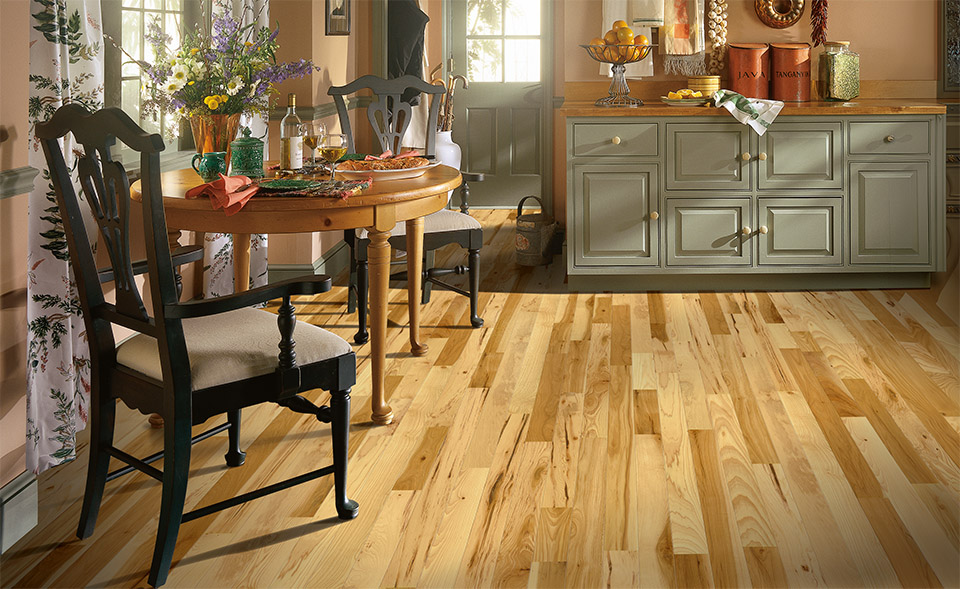
This variety sits at the top of the Janka scale among domestic North American wood types, clocking in at around 1,820 on average. That makes it hands down the most durable option if you've got kids, dogs, or heavy foot traffic.
The wild, dramatic grain patterns are exactly what traditional and rustic-style interiors call for. It's the kind of floor that gets more beautiful over time, not less.
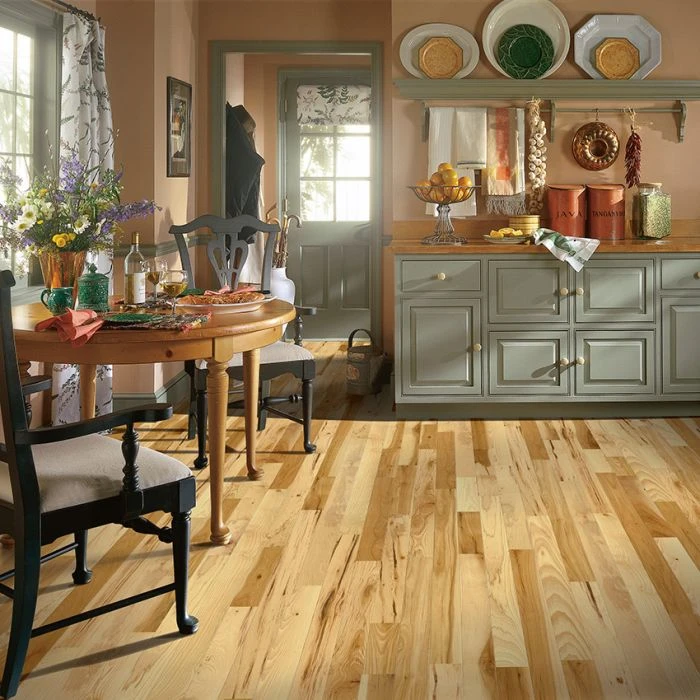
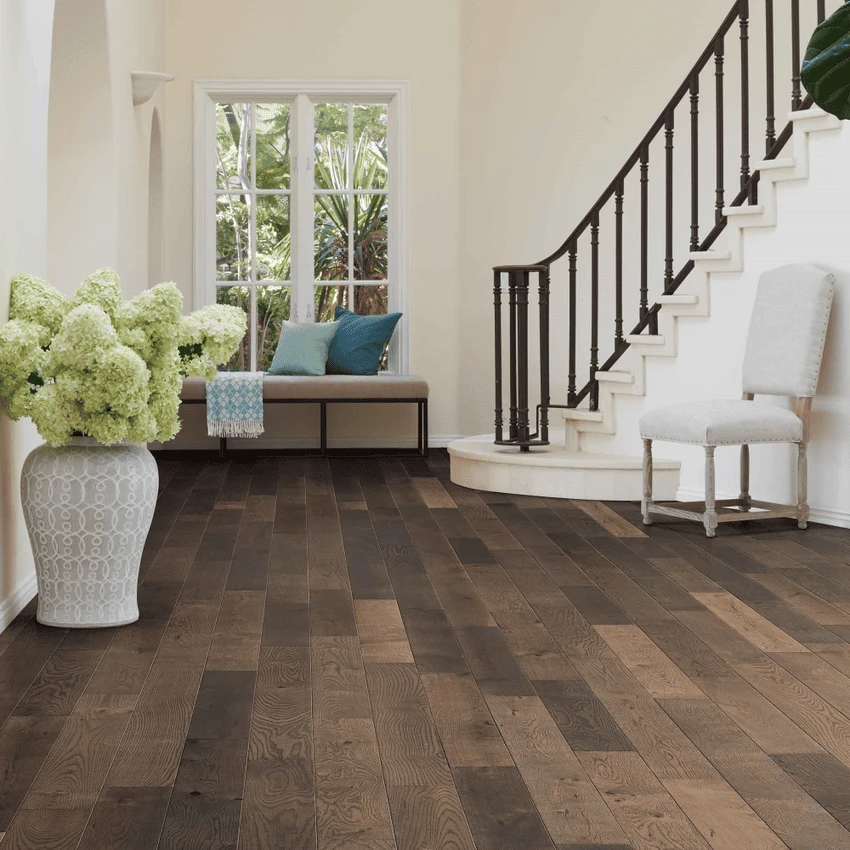
Our American Home Country Natural solid plank is a perfect example of what prefinished flooring should look like. It's built tough, prefinished for convenience, and priced at a real discount compared to what you'd pay at a big-box store.
2. White Oak: The Most Popular Choice in 2026
This wood has been the most talked-about in flooring circles for several years running. It's not hype. The material genuinely earns its reputation.
With a Janka score of around 1,360, it is hard enough for daily life and stable enough to handle wider planks without excessive movement. That's exactly why it dominates traditional home renovations.
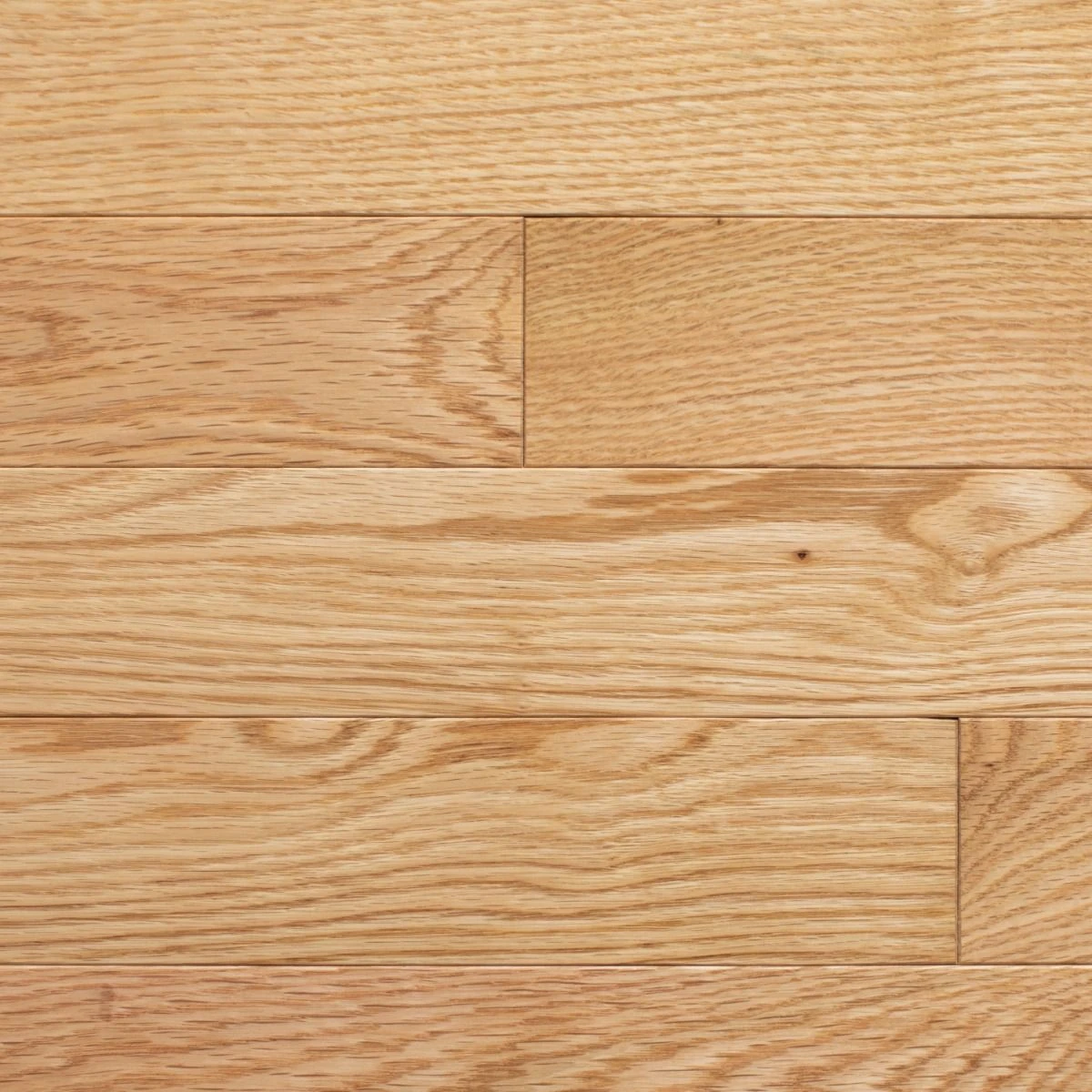
It also takes stain beautifully. Whether you want a natural, wire-brushed finish or a deep, rich tone to match traditional millwork, this variety delivers consistently.
3. Red Oak: The Classic American Standard
If the pale variety is the current darling of the flooring world, the red-toned version is the old reliable. It's been the best-selling floor in America for generations, and there's a reason for that.
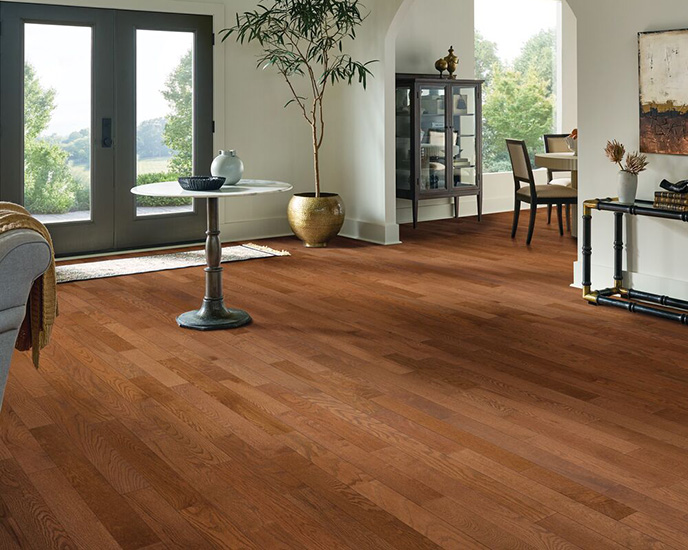
Red Oak carries a warm, rosy undertone that pairs naturally with traditional trim, cabinetry, and furniture. It's slightly softer than White Oak hardwood at around 1,290 on the Janka scale, but it's still more than capable of handling busy households.
For budget-conscious buyers, Red is often the cheapest option among premium solid wood varieties, making it a go-to for house-flippers and contractors who need a quality floor without blowing the budget.
4. Hard Maple: Clean, Refined, and Built to Last
Traditional solid hard maple comes in at around 1,450 on the Janka scale, making it one of the hardest domestic wood types available. Its fine, consistent grain and creamy color palette make it a natural fit for formal traditional spaces.
It's commonly used in dining rooms, foyers, and formal living areas where you want a refined, almost furniture-quality look underfoot. Hard Maple doesn't have the dramatic character of wilder grain patterns, but that restraint is exactly the point in formal traditional interiors.
5. American Black Walnut: The Premium Traditional Choice
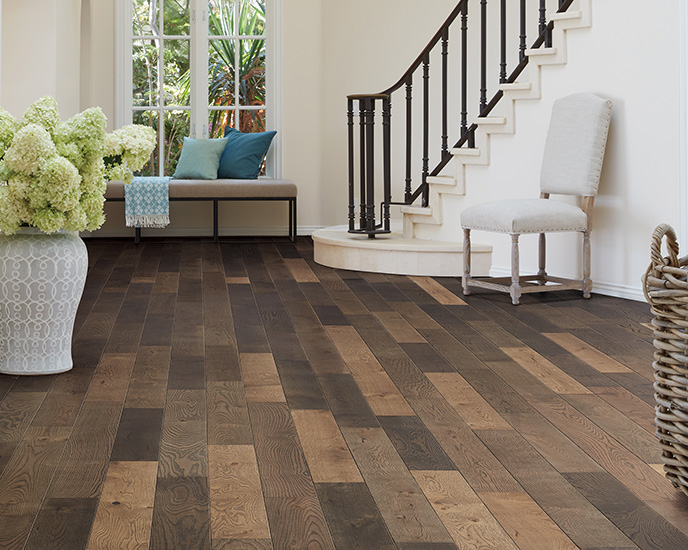
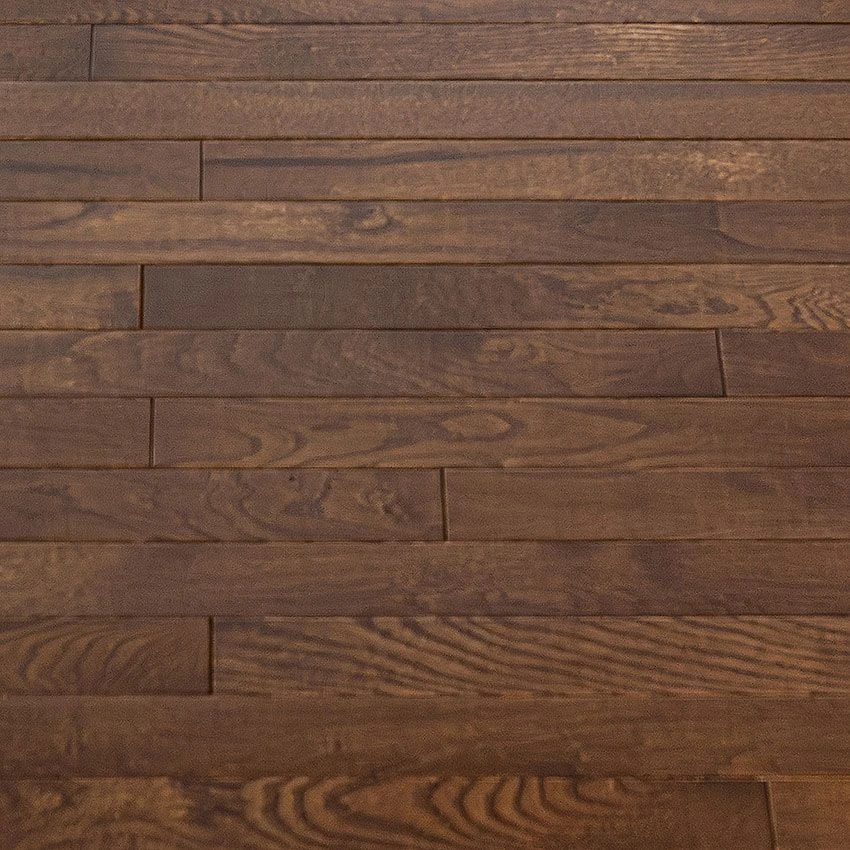
Walnut is the wood you choose when you want something that says "this floor was not an afterthought." The rich chocolate tones and flowing grain patterns make it one of the most visually striking options available.
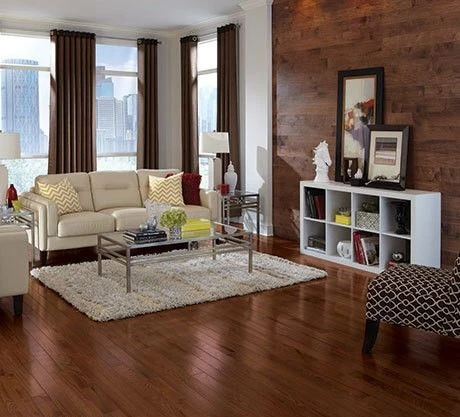
At around 1,010 on the Janka scale, Walnut is softer than the other entries on this list. But in a traditional interior where the hardwood floor isn't being used as a basketball court, Walnut's durability is more than adequate and the visual payoff is enormous.
How Flooring Grades Affect Durable Solid Hardwood Options for Traditional Homes
Here's something most flooring retailers don't want to explain to you, because it cuts into their margins. The grade is probably the single most misunderstood concept in the entire flooring industry.
Think of it like buying eggs at the grocery store. Grade A eggs look perfect and uniform. Grade B eggs might have slight variations in shell color or size, but they taste exactly the same. Wood grading works the same way.
We simplify the National Wood Flooring Association's complex grading system into three categories that actually make sense to real people:
- First Quality: The cleanest, most uniform appearance. Minimal knots, color variation, or character marks. Best for formal traditional spaces where consistency matters.
- Builder Grade: A step down in visual uniformity but still a solid, quality floor. You'll see more natural variation. This is where most contractors buy, and it's a significant discount over First Quality pricing.
- Cabin Grade: This is the 5-10% of wood that most stores flat-out refuse to carry because the profit margins are thin. We make it a core part of what we do. You get real wood character, including knots, wormholes, and color variation, at the cheapest possible price point.
For a traditional home with a rustic or farmhouse-influenced design, Cabin Grade solid planking is actually the most authentic-looking choice you can make. And the savings are real.
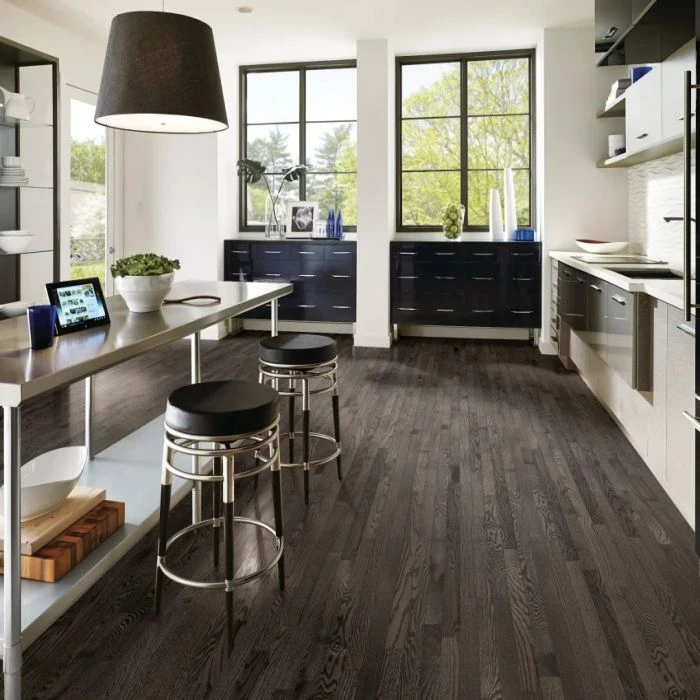
Top Options for Traditional Homes on a Budget
Let's be straight about something. You don't need to spend a fortune to get quality solid wood. You just need to know where to buy it.
Big-box stores mark up their flooring dramatically. They have to. They're carrying carpet, tile, laminate, appliances, and paint. Their overhead is massive. We don't sell any of that. We focus strictly on real wood, engineered planks, and LVP, which means our buying power on solid material is in a completely different league.
Here are a few practical strategies for finding cheap solid hardwood without getting junk:
- Shop Builder Grade over First Quality. The floor is structurally identical. You're paying a discount simply because of minor visual variation. For most traditional homes, Builder Grade looks completely natural and appropriate.
- Consider Cabin Grade for character-rich spaces. Mudrooms, libraries, and casual living areas are perfect candidates for Cabin Grade solid hardwood. The character marks tell a story.
- Watch for liquidation stock. We regularly carry liquidation flooring from top manufacturers. Some of this stock is genuinely higher quality than other brands' regular lines. I bet you've never heard of buying liquidation flooring as a savings strategy, but it's one of the best-kept secrets in this industry.
- Buy in volume when prices are right. Contractors and house-flippers we work with often use HELOC-funded inventory hedging to buy pallets of flooring before material costs rise. It's a real strategy that saves serious money over time.
The bottom line: you can absolutely find durable solid hardwood flooring at a discount price if you shop smart and work with a retailer who actually specializes in it.
Plank Width and Finish: Getting the Traditional Look Right
Species choice is important, but plank width and finish are what actually tie the floor to your home's architectural style.
In 2026, 7 to 10-inch wide planks have become the top choice for high-end traditional renovations. That wide, sweeping grain creates a sense of history and permanence that narrower strips simply can't replicate.
For finish, prefinished solid hardwood is the practical choice for most homeowners. The factory finish is more durable than anything applied on-site, and you can move furniture back in immediately after installation. Our American Home Country Hickory Natural is a great example of a prefinished solid hardwood that checks every box for traditional home flooring.
Unfinished solid hardwood gives you the flexibility to stain to any color on-site, which matters if you're trying to match existing floors or custom millwork. The trade-off is installation time and the off-gassing period from the finish application.
USA Manufacturers and Direct-Source Quality
Here's something worth knowing when you're comparing solid hardwood flooring options. Not all manufacturers are equal, and not all dealers have the same access.
We have a direct sourcing relationship with Somerset Hardwood Flooring in Somerset, Kentucky. That's a Made-in-the-USA operation that we've worked with closely for years. What most people don't know is that Somerset's lower-grade "fallout" wood is genuinely better quality than a lot of other manufacturers' premium lines.
Every purchase you make through us directly supports American manufacturing. That's not just a talking point for us. It's something we've been committed to since our parents bought this business in 1973, and it matters more than ever in 2026.
What Real Customers Say About Solid Hardwood in Traditional Homes
We've been lucky to work with customers all across the country who've transformed their traditional spaces with solid wood. The results speak for themselves.
From customers who've installed our prefinished planks in historic farmhouses to those who chose a pale quartersawn finish for formal Craftsman bungalows, the feedback is consistent: the right solid floor changes the entire feel of a room. It adds weight, warmth, and permanence that no other flooring material can match.
Our Floor Talk community on Digg is a great place to see real project photos and connect with other homeowners who've gone through the same decisions you're facing. When you're trying to choose between species or grades, nothing beats seeing a real finished floor in a real home.
Where to Buy Flooring for Traditional Homes at a Real Discount
If you're serious about getting the best price on durable solid wood, you need to skip the big-box stores. Their markup on flooring is significant, and you're subsidizing their carpet and appliance departments whether you realize it or not.
We operate out of our warehouses in Murphy, NC and Blue Ridge, GA, and we hold a Monthly Warehouse Sale at the Murphy location that draws buyers from across the region looking for real deals on solid hardwood. If you're not local, our online store carries the same inventory at the same prices.
The key point: we specialize. We sell real wood, engineered planks, and LVP. That's it. No carpet, no tile, no laminate. That focus is what allows us to buy smarter, price cheaper, and give you better advice than any general home improvement store ever could.
For any homeowner looking at the top durable solid wood options for traditional interiors, that kind of specialization matters more than any loyalty points program or big-box financing deal.
Conclusion: Finding the Best Flooring Options for Your Traditional Home
The top durable options for traditional interiors come down to five core choices. Each one brings something different to the table, and the right pick depends on your style, your traffic levels, and your budget.
What we can tell you after more than 50 years in this business is that solid wood in a traditional setting is never a mistake. It adds real value, real character, and real longevity. With a 118% return on investment and the majority of buyers actively willing to pay more for real wood floors, it's one of the few improvement decisions that genuinely pays you back.
Whether you're shopping for a cheap Cabin Grade option or looking at premium Walnut planks for a formal dining room, we've got the inventory, the expertise, and the discount pricing to help you stay under budget without sacrificing quality. Browse our American Home Country Natural as a starting point and take it from there.
Frequently Asked Questions
What is the most durable tongue and groove floor for a traditional home in 2026?
At 1,820 on the Janka scale, it is the hardest and most durable domestic option available. For traditional residences that need maximum durability alongside classic character, this prefinished plank is the top choice in 2026.
Does solid work for a traditional home or should I go with engineered?
A solid plank is worth every penny for a traditional home because it can be sanded and refinished multiple times over decades, making it a lifetime floor. Engineered construction has its place, but if you want an authentic, permanent floor with a real wood feel, solid is the answer.
What's the cheapest wood for a traditional home that still looks good?
Red is consistently the most affordable solid option that still delivers a premium traditional look. If you're open to more character variation, Cabin Grade in any variety is the cheapest option available without sacrificing the authenticity of real wood.
How do I get real discount flooring without buying junk?
Buy from a specialist retailer rather than a big-box store, and look for Builder Grade or Cabin Grade options instead of First Quality. Direct-source retailers who focus exclusively on real wood consistently offer better prices than general home improvement stores because they have no overhead to pass on from unrelated product categories.
What wood type works best with traditional home trim and millwork?
Both pale and red-toned varieties pair naturally with traditional trim profiles, crown molding, and wainscoting because their grain patterns and tonal range complement classic architectural details. Hard Maple is ideal for more formal traditional spaces where a cleaner, more restrained look is preferred.
Does solid wood flooring actually increase home value in 2026?
Yes, and the numbers are clear. Properties with real wood floors sell for 2.5% to 5% more than comparable listings without them, and 54% of buyers in 2026 are willing to pay a premium for a home that already features natural planks. It's one of the highest-ROI upgrades a homeowner can make.
What plank width should I choose for solid wood in a traditional home?
For a classic traditional look, choose planks that are at least 5 inches wide. In 2026, 7 to 10-inch wide planks are the premium standard for high-end traditional renovations, creating that authentic, historic estate feel that narrow strip flooring simply cannot achieve.