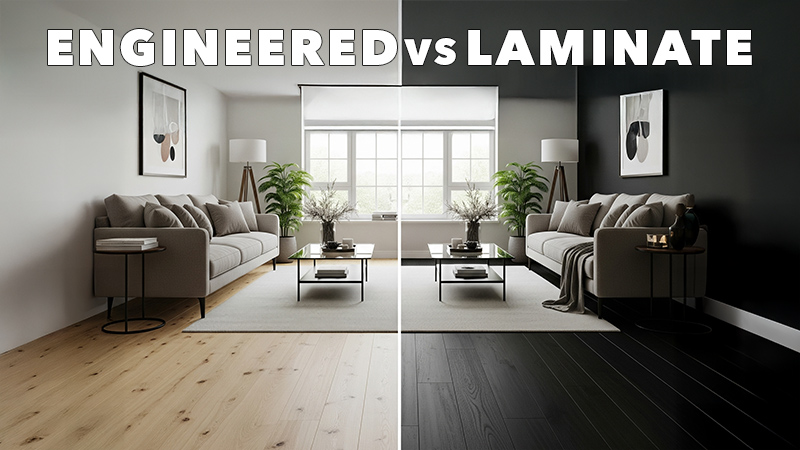
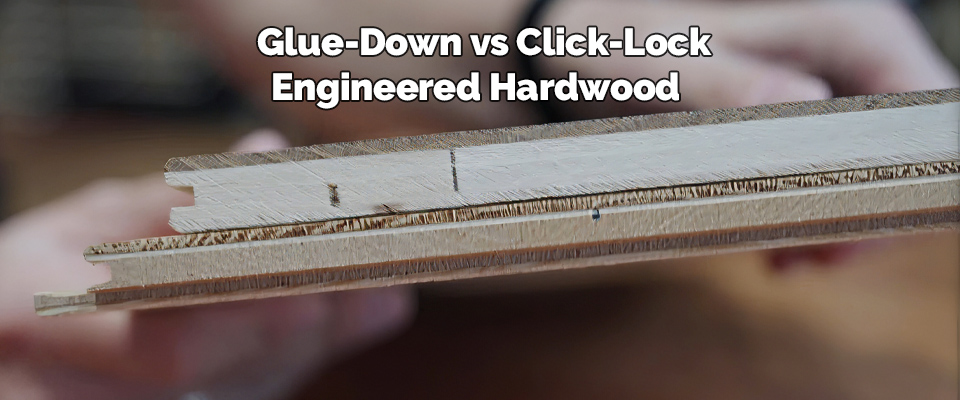
When you sit down to compare glue-down vs click-lock engineered wood floor systems, you quickly realize this isn't just a question of personal preference. New hardwood floor installations return approximately 118% of their cost at resale, which means getting the installation method right actually matters for your wallet long after the floor goes down. Choosing the wrong system for your subfloor, your budget, or your skill level is the kind of mistake that costs real money to fix. Overall click-lock flooring is more forgiving if adding up mistake after mishap as a newbie is your main fear.
Key Takeaways
| Question | Quick Answer |
|---|---|
| Which system is cheaper to install? | Click-lock. Labor runs roughly 40% less than glue-down in 2026. |
| Which feels more solid underfoot? | Glue-down. Full adhesive contact eliminates hollow spots and flex. |
| Can a homeowner DIY click-lock flooring? | Yes. It's the system most DIYers actually finish without calling a pro. |
| Which works better on concrete? | Both can work on concrete, but glue-down with a moisture barrier is the more reliable long-term choice. |
| Is click-lock reversible? | Yes. Floating click-lock floors can be pulled up and reinstalled in another room or taken with you when you move. |
| Does the installation method affect engineered hardwood quality? | No. The core construction and veneer quality matter far more than the locking system. Don't let a box store tell you otherwise. |
| Where can I find discount engineered hardwood flooring in both systems? | Browse our full engineered hardwood collection for both glue-down and click-lock options at honest prices. |
Learn the Adhesive & Floating Floor Engineered Wood Floor Installation Systems
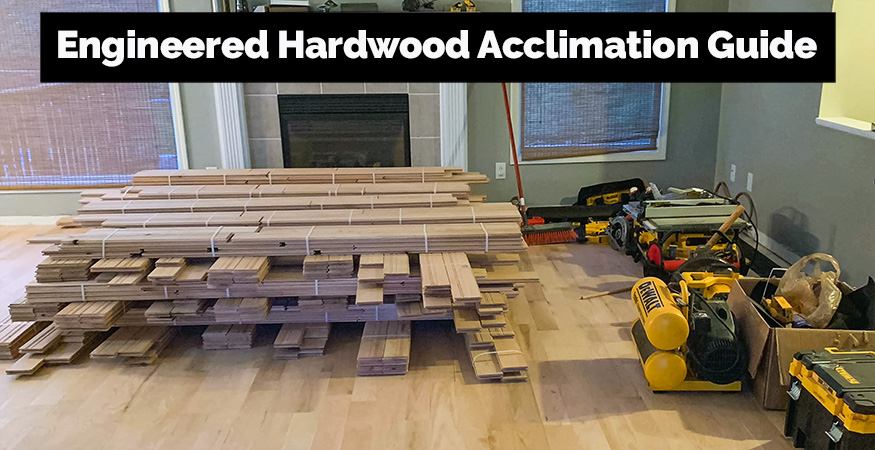
Honestly, most people overthink this. When you compare glue-down vs click-lock engineered hardwood floor systems, you are really just choosing how the board attaches to the subfloor. The wood itself, the core construction, the face veneer quality, all of that stays the same.
It is important that we discuss these as definitions as opposed to preferences and opinions, because the internet has made this topic more confusing than it needs to be.
- Glue-down means the engineered hardwood board is adhered directly to the subfloor using a urethane or pressure-sensitive adhesive. Every inch of the floor is bonded. It does not float. It does not move. It is permanent.
- Click lock means the boards snap together at their edges using a tongue-and-groove or Uniclic-style locking profile. The whole floor floats over the subfloor as one connected unit, held down by its own weight and perimeter moldings after a full floor installation.
That is the whole difference. Simple. What gets complicated is figuring out which method is right for your specific situation, your subfloor, your skill level, and your budget. Let's walk through it.
Glue Down Engineered Hardwood Flooring: The Solid, Permanent Choice

Glue-down flooring is the professional contractors preferred method for a reason. When every plank is bonded to the subfloor, you get a floor that feels like solid hardwood. No hollow echo when you walk across it. No flex in the boards. Just a solid, quiet surface. This approach is popular with laminate flooring as well.
Here's where glue-down earns its reputation:
- Best on radiant heat systems. Full adhesive contact means heat transfers evenly, and the boards are restrained from seasonal expansion that would otherwise cause gaps or buckling in a floating floor.
- Best in high-traffic commercial applications. Retail stores, restaurants, and busy households beat the daylights out of floors. Glue-down holds up to that punishment because the boards cannot shift.
- Best for wide-plank engineered hardwood flooring. Boards 5 inches and wider tend to cup and bow more noticeably in a floating installation. Gluing them down controls that movement.
- Works on concrete slabs when used with the correct moisture-control adhesive or separate moisture barrier.
The trade-off is real, though. Glue-down is labor-intensive, messy, and essentially permanent. If you change your mind about the floor in five years, you are in for a serious demolition job. And the adhesive is not cheap.

If you are hiring a professional installer for your engineered hardwood flooring project in 2026, glue-down labor runs roughly $5.50 to $9.50 per square foot depending on your market. That adds up fast on larger rooms.
Click-Lock Engineered Hardwood Flooring: The Smart Choice for DIYers and Renters

I put click-lock flooring in my rental house and it was the right call. Not because it's the "best" floor in some abstract sense, but because it was practical. Faster to install. Easy to repair individual boards if a tenant damages one. And honestly, the finished product looks just as good as glue-down to any normal person walking across it.
Click-lock has legitimate advantages that glue-down simply cannot match:
- DIY-friendly. If you can set a level and use a mallet, you can install a click-lock floor. The tools are cheap. The learning curve is manageable over a weekend.
- Reversible. Unlike glue-down, a floating floor can be unclipped and reinstalled somewhere else. If you're a renter or you're staging a home for sale, that matters.
- Faster installation. A skilled installer can cover significantly more square footage per day with click-lock vs. glue-down. That translates directly into lower labor cost.
- More forgiving on slightly uneven subfloors. The underlayment pad that goes under a floating floor absorbs minor imperfections better than glue-down, which requires a very flat and clean substrate.
- Works over existing flooring in some cases, which can save demolition costs.
The honest downside? Click-lock floors can feel slightly hollow underfoot in spots where the subfloor dips. And in very large open rooms, the floating floor can develop a subtle "wave" effect over time if the subfloor prep was not right. Neither of these is a dealbreaker. They're just things you should know going in.
Compare Glue-Down vs Click-Lock Engineered Hardwood Floor Systems: Full Cost Breakdown
There are 2 things that thrill me: buying the good stuff and saving money. So let's talk dollars honestly, because the installation method choice has real financial consequences.
| Cost Factor | Glue-Down | Click-Lock (Floating) |
|---|---|---|
| Professional Labor (2026) | $5.50–$9.50/sq. ft. | $3.00–$5.50/sq. ft. |
| Adhesive Cost | $0.50–$1.50/sq. ft. additional | None (underlayment pad ~$0.25–$0.50/sq. ft.) |
| DIY Feasibility | Difficult. Requires trowel work, timing, and experience. | Moderate. Most homeowners can handle it. |
| Subfloor Prep Requirements | Very flat. Dips over 3/16" per 10 ft. must be corrected. | More forgiving. Underlayment absorbs minor variation. |
| Repair Cost | High. Individual boards are difficult to remove cleanly. | Low. Boards can often be unclicked and replaced. |
| Longevity/Stability | Excellent. Zero movement. | Very good. Minor seasonal movement possible in large rooms. |
| Best For | Concrete slabs, radiant heat, commercial, wide planks. | Rentals, DIY projects, upper floors, staged homes. |
Simply put: if your money is tight and you are doing the work yourself, click-lock is the move. If you are paying a pro to put down a floor over a concrete slab with radiant heat, glue-down is worth every penny of the extra cost.
And if you want a cheap floor on a rental, buy a discount click-lock engineered product, install it yourself, and spend your savings on paint. That philosophy has worked fine for me more than once.
Which Installation Method Is Best for Concrete Subfloors?
This is the question I get asked more than any other when people are trying to compare glue-down vs click-lock engineered hardwood floor systems. Concrete is a different animal than wood subfloor, and the answer matters.
Concrete holds moisture. Not always obviously, but it does. And moisture is the enemy of hardwood flooring in any form.
Glue-down on concrete: This works very well when done correctly. The key word is "correctly." You need a moisture vapor emission rate (MVER) test done first. If moisture is present, you use a moisture-control adhesive or roll on a membrane barrier before the adhesive goes down. Done right, a glue-down floor on concrete is rock solid and will last decades.
Click-lock floating over concrete: Also viable, but you need a proper underlayment with a built-in vapor barrier. The floor floats above the slab, which actually provides a tiny bit of insulation. The weak point is that if moisture gets under the underlayment and has no path to escape, you can get mold under there without knowing it for a while. Good moisture testing and a quality 6-mil poly barrier or combination underlayment solves this.
For below-grade installations (basements), I lean toward glue-down with a moisture-control adhesive as the more reliable long-term solution. For on-grade or above-grade concrete, either method works when done properly.
The "Best For" Guide: Compare Glue-Down vs Click-Lock Engineered Hardwood Floor Systems Side by Side
Let me cut through the noise and just tell you which system wins in each real-world scenario. This is the practical guide I wish someone had handed me the first time I had to make this call.
Choose Glue-Down If:
- You have radiant floor heating
- You are installing wide-plank boards (5 inches or wider)
- You are going over a concrete slab, especially below grade
- You want the quietest, most solid-feeling floor possible
- You are doing a commercial installation with heavy foot traffic
- You are hiring a professional and permanence is the priority
Choose Click-Lock If:
- You are installing the floor yourself to save on labor
- You want a discount engineered hardwood flooring option that still looks great
- You are doing a rental property and may want to pull the floor up later
- You are going over an existing floor surface to avoid demo costs
- You are installing on an upper level over a wood subfloor
- You want easy access for future repairs or individual board replacement
"If I sound a bit prejudiced towards our engineered collections, it is because I am." The honest truth is that a quality 8-ply, 1/2-inch engineered floor installed via click-lock by a careful DIYer will outperform a cheap 5-ply glue-down any day of the week. The installation method matters, but the core construction matters more.
Our Top Engineered Hardwood Picks
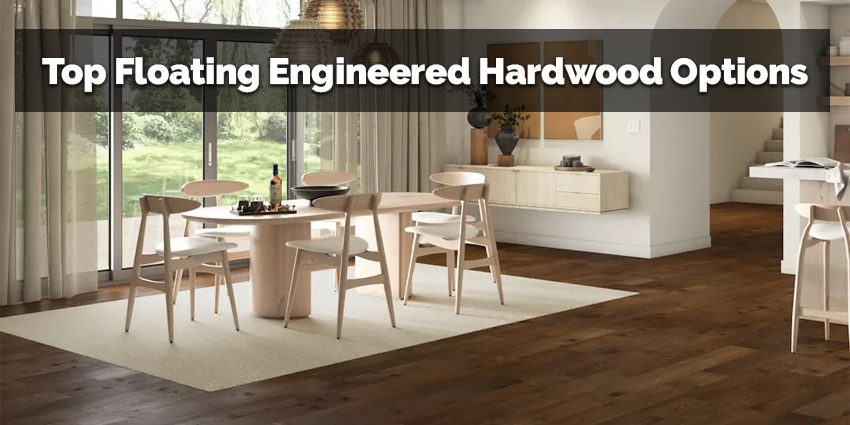
We carry engineered hardwood flooring that works beautifully in both installation systems. Here are some standouts from our current collection. If I sound a bit prejudiced towards these picks, it is because I am. These are real first-quality floors, not the motley collection of Builder Grade seconds you'll find stuffed into a big box store's discount bin.
Duet Rhett's Desire 7.5" 1st Quality
A wider plank that thrives in a glue-down application. The 7.5-inch width means radiant heat and concrete slab installs benefit most from full adhesive contact on this one.
Canyon Elements Cedar Creek 7.25" 1st Quality
Works in either installation method. The click-lock system makes this a strong DIY candidate for upper-level rooms over wood subfloor. Good honest floor.
Dogwood Charles Engineered Hardwood
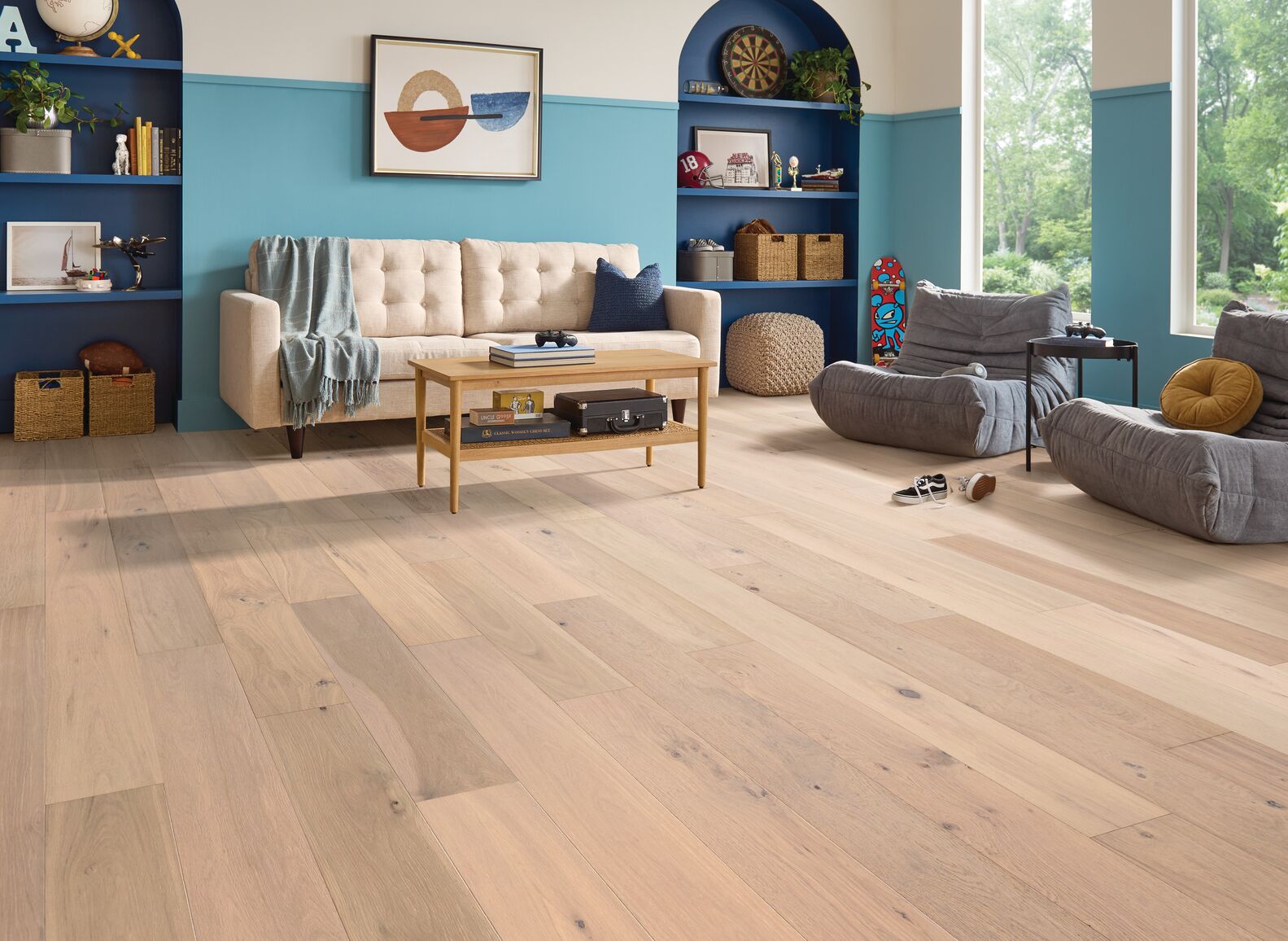
A great rental-grade option when money is tight. Floating click-lock install keeps your labor costs down and the floor still looks sharp in the room scene. I'd put this in a rental without hesitation.
Want to see the full lineup? Browse all of our engineered hardwood flooring options and filter by the installation method that works for your project.
Don't Forget: The Core Construction Still Matters More Than the Install Method
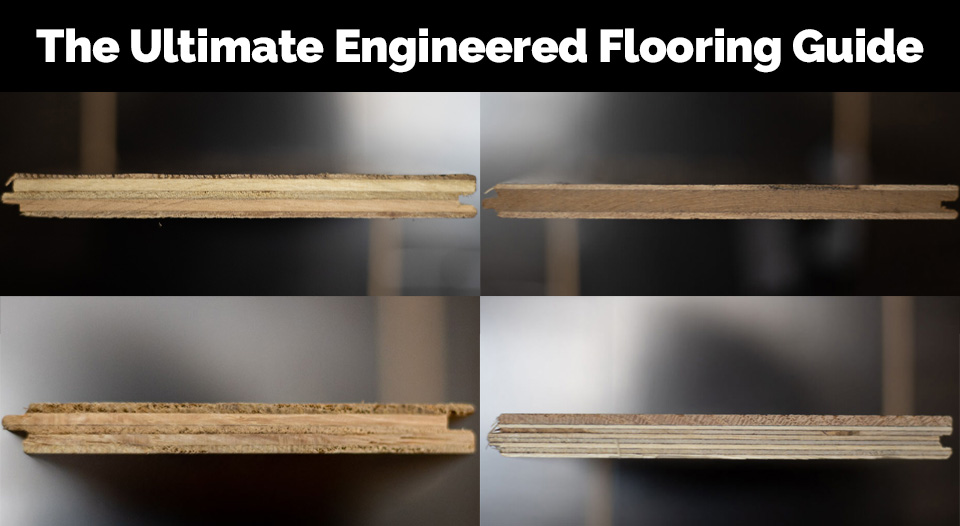
This is the part where I need to say something that most flooring websites skip. Please skip right past the 5-ply engineered flooring to the good stuff. An 8-ply, 1/2-inch core is a fundamentally better floor, regardless of whether you glue it down or float it.
Here's why that matters when you compare glue-down vs click-lock engineered hardwood floor systems: the installation method controls how the floor connects to your house. The core construction controls how the floor responds to humidity, heat, and foot traffic over its entire life.
- 8-ply core: More dimensional stability. Less seasonal movement in both glue-down and floating systems. Worth the extra money every time.
- Face-sawn veneer: Shows the actual hardwood grain the way nature intended. Far superior to rotary-peeled veneer, which looks plasticky and uniform. I won't carry rotary-peeled if I can help it.
- Thick wear layer: A 2mm or thicker wear layer means you can sand and refinish the floor at least once. A thin 0.6mm layer is a one-and-done deal. Know what you're buying.
The box stores push thin, cheap engineered flooring with decent-looking click-lock systems because the locking mechanism is visible and tangible. What you can't easily see is the 5-ply core that will telegraph every subfloor imperfection and start to feel soft within a few years. That is the scam. I realize that is big talk, but we can back it up.
Our Blue Ridge High Meadow 7.5" engineered hardwood is a good example of what first-quality construction actually looks like when you're not compromising on the core just to hit a price point.
A quick visual guide to the top differences between glue-down and click-lock engineered hardwood floor systems. Helps you choose the right installation method.
Common Mistakes to Avoid With Both Systems
I've seen these mistakes enough times that they deserve their own section. None of them are catastrophic on their own, but they tend to cluster together and produce floors that fail prematurely.
Mistakes with Glue-Down:
- Skipping moisture testing on concrete. This is the number one cause of glue-down failure. The adhesive can trap moisture and cause cupping or bond failure. Test first. Every time.
- Using the wrong adhesive. Not all urethane adhesives are compatible with all core constructions. Read the manufacturer spec sheet and buy the recommended product.
- Not troweling to the right spread rate. Too little adhesive and you get hollow spots. Too much and you get squeeze-up in the joints. Follow the instructions on the pail.
Mistakes with Click-Lock:
- Not leaving expansion gaps. A floating floor needs 1/4-inch expansion space at every wall and vertical obstruction. Skip this and the floor will buckle when the humidity rises.
- Using too thick an underlayment. Thick, spongy underlayments feel great but can cause locking joints to stress and fail over time. Check the manufacturer's maximum underlayment thickness spec.
- Installing in a room that is too large without transitions. Large open-plan click-lock floors need T-molding transitions at doorways and at the 30-to-40-foot span limit. This is not optional.
Conclusion
When you actually sit down and compare glue-down vs click-lock engineered hardwood floor systems, the honest answer is that neither method is universally superior. They are tools. The right tool depends on your subfloor, your budget, your skill level, and how permanently you want the floor committed to your house.
Glue-down wins on concrete, on radiant heat, with wide planks, and in commercial applications. Click-lock wins for DIYers, rentals, upper-level wood subfloor installs, and anyone who values flexibility and lower installation cost.
What I will tell you is this: do not let the installation method distract you from the more important question, which is the quality of the engineered hardwood flooring itself. A cheap, thin-core board installed with a perfect glue-down method is still a cheap floor. An 8-ply, face-sawn, first-quality engineered plank installed via click-lock on a clean subfloor is the good stuff, regardless of what the box stores will tell you about "professional installation methods."
If you want to find discount engineered hardwood flooring that doesn't compromise on core construction, browse what we actually carry. We back up every claim we make about the product, and we will tell you the ugly truth about any floor in our catalog before you buy it. That is the deal.
Frequently Asked Questions
Is gluing or click lock engineered hardwood better for basement installations in 2026?
Glue-down with a moisture-control adhesive is generally the more reliable choice for below-grade basement installations because it gives you a moisture mitigation layer built into the bonding process. Click-lock can work in basements but requires a very good vapor barrier underlayment and consistent moisture control. When the stakes are high, glue-down wins underground.
Can I glue down a click locking engineered hardwood floor?
Some click-lock engineered hardwood flooring products are rated for both floating and glue-down installation, but not all. Check the product specification sheet before you buy adhesive. Using a glue-down installation with a board designed only for floating can void the manufacturer warranty and sometimes create adhesion problems with certain core constructions.
Is a click and lock engineered floor good enough for a high-end home?
Absolutely. The installation method has no bearing on the visual quality or the durability of the hardwood itself. A first-quality, 8-ply, face-sawn engineered hardwood installed as a floating click-lock floor looks identical to the same product glued down. Focus on the veneer quality and core construction, not the installation method, if you want the good stuff.
Which is cheaper in 2026?
Labor for click-lock floating systems runs approximately $3.00 to $5.50 per square foot in 2026, compared to $5.50 to $9.50 per square foot for glue-down, a difference of roughly 40%. Add in the cost of adhesive for glue-down (another $0.50 to $1.50 per square foot) and the savings with click-lock on a 500-square-foot room can easily exceed $2,000.
What is the best for a DIY click-lock installation?
Look for a product with a Uniclic or similar glueless locking profile, a core thickness of at least 1/2 inch, and an 8-ply construction. Avoid thin 3/8-inch engineered boards for floating installations, as they are more prone to feeling hollow and to joint stress. Our Noble's Way Winter River 7.25" engineered hardwood is a solid first-quality option worth looking at.
Does glue-down engineered hardwood flooring add more resale value?
Not in any measurable way that buyers or appraisers distinguish at resale. What adds value is the quality of the hardwood itself, the width of the plank, and the condition of the floor. The installation method is invisible once the floor is down and the moldings are in place. Both systems contribute to that 118% average return on hardwood flooring investment.
Is there a discount engineered hardwood flooring option?
Yes, and that is exactly what we stock. Many of our first-quality and Builder Grade engineered hardwood options are rated for multi-method installation. The key is checking the product specification before you commit to an installation method. Some of our best value floors are explicitly designed to handle either system, giving you maximum flexibility without paying full retail price.