In 2026, oak floors moving due to changing seasons is still the #1 reason homeowners call us right after their first real humidity swing, and it surprises people because it feels “random” until you understand how a wood floor actually behaves. Did you know red oak currently dominates the wood type segment (52%), meaning this movement issue is affecting the majority of North American hardwood owners. A little seasonal movement is normal but if you are experiencing a hardwood floor that looks defective then its time to read this seasonal hardwood blog right now.
Key Takeaways on the Stability of Red Oak Floors
| 1) Expect movement, not failure | Seasonal humidity changes make expand and shrink, even in “good” homes. |
| 2) Aim for the right indoor RH | A common RH target homeowners try to stay in is 40-50%. |
| 3) Control subfloor moisture at install | Install conditions matter, because subfloor moisture drives board movement later. |
| 4) Grade and construction change how “loud” movement looks | Cabin grade can look amazing, but you will see more character when the wood reacts. |
| 5) Finish and maintenance matter | The shiny finish doesn’t hold up in a “life happens” type of home, and gloss makes gaps look worse. |
| 6) If you’re buying, buy with the climate in mind | Start with the right plank width and learn your seasonal rhythm. |
- Check our Current Inventory before you order: Red Oak Hardwood Flooring
- Want a real-world finish check: Why non-glossy hardwood floors are the standard
- Flipper reality: Best way to buy flooring as a home flipper
Alright, now let’s get blunt. Red oak hardwood flooring isn’t “bad” because it moves. It moves because it’s wood, and it’s a great deal of the reason red oak stays popular in 2026. The win is knowing what movement looks like, what causes the problem moments, and how to set yourself up so the floor survives life, not just the showroom.
Homeowners report red oak flooring gaps and cupping moving 35-50% with seasonal humidity changes.
What “Seasonal Movement” Really Means for Red Oak
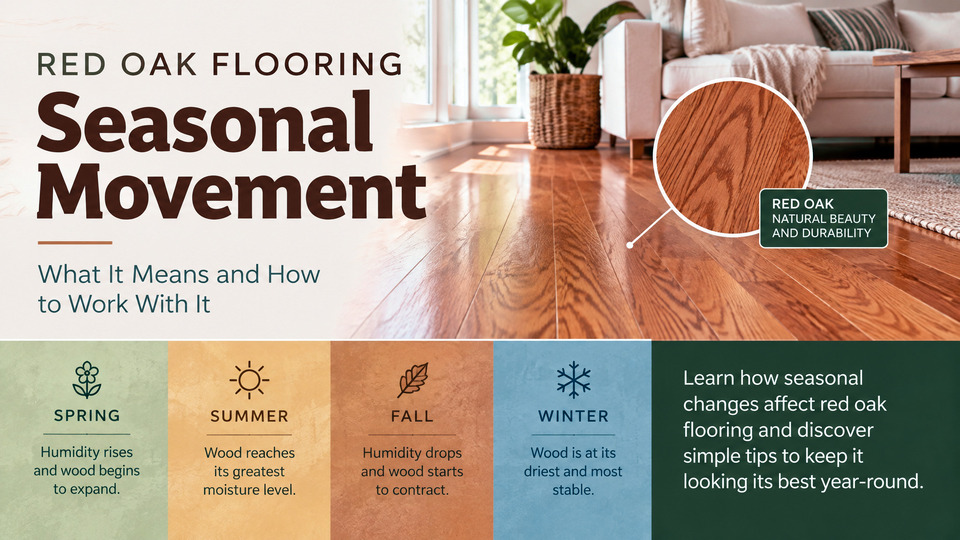
The hardwood flooring movement is just the wood responding to moisture changes in the air. When indoor humidity rises, boards swell. When humidity drops, boards shrink.
Here’s the part most people miss. It’s not just the floor “getting bigger” or “getting smaller.” The wood moves across the grain, so you can get width changes (gaps) and height changes (cupping) depending on installation and subfloor conditions.
Solid vs. Engineered Types Change the Movement Pattern
Solid hardwood reacts more directly to your home’s humidity. Engineered hardwood typically handles movement better because it’s built with layered construction. The industry is confirming what we’ve known for years, most people replace glossy floors for a product at Really Cheap Floors.
Still, even engineered options can show seasonal movement at the surface if the climate swings hard. So you don’t ignore humidity, you manage it.
Why Any Movement Feels Worse in 2026 Homes
Modern homes are tighter. Better windows, better insulation, and fewer air leaks mean your HVAC system controls humidity more directly, for better or worse.
Now add real life, laundry days, muddy dog paws, wet umbrellas, kitchens that run hot, and basements that breathe. That’s why we tell people this is life happens flooring, not a museum piece.
The Humidity Range That Drives Gaps, Cupping, and “Why Now?”
When you hear “gaps showed up,” what’s usually happening is the boards shrank after the air got drier. When you hear “it’s cupped,” you’re dealing with boards that swelled and the board shape pushed upward in the wrong conditions.
In 2026, more homeowners are tracking humidity than ever, and the pattern stays the same. You get noticeable hardwood flooring movement when your indoor RH swings outside a safe comfort zone, even if you feel like the house is “normal.”
The moisture window you should plan around
- Below a lower humidity threshold (around 30%), hardwood can start to shrink more than you expect, and indoor comfort can suffer.
- Inside the typical 40-50% target range, red oak movement still happens, but it’s usually smaller and more predictable.
- Above a higher humidity threshold (around 55%), the wood environment gets risky for swelling and moisture-related issues.
And yes, even if you land in a “reasonable” range, some homes still see gaps. A reported home humidity range where red oak floor gaps were still noticeably visible is 35-50%. That tells you it’s not just the target number, it’s how stable your home stays.
Subfloor Moisture and Installation Timing, the Stuff Nobody Wants to Talk About
Here’s the blunt truth. Most of the time the subfloor moisture is way off from being dry when you install. The floor is not sealed from your building’s moisture conditions, even a white oak or any other species is affected by this.
If the moisture content difference between the flooring boards and the subfloor is too high, you can lock in stress and then watch it show up later as gaps, or worse, shape problems.
Target Low Moisture Levels
- Keep moisture content difference tight: the maximum acceptable difference is often described as 2 or 3 points.
- Subfloor moisture range: a commonly cited acceptable moisture content range is 6-12 for installation stability.
Need a simple homeowner translation? If your basement crawls moisture up toward the living space, your hardwood will “feel” it. If your HVAC can’t hold a steady humidity swing from winter to summer, your boards will keep reacting.
Plank Width, Grade, and Finish, How They Change What You Notice
People think the movement is the problem. Sometimes it is, but often the real problem is visibility. Wide planks show movement more dramatically because small changes in wood moisture translate into bigger visible width shifts.
And grade plays a role too. Buying our Blue Label cabin grade gives you the exact same material and finish as 1st Quality for a fraction of the cost. But cabin grade is not pretending it’s identical to perfectly uniform first quality. It ain’t all pretty, but it has character.
Why grade affects “appearance”
- More variation means more reading into changes: knots, mineral streaks, and natural board character can make swelling or shrinking look more dramatic.
- Short boards and mill run layout: Expect lots of short pieces and you will not be disappointed. Short boards can also break up the visual impact of board-by-board movement.
- Finish sheen changes the perception: The shiny finish doesn’t hold up in a “life happens” type of home, and gloss highlights shadow lines from gaps.
If you want to shop red oak with this in mind, start with our Red Oak collection. It’s built to help you match width, color, and construction to how your home actually runs in 2026.
Best Hardwood Floor Choices in 2026
“Best” depends on your climate and your tolerance for seeing the wood react. So we’re going to give you practical picks, not vague promises.
1) Solid builder options when you’re ready to manage humidity
Solid red oak can look fantastic. But you have to be realistic about your wood floor and keep your indoor humidity stable.
Example product to consider:
Winchester Red Oak Natural 2.25" Builder is listed at $2.29. If you’re installing and you can keep your home around the recommended RH range, this type of builder style is a straightforward way to get the red oak look without overpaying.
2) Cabin grade when you want killer value and accept character
Cabin grade is where regular folks can finally get the quality they expect without the big-box markups. Most stores flat-out refuse to carry Cabin Grade because the profit margins are thin.
Examples we see people buy specifically for real homes:
Oak Lakes Red Oak Natural 4" Cabin is listed at $2.99. And:
Oak Lakes Red Oak Natural 5" Cabin is listed at $3.29. Wider planks can show movement more, but cabin grade short-board layouts can also make the seasonal shifts look more “designed” instead of “failed.”
3) Engineered Hardwood Floors Create Less Drama
If you know your house humidity swings are hard to control, engineered is usually the safer bet. It’s not magic. It just resists movement better because of the construction.
Example product to consider:
Chateau Oak Red Oak Natural 5" 1st Quality (Engineered) is listed at $3.49. If the flip *must* have solid hardwood, you should never, ever pay full price. Otherwise, engineered can save you from seasonal movement headaches.
How to Minimize Movement (Without Guessing)
You cannot “stop” wood from moving. You can reduce the problem movement and reduce how noticeable it becomes.
- Track your humidity in 2026, especially during heating season and peak summer humidity.
- Target a stable RH range (commonly 40-50%), because stability beats perfection.
- Use a proper moisture test at install and compare the subfloor and the flooring boards. Keep the difference within the commonly cited 2 or 3 points.
- Choose plank width that matches your tolerance. Wide boards show movement more visually.
- Avoid glossy, showy finishes if you want gaps to look less obvious. Remember, the shiny finish doesn't hold up in a “life happens” type of home.
If you’re already dealing with seasonal gaps, don’t rush to panic. First, check humidity stability. Then check if you installed when the subfloor moisture was within the acceptable 6-12 range. That’s the boring stuff that actually fixes the cause.
Why “Non-Gloss” and Real Maintenance Help With Movement Visibility
We keep saying it because people forget it. Your floor doesn’t just move, it reflects light. Glossy floors turn tiny shadow lines into obvious problems.
That’s why our guidance is consistent: choose finishes that look good in normal lighting, not showroom lighting. You want a finish that hides dust, hides micro-scratches, and does not make every gap line pop out.
If you want the full breakdown, read the end of the shine. It’s the kind of advice you wish you got before your first “why is my floor doing that?” call.
When to Switch From “It’s Normal” to “We Need to Fix Something”
Here’s the line we use when people call. Seasonal movement is normal. Repeated, worsening movement that doesn’t track with humidity patterns is a sign something else is going on.
Watch for these red flags
- Gaps that keep opening beyond what your seasonal RH predicts
- Cupping or twisting that doesn’t improve when humidity stabilizes
- Visible movement right after install, especially if subfloor testing wasn’t handled carefully
If you bought cabin grade or another value-focused option, you still should expect it to perform. The difference is how much character you’re willing to accept. Living on a mirror isn't practical, and in 2026, it isn't stylish either.
Frequently Asked Questions
How much movement is normal in 2026?
A wood floor will move with moisture changes because wood expands and shrinks with humidity. Many homeowners see noticeable gaps in response to stability issues, even within a commonly reported indoor RH window like 35-50%.
What indoor humidity range helps prevent gaps?
A common target homeowners use for wood flooring is around 40-50% relative humidity. The key in 2026 is stability, because repeated swings make gaps more noticeable.
Should I worry if my floor gaps show up in winter?
Winter often brings lower humidity, which can cause boards to shrink and create gaps. If the gaps match your seasonal humidity pattern and improve later, that typically fits a normal wood floor behavior.
Can engineered red oak reduce movement compared to solid?
Yes, engineered hardwood often reduces the visible impact of floor movement because its construction is built to resist dimensional change better than solid planks. You still need proper floor installation conditions and reasonable humidity control.
How do I know if my subfloor moisture is causing red oak movement?
If your moisture difference between the wood floors and the subfloor is too high, the floor can get worse over time. Installers typically aim for a tight moisture difference (often described as 2 or 3 points) and a subfloor moisture range that supports stability.
Does finish sheen make red oak gaps look worse?
It can. Glossy finishes highlight shadow lines and make the visual effects of a changing floor more obvious. That’s why we push non-gloss options for “life happens” homes.
What should I buy in 2026 if I want killer value but less movement drama?
Pick options that match your humidity reality. Cabin grade can be a great value when you accept character, and engineered styles are usually the better match if you struggle to keep RH stable.
Conclusion On Red-Oak Flooring Movement
The moving floor is not a defect, it’s a predictable response to humidity. In 2026, the homes people live in are tighter and busier, so the movement shows up more often, and it shows up faster when indoor RH swings.
So we suggest you do it the smart way. Target stability around the commonly recommended RH range (often 40-50%), keep subfloor moisture in check during installation, and choose plank width and construction that matches your tolerance. If you want killer value without big-box markups, start with our red oak flooring selection, then order with the movement reality in mind.
If you’d rather talk to a human, call us to order at 1-800-253-2728.