Here's a stat that'll surprise you: building codes now allow mass-timber structures to reach 18 stories tall, built almost entirely from engineered wood. If engineers trust this material to hold up a skyscraper, it can handle your living room floor.
Engineered wood stability and modern aesthetics go hand in hand, and that's not a sales pitch, it's just physics. A tree doesn't grow straight, and neither does the lumber cut from it. Engineered hardwood fixes that problem with a layered core, and it opens the door to the wide-plank, low-gloss looks everybody wants in 2026.
Key Takeaways
- Engineered hardwood is built from layers, not one solid piece. That layered core is what stops the twisting and cupping that plague solid wood.
- Wide planks (7 inches and up) are only practical with engineered construction. Try that width in solid wood and you're asking for gaps by winter.
- Moisture resistance matters more than ever. Products like HydroGuard Maple Natural handle basements and humid climates that would destroy a solid board.
- Matte and low-gloss finishes are the modern standard, not glossy showroom shine. That shine looks great in a magazine and terrible after six months of "life happens."
- You don't need to pay big-box markups for engineered stability. Browse our full engineered hardwood shop and compare pricing yourself.
- Hardness still counts. Hickory is one of the toughest domestic species available in engineered form, built for real households.
- Wholesale and liquidator pricing exists for a reason. Manufacturers overproduce, and that surplus is where the real value lives.
What Actually Makes Engineered Wood Stable
Solid wood is a single, solid piece cut straight from a tree. A tree, and the lumber cut from it, are never grown straight, there are bends and twists built into the grain of every single board.
Even after milling, that wood still wants to move the way it grew. Humidity swings, seasonal changes, subfloor moisture, all of it pulls a solid board back toward its natural twist.
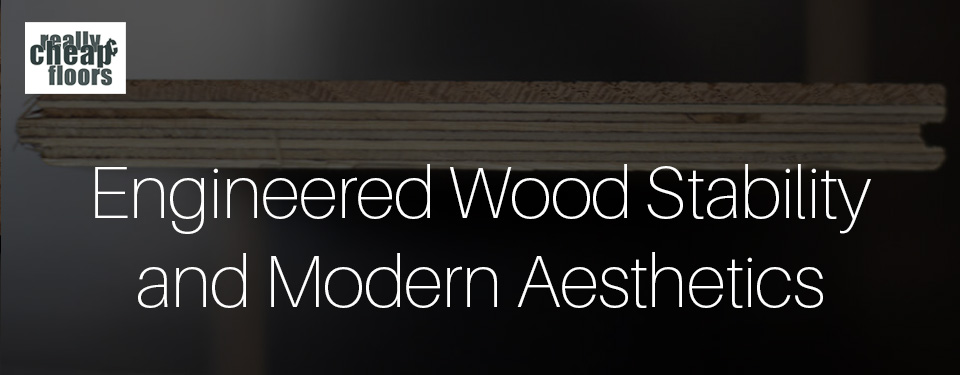
Engineered hardwood solves this with a plywood-style core, thin layers of wood stacked with the grain running in alternating directions. That cross-lamination cancels out the movement, so the plank stays flat instead of cupping or crowning on you.
A thin layer of real hardwood sits on top of that core, giving you the same look and feel as solid wood, just without the drama underneath.
Engineered Wood Stability and Modern Aesthetics: The Wide-Plank Trend Taking Over in 2026
Wide planks are the look right now, and we mean wide. Modern flooring trends favor boards 7 inches and wider to make rooms feel bigger and more open.
You physically cannot do that in solid wood without inviting gaps, cupping, and callbacks. Engineered construction is the only thing making that wide-open, modern look possible without the floor fighting you every season.
Take a look at what that stability actually lets manufacturers build:
Noble's Way Winter River runs 7.25 inches wide, First Quality, at $1.99 a square foot. That's a light, textured floor that opens up a room without the twisting issues a solid board that width would eventually show.
Duet Rhett's Desire goes even wider at 7.5 inches, priced at $2.79. It's a dark, dramatic stain built for modern spaces, the kind of bold statement floor that only makes sense with a stable engineered core underneath it.
Why Solid Wood Twists and Engineered Hardwood Doesn't
We said it at the top, and it's worth repeating: even when solid wood is cut, it wants to twist back the way it grew as a tree. That's not a defect, that's just how wood works.
Engineered hardwood's layered core fights that instinct directly. Living on a mirror isn't practical, and in 2026, it isn't stylish either, but you also don't want a floor that's rocking and gapping two winters after install.
Solid wood naturally twists, but engineered hardwood's layered core allows for expansive, stable modern aesthetics.
That's the whole story of engineered wood stability and modern aesthetics in one picture. You get the width and the character without the fight.
Canyon Elements Cedar Creek is a good example, a 7.25-inch First Quality plank at $2.49 that gives you classic hardwood character with a modern medium-brown color. It's stable across multi-level homes, which matters if you've got a walkout basement or a bonus room over a garage.
HydroGuard Maple Natural: Stability Where Solid Wood Can't Even Compete
Solid hardwood has a hard rule: no basements, no below-grade rooms, period. Moisture down there will warp a solid board fast, twist or no twist.
Engineered construction gets around that entirely, and HydroGuard Maple Natural takes it further with built-in moisture resistance.
This is a 6.5-inch wide plank built specifically for rooms where moisture could be a problem, laundry rooms, basements, homes near the coast. If dogs track in mud all day and the washer overflows once a year, this is the floor that shrugs it off instead of cupping at the seams.
Blue Ridge High Meadow: Modern Aesthetics That Actually Fit a Real Home
Not every room needs a dark, dramatic plank. Some homeowners want something warm and neutral that works in every room without fighting the rest of the house.
Blue Ridge High Meadow is a 7.5-inch wide plank in a mid-tone that reads warm without going orange or gray-washed. It's versatile enough to run through an entire multi-level home, and because it's engineered, that consistency holds up floor to floor regardless of what's happening with humidity in the basement versus the second story.
Hardness Meets Stability: American Home Country Hickory Natural
Stability is only half the equation. The wear layer on top still needs to survive dogs, kids, moving furniture, and everyday "life happens" traffic.
Hickory is one of the hardest domestic hardwoods you can put on a floor, period. It laughs off dents that would leave a mark in oak or maple.
American Home Country Hickory Natural comes in both engineered ($2.89) and solid ($2.99) versions, so you can compare the same species side by side and decide for yourself. The low-gloss finish helps hide the everyday wear and footprints that a shiny finish would show off like a spotlight.
If you want to dig deeper into hickory options across grades and finishes, our full hickory hardwood flooring collection is worth a browse before you decide.
The End of the Shine: Matte Finishes Are the Modern Aesthetic
The shiny finish doesn't hold up in a "life happens" type of home. Every scuff, every scratch, every dust bunny shows up under that high-gloss coat like it's under a spotlight.
That's why low-gloss and matte finishes have become the standard for modern aesthetics, not just a passing trend. The industry is confirming what we've known for years, most people replace glossy floors for a product with a lower sheen.
Wire brushed textures, hand-scraped surfaces, low-gloss red oak, they all do the same job. They hide wear instead of showing it off, and they pair naturally with the wide-plank engineered floors that dominate modern homes right now.
Living on a mirror isn't practical, and in 2026, it isn't stylish either.
Buying Engineered Hardwood Without the Big-Box Markup
Remember, cheap flooring is our middle name, and this guide is going to show you how to get killer value without the big-box markups. That mass-timber code approval and 81% construction-sector number above aren't just statistics, they're proof that engineered wood stability and modern aesthetics aren't a fad you need to overpay for.
Manufacturers overproduce constantly. Runs get cut short, colors get discontinued, boxes get mismatched, and all of it ends up in liquidator inventory instead of a landfill.
That's where a lot of our engineered hardwood pricing comes from, direct mill runs and discontinued colors sold at a fraction of retail. Expect lots of short pieces on some batches, and you will not be disappointed once you see what you saved.
Browse the full engineered hardwood collection for the current mill runs, or head to our shop to see everything we've got in stock right now, engineered and solid alike. Every option ships from a company that's been sourcing floors the same honest way for 50 years, the Cook family way.
If you want to start from scratch and just poke around, our homepage is the easiest place to see what's on sale this week.
Conclusion
Engineered wood stability and modern aesthetics aren't two separate selling points, they're the same story told twice. A layered core stops the twisting a tree's grain wants to do, and that stability is exactly what lets manufacturers build the wide, matte, character-rich planks homeowners want in 2026.
Solid wood still has its place, but it ain't all pretty when it starts cupping in a humid basement. If you want the modern look without the maintenance headache, or the price tag, take a look at our engineered lineup and see what fits your home.
Frequently Asked Questions
Is engineered hardwood actually more stable than solid wood?
Yes. Engineered wood stability comes from its layered, cross-laminated core, which cancels out the natural twisting and cupping that solid wood grain wants to do as it reacts to humidity.
Can engineered hardwood be installed in a basement?
Generally yes, unlike solid hardwood, which should never go below grade. Moisture-resistant options like HydroGuard Maple Natural are built specifically for basements and other damp-prone rooms.
Why are wide-plank floors so popular in 2026?
Wide planks of 7 inches or more create an open, modern look that makes rooms feel bigger. Engineered construction is what makes that width possible without the gapping problems solid wood would develop at that size.
Is glossy hardwood flooring still in style?
No, low-gloss and matte finishes have become the standard because they hide everyday scuffs and wear far better than a shiny finish. Glossy floors show every scratch under a "life happens" household.
How long does engineered hardwood actually last?
A quality engineered floor with a solid wear layer can last 25 to 30 years or more, and can often be refinished once depending on the thickness of the top veneer. The stable core underneath means it won't develop the warping issues that shorten the life of solid wood in tough conditions.
Is engineered hardwood worth it compared to solid wood in 2026?
For most homes, yes, especially anywhere moisture, multi-level installs, or wide-plank styling are involved. You get the same real hardwood surface with none of the twisting risk, often at a lower price than solid wood of the same species.
Where can I find engineered hardwood without paying full retail price?
Liquidator inventory and mill-run overstock are the best route, since manufacturers cut these prices to move discontinued colors and short runs fast. Our engineered hardwood shop carries First Quality options at a fraction of big-box markup pricing.