If you're trying to figure out the right core for an engineered floor, you're already asking a smarter question than most people who walk into a flooring store. Here's something that should get your attention right away: standard MDF cores can absorb roughly 15 to 25% of their own weight in water after just 24 hours, with thickness swelling up to 8 to 10% in some cases. That single fact tells you why the core hiding underneath that pretty hardwood veneer matters just as much as the wood on top of it. Get the core wrong, and your new hardwood flooring investment starts failing from the bottom up.
Key Takeaways
- The core is the backbone of any engineered hardwood plank — the veneer gets the compliments, but the core determines how long it actually lasts.
- Plywood cores come in 3-ply and 5-ply constructions — and the ply count directly affects stability, screw-holding strength, and how the board handles moisture swings.
- MDF and HDF cores are denser alternatives, each with different strengths and real moisture limitations you need to understand before you buy.
- Your subfloor, climate, and installation method all influence which core is the right call for your specific situation.
- Cheap engineered hardwood doesn't automatically mean a bad core — liquidators like us source discount flooring with quality cores because we buy overstocks and discontinued goods, not junk.
- Browse our full engineered hardwood flooring collection to see what's available at prices that won't make you wince.
- Vinyl plank flooring uses an entirely different core system — so if you're cross-shopping, the comparison isn't apples to apples.
What Is the Core of Engineered Wood, and Why Does It Run the Show?
Think of engineered hardwood flooring like a multi material base layer sandwich. The top layer (the wear layer) is the real wood you see and walk on. The bottom is a backing layer. But the core in the middle? That's doing all the heavy lifting.
The core is responsible for dimensional stability, meaning how much the plank expands and contracts as humidity and temperature change in your home. A bad core and you get cupping, gaps, and a floor that looks great in the showroom and terrible six months after install. A good core choice means your floor behaves like it should for years.
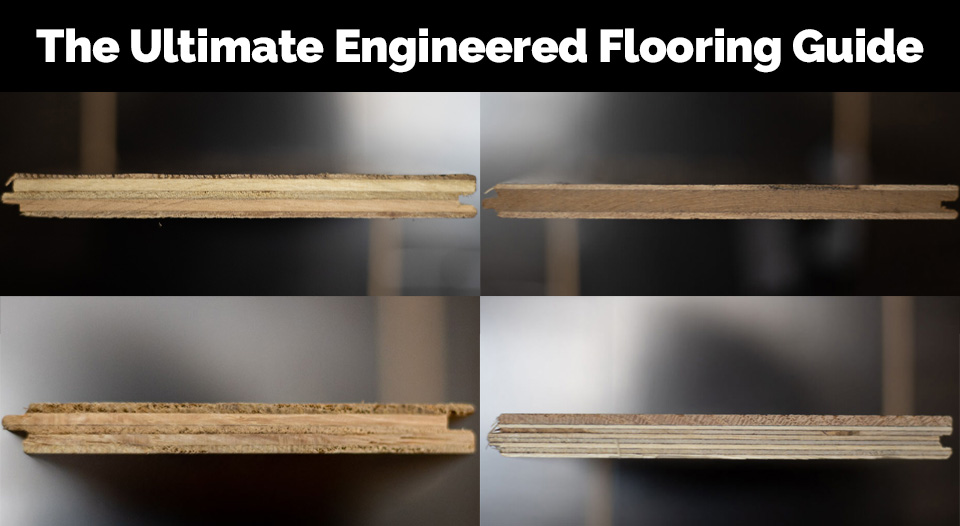
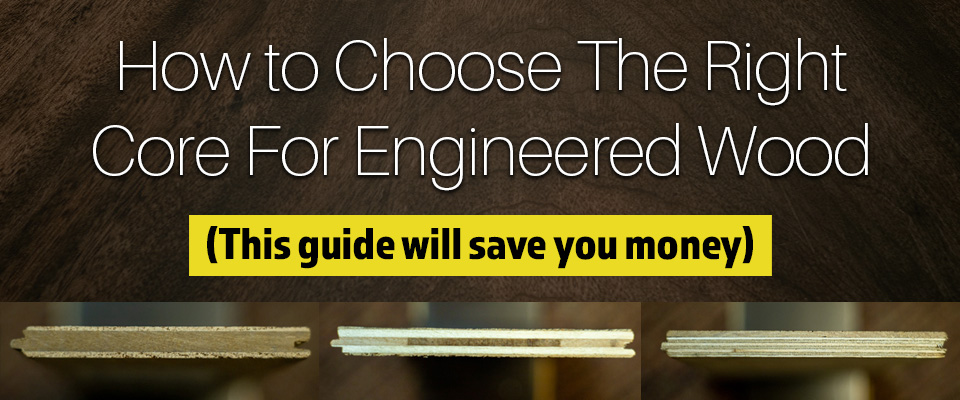
When you're figuring out how to choose the right core for engineered wood, you've basically got four main options to understand: plywood (in 3-ply or 5-ply construction), MDF (medium-density fiberboard), and HDF (high-density fiberboard). Each one has a different composite core or solid wood species.
When selecting engineered hardwood, buyers should note that the number of core constructions ranges from multi-ply cores to high-density fiberboard (hdf) core designs. Manufacturers often highlight that hdf cores are typically composed of compressed wood fibers, which can deliver good quality stability in many residential settings. Industry experts agree that choosing the right flooring option depends on several factors such as moisture exposure, traffic levels, and budget constraints, since hdf constructions frequently serve as the most affordable option. Always review the technical details and warranty information before making a final purchase.
The Core Type with Multiple Layers of Plywood (3-Ply vs. 5-Ply)
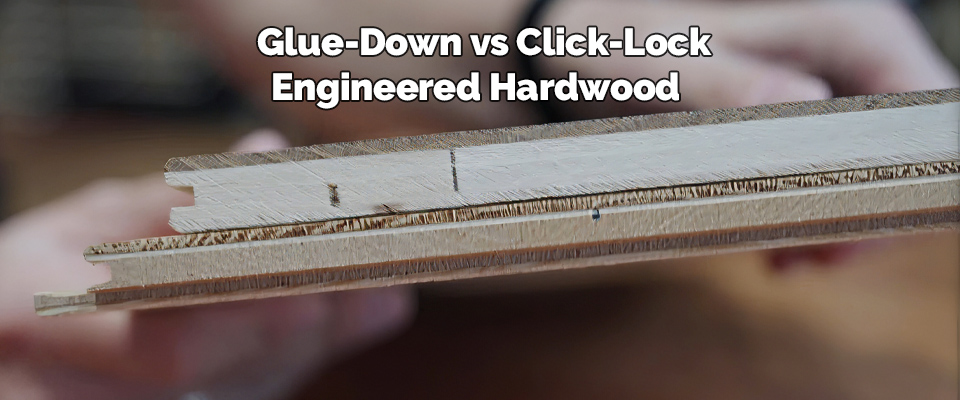
Plywood cores are the old standard in engineered hardwood flooring, and there's a reason manufacturers have used them for decades. These multi-wood layers are made by stacking alternating layers of wood veneer with the grain running perpendicular between layers. That cross-grain construction is what gives it strength and resistance to warping.
Now here's where the 3-ply vs. 5-ply question comes in, because it matters more than most salespeople will tell you.
3-ply engineered hardwood has three layers total. It's thinner, typically used in boards where cost is a priority, and it works fine in many residential applications. However, it has less structural rigidity than a 5-ply, and it's more susceptible to movement under significant humidity changes.
5-ply engineered hardwood has five alternating layers, which means more stability, better screw-holding if you're face-nailing, and a more rigid plank that handles subfloor imperfections better. In 2026, most quality engineered hardwood flooring on the market is built on 5-ply (or more) layers for exactly that reason. If you're comparing two floors and one is 3-ply and the other is 5-ply at a similar price point, the 5-ply is almost always the smarter pick for longevity.
Plywood cores also tend to handle moisture better than MDF over the long haul, though they're not waterproof by any stretch. If a floor is going to cup under humidity stress, research suggests roughly 80% of that deformation shows up within the first three days of exposure. That's actually useful to know because it means moisture problems don't hide long.
For a real-world example of a quality floor, take a look at the Noble's Way Winter River 7.25":
as a perfect example of this — discontinued status, quality construction:
That said, not all discount flooring is equal. Please, look at the photos closely and be aware of what you're getting. Read the specs. Ask about the core type. A genuinely cheap floor with an HDF or 5-ply core is a deal. A cheap floor with a mystery fiberboard core and no published specs is a risk. Here's our Dogwood Charles with a 7.5" Width board at 2.39 per square foot.
How Vinyl Plank Flooring Compares on the Core Question
You're probably cross-shopping vinyl plank flooring somewhere in this process. Fair enough. Vinyl plank (including SPC and WPC variants) uses a completely different core system than engineered hardwood, and it's worth knowing the difference before you decide.
SPC (stone plastic composite) cores are rigid, 100% waterproof, and dimensionally very stable. WPC (wood plastic composite) cores add a foam element for comfort underfoot but are slightly less dense. Neither of these is a wood-based core at all — they don't expand and contract like wood fibers do.
Vinyl plank flooring cores win on waterproofing. Full stop. If you have a space with serious water exposure risk, vinyl plank is hard to argue against on that single point.
But engineered hardwood with a quality plywood or HDF core still has advantages: it's real wood, it refinishes (depending on wear layer thickness), it ages differently, and a lot of people simply prefer it underfoot. The core question for vinyl plank is less about wood fiber behavior and more about thickness and rigidity. For hardwood flooring, the core question goes deeper because wood moves and different core constructions handle that movement in measurably different ways.
Our Current Quality-Core Picks
Look, we could talk cores all day (and kind of just did). But here are some of the engineered hardwood floors we're genuinely excited about right now, with the kind of specs and sourcing that back up that excitement:
The Duet Rhett's Desire 7.5" is a wide-plank hardwood flooring option with a look that earns it some serious compliments:
And the Canyon Elements Cedar Creek 7.25" brings a warm, natural character that works beautifully in both traditional and modern spaces:
We know how to stock amazing deals on flooring because we've spent over 50 years perfecting the art of the deal. These aren't floors we're trying to upgrade you away from — they're floors we actually want you to put in your home.
Browse the full engineered hardwood flooring selection to see what we've got in stock right now, including overstocks and discontinued goods with quality cores at prices you won't find at the big box stores.
How Selecting The Right Core and Wear Layer Thickness Makes a Difference
So let's bring this home. When you're figuring out how to choose the right core for engineered wood, the framework is actually pretty simple: know your space, understand your moisture conditions, and match the core to both.
The 3-ply core is entry-level but workable for controlled above-grade spaces. A 5-ply core floor is the workhorse that handles more installation scenarios reliably. HDF cores deliver excellent density and stability with good moisture performance for a fiberboard product. MDF cores can be cost-effective in dry, controlled environments but need to be avoided anywhere moisture is a real variable — especially standard (non-MR) MDF.
And here's the thing about shopping for discount or cheap engineered hardwood flooring: the core doesn't have to suffer just because the price is low. We source liquidated inventory with legitimate core construction, and we sell it to you at prices that make sense because our overhead model is built differently than the big box stores. No rose-colored glasses allowed here — we'll always tell you exactly what you're getting. That's the only way we know how to do business.
Have questions about a specific product or which engineered hardwood flooring core is right for your project? Give us a call or order samples. We're here, and we know this stuff cold.
Frequently Asked Questions
What is the best core for engineered wood flooring in 2026?
For most residential applications in 2026, a 5-ply core or a high-quality HDF core engineered hardwood flooring offers the best combination of stability, durability, and moisture resistance. If you're installing below grade or in a high-humidity environment, 5-ply plywood is typically the safest choice for long-term performance.
What is the difference between 3-ply and 5-ply cores?
3-ply engineered hardwood has three alternating wood veneer layers, making it thinner and slightly more susceptible to movement under humidity changes. 5-ply cores has five layers, which increases rigidity, dimensional stability, and resistance to warping — making it a better long-term investment for most flooring applications.
Is MDF or HDF better for the engineered cores?
HDF (high-density fiberboard) is generally better than standard MDF for engineered wood flooring cores because it's denser, harder, and significantly more resistant to moisture swelling. Standard MDF can absorb 15 to 25% of its weight in water after 24 hours, while HDF cores show measurably lower thickness swell under the same conditions. If you have to choose between MDF and HDF in similar-priced floors, HDF wins.
How do I know if cheap engineered hardwood flooring has a good core?
Ask specifically whether the core is 3-ply, 5-ply, MDF, or HDF — and whether the manufacturer publishes any moisture performance data. Legitimate discount engineered hardwood from liquidators and overstock sources can absolutely have quality cores; the discount reflects sourcing model and inventory type, not necessarily build quality.
Can I install engineered hardwood with an MDF core in a basement?
It's generally not recommended. Standard MDF cores are particularly vulnerable to moisture absorption and thickness swelling, and below-grade environments carry elevated moisture vapor risk even without visible water. For basement installations, opt for a 5-ply core or an HDF core engineered flooring product with documented moisture performance specs.
How does engineered hardwood core choice affect vinyl plank flooring comparisons?
Vinyl plank flooring uses SPC or WPC cores that are 100% waterproof, which gives it a clear advantage over any wood-fiber-based engineered hardwood core in wet or high-moisture environments. However, engineered floors with a quality multi-ply core or HDF core still outperforms vinyl plank in feel, refinishability, and authenticity for above-grade dry spaces where moisture isn't a primary concern.
Is a thicker engineered hardwood plank always better?
Not always, but generally yes when comparing similar core constructions. A thicker plank typically means a thicker core, which usually translates to better stability and a more solid feel underfoot. We tend to favor 1/2" thickness or greater for most hardwood flooring applications because the performance difference over thinner boards is real and noticeable over time.